
Vietnamese · Main course · SAMPLE RECIPE
Vietnamese shaking beef
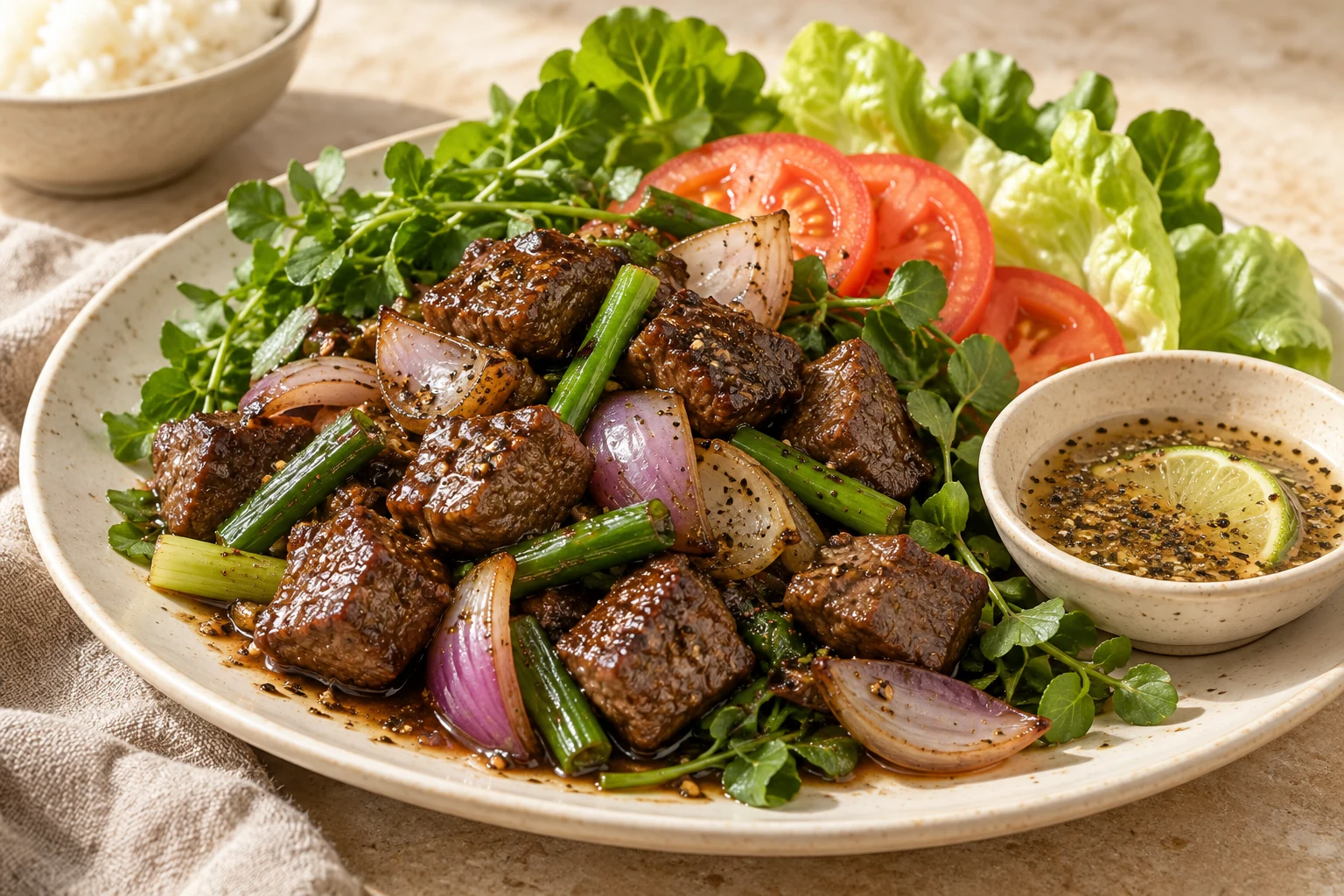
Vietnamese-style steak cubes, browned quickly and served over fresh greens. A tangy onion dressing and lime-pepper dip keep each bite lively.
Save to your Saucey Space, or keep a bookmark on this device.
A NOTE FROM THE KITCHEN
Let the cubes brown before you shake.
Bò lúc lắc gets its name from the shaking or tossing motion used during cooking. In a home skillet, give each side time to color first. A roomy pan and small batches help you get a browned surface without overloading the stove.
Ready to get started? The ingredients and steps are right below.
LET’S MAKE SOMETHING GOOD
Vietnamese shaking beef
Sample recipe awaiting kitchen testing. Timings are estimates.
The good part
Check off each step as you cook.
0 of 4 steps complete
BEHIND THE DISH · Vietnam · Vietnamese diaspora
Vietnamese shaking beefBeyond the plate.
Bò lúc lắc brings browned beef cubes to the table with fresh greens and a bright, tangy finish. Its lively name describes the cooking motion, while its restaurant history shows how a dish can change with the cuts available to its cooks.
ORIGINS & EVOLUTION
The movement gives it a name.
The shaking in shaking beef refers to moving the pan or wok as the small pieces of meat cook. A good sear still matters: the cubes need contact with the hot surface between movements. The name describes a technique, without supplying a secure date or a single inventor.
Vietnamese preparations and overseas restaurant versions do not always use the same beef. Tender filet mignon became a conspicuous choice in some American restaurants. Our home version uses sirloin or ribeye, with oyster sauce, soy sauce, fish sauce, garlic, and sugar in the marinade.
CULTURAL IMPACT
A remembered meal became a signature.
Chef Charles Phan recalled eating the dish in a hotel in Vietnam on his first return trip after the war, in 1992. At San Francisco’s Slanted Door, he adapted it with filet mignon and larger cubes. His account provides a specific example of culinary memory becoming a restaurant preparation.
That adaptation was a choice, not a new origin for the dish. His version placed the beef over watercress with a lime, salt, and pepper dip. Our recipe also pairs warm meat with greens and a sharp dip, adding tomatoes and tangy onion dressing to the platter.
SOCIAL HISTORY
An occasion dish with a wider audience.
Vietnamese food writer Andrea Nguyen describes shaking beef as a celebratory preparation rather than something in every home cook’s regular repertoire. She also notes its usefulness on Vietnamese restaurant menus in America, where it offered a recognizable beef dish to diners already fond of steak.
Those observations place the dish between special occasions and restaurant hospitality. Serving the beef in small pieces with other dishes also changes the experience from an individual steak dinner. A shared platter, rice, and fresh greens allow the rich browned meat to become one part of a varied meal.
What else sounds good?
There’s a little more inspiration in the kitchen.
Back to the recipes