
Vietnamese · Drinks · SAMPLE RECIPE
Vietnamese iced coffee
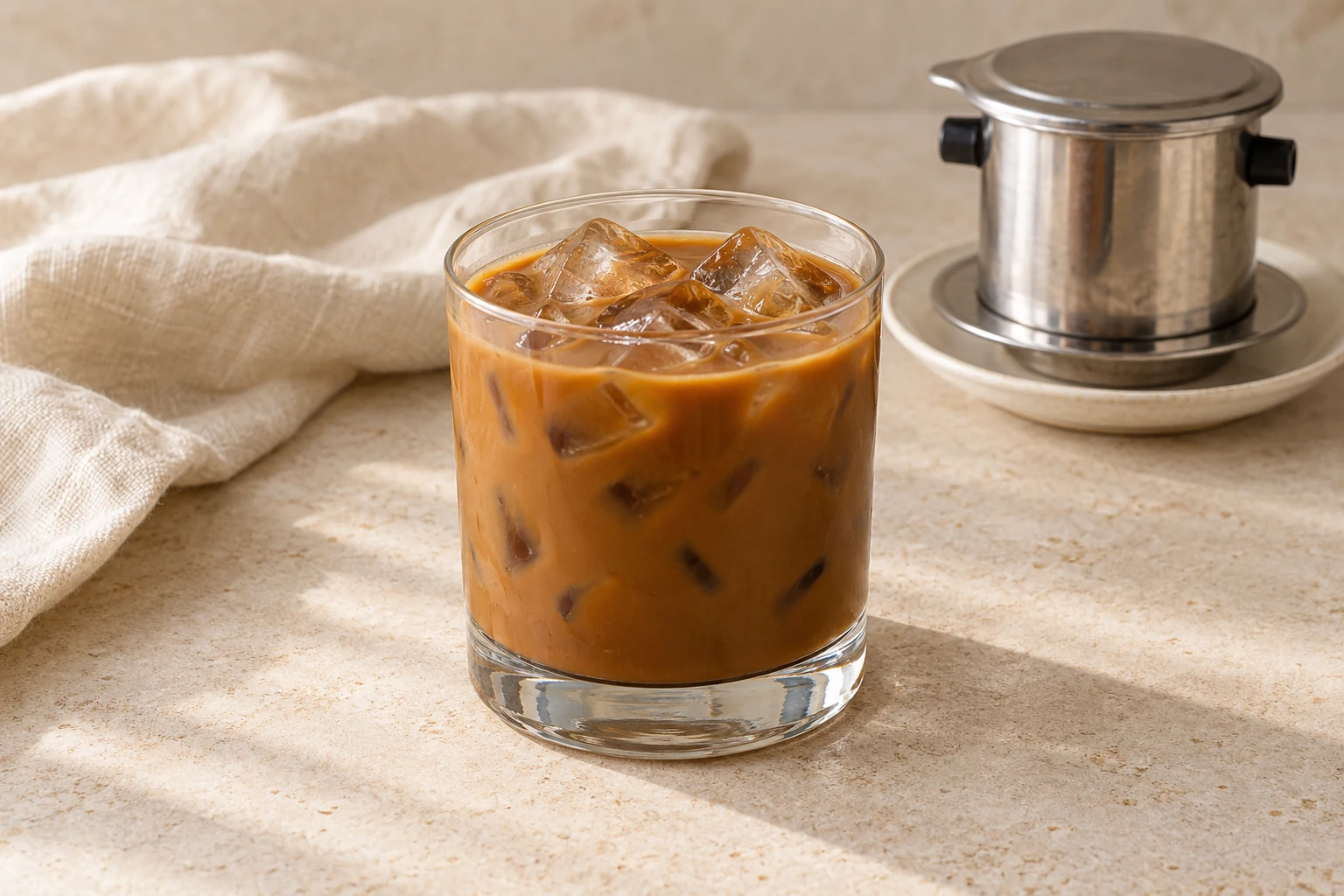
Slow-dripped dark coffee meets sweetened condensed milk and a generous glass of ice, giving a small drink plenty of depth.
Save to your Saucey Space, or keep a bookmark on this device.
A NOTE FROM THE KITCHEN
Give the phin time to drip.
This cà phê sữa đá uses small Vietnamese metal phin filters. Choose a dark roast ground for a phin; a robusta or robusta-arabica blend gives a bold cup. The timing assumes a filter for each serving, brewing together.
Ready to get started? The ingredients and steps are right below.
LET’S MAKE SOMETHING GOOD
Vietnamese iced coffee
Sample recipe awaiting kitchen testing. Timings are estimates.
The good part
Check off each step as you cook.
0 of 4 steps complete
BEHIND THE DISH · Vietnam
Vietnamese iced coffeeBeyond the plate.
Vietnamese iced coffee brings a concentrated brew, sweetened condensed milk, and ice into one small glass. Its story connects a colonial-era crop with Vietnamese brewing habits and the everyday social life of cafés.
ORIGINS & EVOLUTION
An imported crop becomes a local drink.
Coffee reached Vietnam through the French in the nineteenth century. The drink that developed there acquired a character of its own: a strong coffee base softened by sweetened condensed milk. A precise inventor or first serving of cà phê sữa đá is difficult to establish.
The phin is central to the preparation. This small metal brewer rests above the cup and lets water move slowly through the grounds. Its perforated parts filter the coffee without a paper liner.
CULTURAL IMPACT
One recognizable glass, many coffee styles.
Iced milk coffee has a particularly strong association with Saigon, now Ho Chi Minh City. It appears in settings ranging from roadside stalls to formal restaurants, and Vietnamese restaurants abroad have carried the combination to diners far beyond the country’s borders.
It also sits within a varied coffee culture. Coconut coffee, Hanoi’s egg coffee, and salted cream coffee associated with Hue offer different textures and balances. Their presence shows how Vietnamese cooks and café owners keep developing the ways coffee can be served.
SOCIAL HISTORY
A reason to sit for a while.
Vietnam’s coffee spaces include pavement cafés with low stools, shops in older apartment buildings, and contemporary roasteries. The setting shapes the experience: a glass can accompany watching a busy street, meeting friends, or settling down to work. Coffee belongs to these routines as much as to the roasting process.
The phin makes the wait visible, with the brew collecting a little at a time. Our home version keeps that ritual, then stirs the coffee and condensed milk together before adding ice. Individual servings let each drinker enjoy a freshly made glass.
What else sounds good?
There’s a little more inspiration in the kitchen.
Back to the recipes