Chinese · Main course · SAMPLE RECIPE
Vegetable & egg fried rice
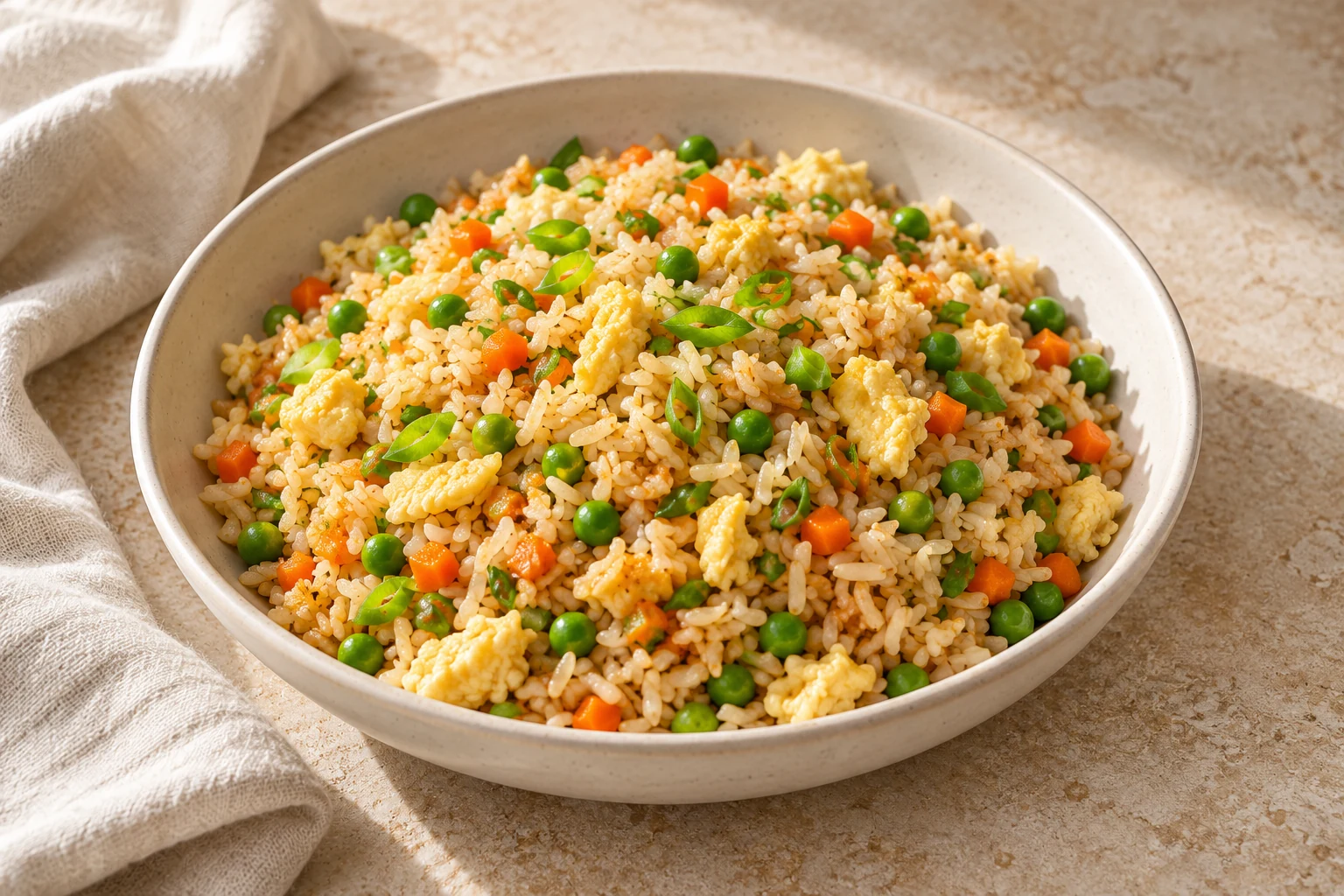
A colorful skillet of rice, tender vegetables, and soft pieces of egg, finished with soy sauce and a little toasted sesame oil.
Save to your Saucey Space, or keep a bookmark on this device.
A NOTE FROM THE KITCHEN
Start with safely chilled rice.
This Chinese-inspired vegetable fried rice starts with already cooked, properly chilled rice; its cooking and cooling time is not included. Cool freshly cooked rice promptly in shallow containers and refrigerate within 1 hour where possible, never leaving it out beyond 2 hours. Use it the next day. Rice that has been left out too long cannot be made safe by reheating.
Ready to get started? The ingredients and steps are right below.
LET’S MAKE SOMETHING GOOD
Vegetable & egg fried rice
Sample recipe awaiting kitchen testing. Timings are estimates.
The good part
Check off each step as you cook.
0 of 4 steps complete
BEHIND THE DISH · Chinese kitchens & the Chinese diaspora
Vegetable & egg fried riceBeyond the plate.
A bowl of fried rice can look simple while asking quite a lot of the cook. Its story connects resourceful household meals, restaurant training, and the adaptations Chinese cooks have made around the world.
ORIGINS & EVOLUTION
A method with many local expressions.
Fried rice has a long association with Chinese cooking, but its precise invention is uncertain. Neat stories assigning every version to one ancient city or emperor are less secure than the living evidence of many regional preparations, ingredients, and approaches to the pan.
Cooking rice again with other ingredients offers a useful way to build another meal from an existing staple. In rice-growing southern China, that practical relationship helps explain its place in everyday cooking. Our combination of peas, carrot, scallions, and egg is a Chinese-inspired home version, not a named regional specialty.
CULTURAL IMPACT
The technique travels with the cook.
Chinese migration carried stir-frying into kitchens with different ingredients and customers. Documented restaurant examples include jerk chicken fried rice in Chinese Jamaican cooking and spicy vegetarian fried rice made with basmati in a Chinese Indian restaurant. The pan’s method can remain recognizable while the flavor changes.
These dishes reveal more than substitution. In one New York restaurant, a Jamaican cook prepared jerk chicken and a Chinese cook then stir-fried it with rice. A shared dish emerged from people working side by side, making culinary exchange a practical collaboration.
SOCIAL HISTORY
An everyday dish teaches serious skills.
Professional cooks describe fried rice as a useful test of timing, seasoning, oil, and control of the wok. Singapore chef Ang Song Kang recalled learning it as a young apprentice by cooking, tasting, and watching more experienced colleagues. Its familiar appearance can hide considerable accumulated knowledge.
Home cooks pass on that knowledge too. Chinese American food writer Grace Young demonstrated fried rice while discussing the preservation of family cooking traditions; her family wok entered a museum collection. An ordinary cooking vessel can therefore record family life and migration as meaningfully as a written recipe.
What else sounds good?
There’s a little more inspiration in the kitchen.
Back to the recipes