Italian · Dessert · SAMPLE RECIPE
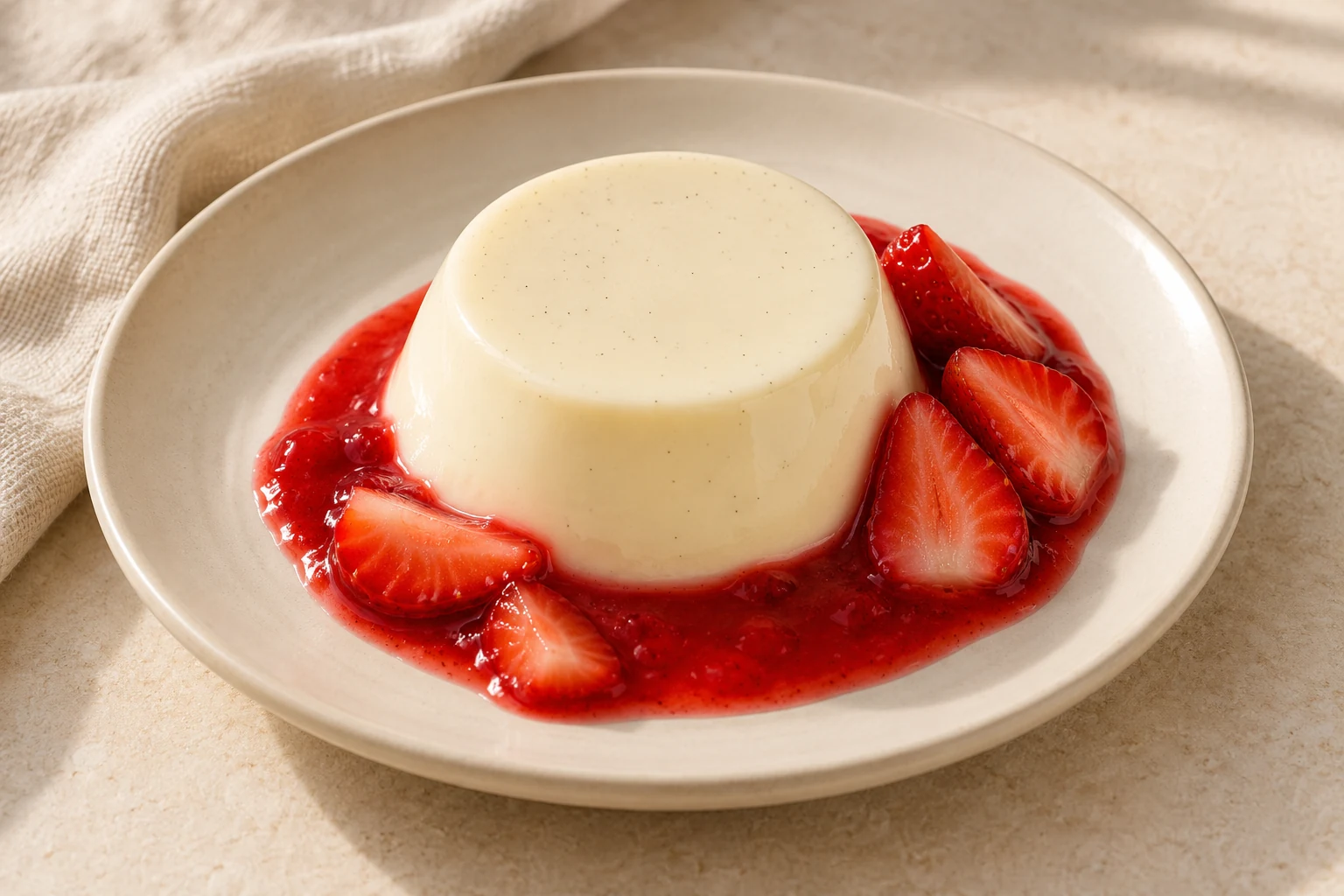
Vanilla panna cotta with strawberries
Softly set vanilla cream with a spoonful of fresh strawberry sauce, made ahead and turned out just before dessert.
Save to your Saucey Space, or keep a bookmark on this device.
A NOTE FROM THE KITCHEN
A gentle wobble is the goal.
Panna cotta is associated with Piedmont and other parts of northern Italy. This version uses cream and milk with powdered gelatin, then adds a simple strawberry sauce. It needs six hours in the refrigerator to set for unmolding; the short preparation is only the beginning of the timing.
Ready to get started? The ingredients and steps are right below.
LET’S MAKE SOMETHING GOOD
Vanilla panna cotta with strawberries
Sample recipe awaiting kitchen testing. Timings are estimates.
The good part
Check off each step as you cook.
0 of 5 steps complete
BEHIND THE DISH · Piedmont and northern Italy
Vanilla panna cotta with strawberriesBeyond the plate.
Panna cotta pairs simple ingredients with delicate texture. Its story moves from northern Italian identity into home entertaining and restaurant kitchens.
ORIGINS & EVOLUTION
A regional tradition without a certain inventor
Piedmont includes panna cotta among its traditional foods, while culinary accounts also connect it with neighboring northern regions. Stories assign it particular creators in the Langhe, but those stories are not a firm basis for naming one inventor or an exact birth year.
The name means cooked cream. In the familiar modern method, sweetened dairy is warmed and set with gelatin, then chilled. It can contain cream alone or a mixture of cream and milk. The cold dessert is therefore quite different from an egg custard baked in a water bath.
CULTURAL IMPACT
A recognizable texture, many interpretations
Plain versions let the dairy flavor lead; fruit and other accompaniments provide another approach. This vanilla-and-strawberry adaptation follows that flexible pattern. Its sauce is a serving choice, rather than a claim that strawberries belong to one definitive historical formula.
Restaurant cooks have carried the method into strikingly different dishes, including smoked chocolate, vermicelli with mango, and savory edamame versions. These examples show how a regional dessert can also become a technique that cooks adapt to other ingredients and culinary traditions.
SOCIAL HISTORY
The practical appeal of making dessert ahead
The work happens before the meal: warm the mixture, fill the molds and let the refrigerator finish the setting. For a host, that separates dessert preparation from the bustle of serving dinner. Its convenience helps explain its appeal in contemporary home cooking without inventing an ancient household origin.
Its circulation also involves teaching and recipe exchange. Cooking classes in Tuscany have helped share home versions with visiting cooks, while chefs elsewhere have put their own interpretations on menus. The dish travels through people learning a method as well as through restaurants selling a finished dessert.
What else sounds good?
There’s a little more inspiration in the kitchen.
Back to the recipes