
Thai · Drinks · SAMPLE RECIPE
Thai iced tea
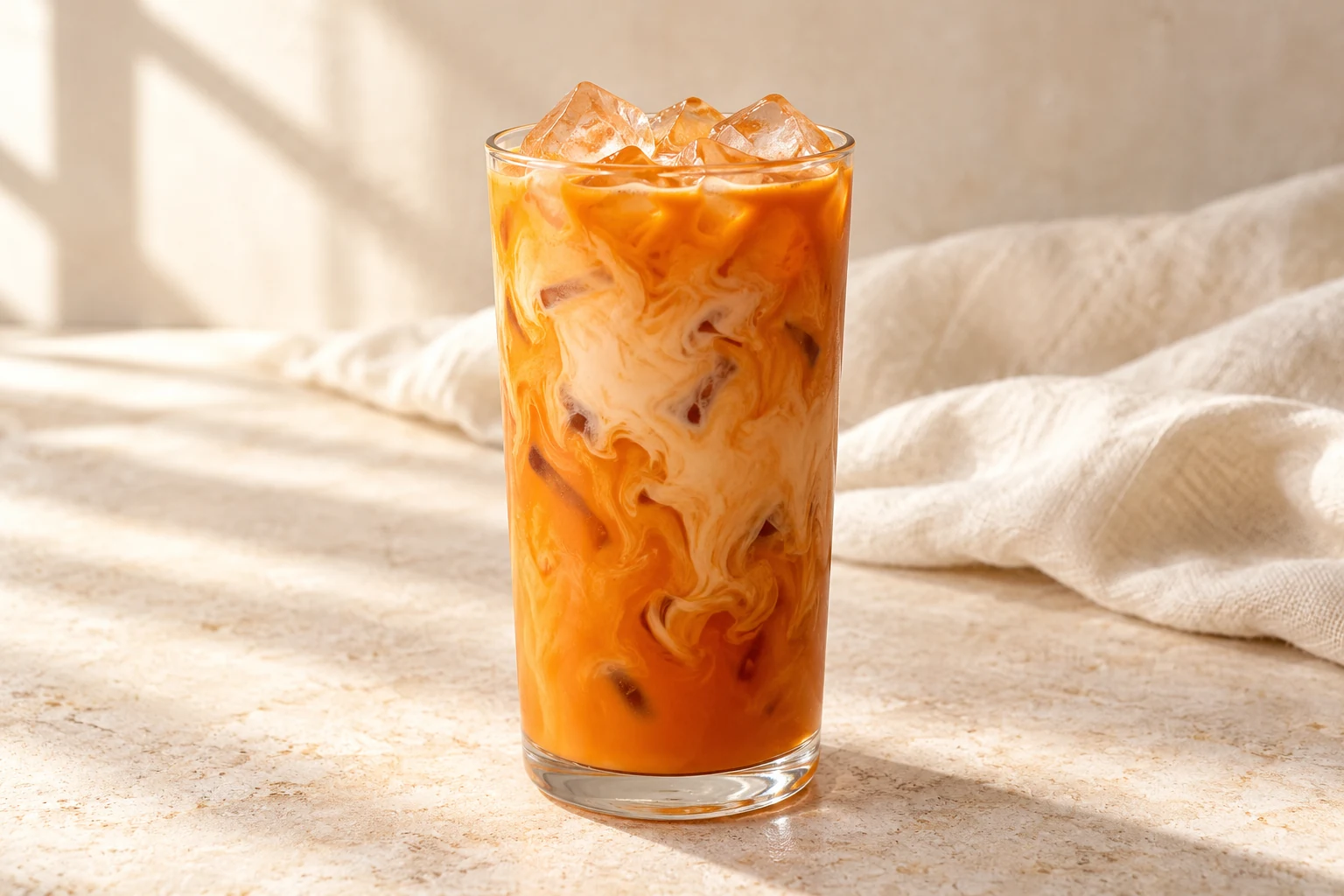
Strong Thai black tea, sweetened condensed milk, and a final pour of evaporated milk make a rich amber-orange iced drink.
Save to your Saucey Space, or keep a bookmark on this device.
A NOTE FROM THE KITCHEN
Start with tea made for this glass.
Use a loose Thai black tea blend for brewing, rather than an instant milk-tea powder. Many blends contain food coloring, which gives the familiar orange appearance. This home version mixes in condensed milk and saves the evaporated milk for the creamy finish.
Ready to get started? The ingredients and steps are right below.
LET’S MAKE SOMETHING GOOD
Thai iced tea
Sample recipe awaiting kitchen testing. Timings are estimates.
The good part
Check off each step as you cook.
0 of 4 steps complete
BEHIND THE DISH · Thailand
Thai iced teaBeyond the plate.
Thai iced tea, or cha yen, is a strong, sweet tea served cold with milk. Its history combines Chinese tea commerce, the availability of ice and canned dairy, and generations of preparation in shops and street stalls.
ORIGINS & EVOLUTION
Tea drinking predates the orange glass.
Accounts of tea drinking in Siam reach back to the seventeenth century, when the drink was served hot. The familiar iced milk tea belongs to a later history. Sweetened condensed milk and manufactured ice helped make new kinds of cold, creamy drinks practical.
A commercial landmark is 1945, the founding year claimed by ChaTraMue. Its family business opened a Chinese tea shop in Bangkok in 1925 and later developed iced milk and black-tea drinks. That chronology documents a producer’s development rather than proving a single invention of Thai iced tea.
CULTURAL IMPACT
A familiar color carries different recipes.
Commercial Thai tea blends commonly supply the orange color associated with the finished drink. The milk lightens the brewed tea and creates its creamy appearance. Blends and preparations vary, so the color alone cannot tell you how a particular shop balances tea, sweetness, and dairy.
Thai restaurants abroad helped make the drink recognizable internationally. Serving methods also traveled and changed: some restaurant versions emphasize a separate cream layer, while preparations in Thailand commonly combine sugar, condensed milk, and evaporated milk. The same drink name can therefore lead to noticeably different glasses.
SOCIAL HISTORY
A drink shaped by shops and supply.
Small restaurants and street stalls give cha yen an everyday setting. Strong tea can stand up to the milk and melting ice added at service. The ability to prepare a tea base and finish individual glasses suits this kind of small-scale hospitality.
Tea production connects the glass to northern Thailand. ChaTraMue’s history describes early processing in Chiang Rai and a later purchasing network with local growers. Our recipe works at the other end of that chain, brewing a packaged blend and chilling it before the final milk pour.
What else sounds good?
There’s a little more inspiration in the kitchen.
Back to the recipes