French · Main course · SAMPLE RECIPE
Steak au poivre
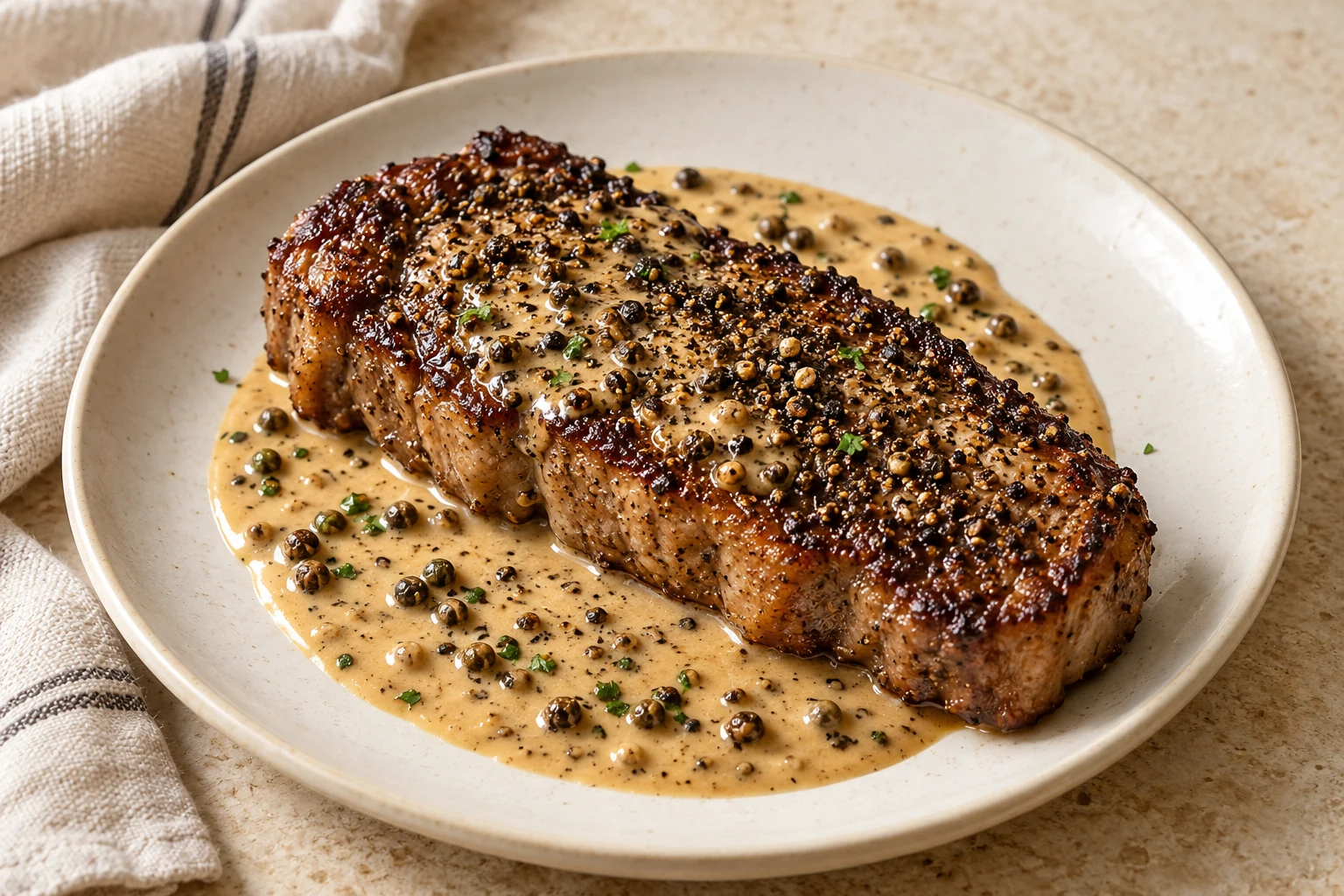
A French bistro favorite: pepper-crusted steak and a silky cream sauce. A little pan sauce makes the whole plate feel special.
Save to your Saucey Space, or keep a bookmark on this device.
A NOTE FROM THE KITCHEN
Crack the pepper, keep its texture.
Coarsely crushed peppercorns give the crust its character. This home version builds the sauce with stock and cream, without the brandy often used in bistro preparations. Moderate the heat if the pepper starts darkening too quickly.
Ready to get started? The ingredients and steps are right below.
LET’S MAKE SOMETHING GOOD
Steak au poivre
Sample recipe awaiting kitchen testing. Timings are estimates.
The good part
Check off each step as you cook.
0 of 4 steps complete
BEHIND THE DISH · France
Steak au poivreBeyond the plate.
A peppery crust, a rich pan sauce, and a little restaurant theater. The story of steak au poivre connects French dining with home kitchens, professional training, and the pleasure of making dinner an occasion.
ORIGINS & EVOLUTION
A classic with more than one beginning.
Steak au poivre means “steak with pepper.” Its name is straightforward; its beginnings are less tidy. At least four chefs claimed to have invented the dish, with rival accounts placing their versions between 1905 and 1930. No single inventor or exact birthplace is securely established by those competing stories.
What is clearer is the dish’s place in French bistro cooking: seared beef, cracked peppercorns, and a sauce built from the browned juices in the pan. The preparation gives a small set of ingredients a distinctly restaurant-like finish.
CULTURAL IMPACT
French dining finds a wider table.
By 1953, steak au poivre had appeared in an American cooking magazine. It was already traveling beyond France before the publication of Mastering the Art of French Cooking in 1961 and Julia Child’s later television work helped make French techniques more approachable to American home cooks.
That wider enthusiasm offers a useful way to understand the dish’s appeal: a home cook could practice searing, deglazing, and making a pan sauce while bringing something associated with French restaurant dining to their own table.
SOCIAL HISTORY
Dinner as performance—and a lesson.
In some restaurants, steak au poivre became part of tableside cooking. A 1994 American restaurant advertisement lists it among dishes prepared at the table, giving us a small, concrete glimpse of hospitality as entertainment: diners could watch the preparation become part of the meal.
Its story also includes the passing of skills between cooks. Chef Jacques Wilson recalled learning the dish at culinary school in 1983; a 2011 account shows him guiding a new student through seasoning, searing, and sauce-making. Together, these examples suggest why the dish endures: it offers a little ceremony for diners and a practical lesson in technique for cooks.
What else sounds good?
There’s a little more inspiration in the kitchen.
Back to the recipes