
Italian · Main course · SAMPLE RECIPE
Spaghetti aglio e olio
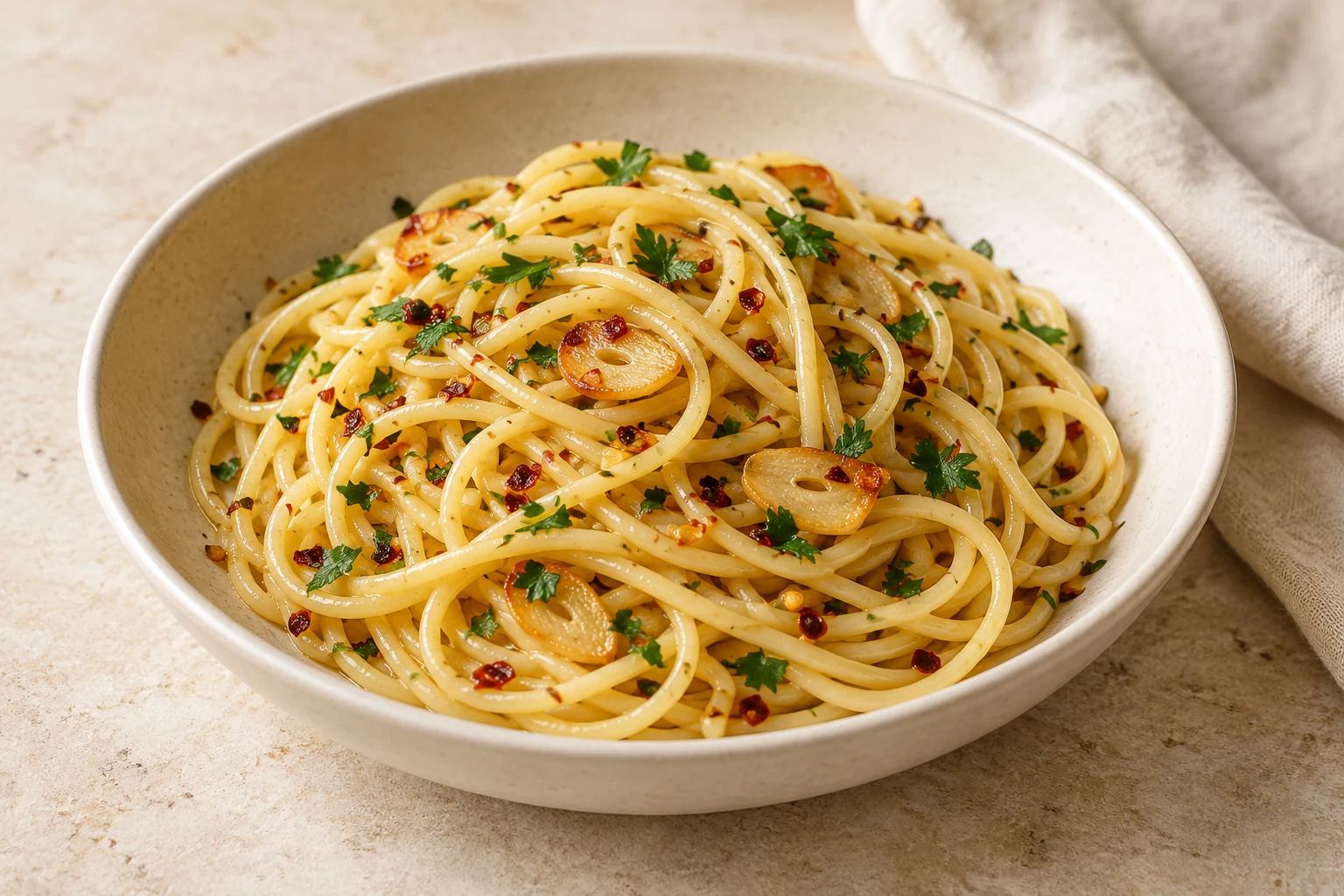
Golden garlic, olive oil, and a little chile coat hot spaghetti, with chopped parsley for a fresh finish. A pantry supper with a bright, savory bite.
Save to your Saucey Space, or keep a bookmark on this device.
A NOTE FROM THE KITCHEN
Aim for golden garlic, never dark brown.
Aglio e olio means garlic and oil. This version includes chile and parsley, with no cheese. A little starchy pasta water helps spread the fragrant oil over every strand instead of leaving it in a puddle underneath.
Ready to get started? The ingredients and steps are right below.
LET’S MAKE SOMETHING GOOD
Spaghetti aglio e olio
Sample recipe awaiting kitchen testing. Timings are estimates.
The good part
Check off each step as you cook.
0 of 4 steps complete
BEHIND THE DISH · Campania and southern Italy
Spaghetti aglio e olioBeyond the plate.
Garlic, oil, and spaghetti can become dinner with very little advance planning. Aglio e olio is associated with Campania, but its broader story lies in shared cupboards, regional variations, and the sociability of a meal assembled when people are already hungry.
ORIGINS & EVOLUTION
A simple combination travels easily.
The name describes the core seasoning: garlic and oil. Chile is a familiar addition, often reflected in the longer name aglio, olio e peperoncino. Its association with Naples and Campania should not be mistaken for proof of one inventor or one fixed original formula.
The preparation is also documented in Puglian food traditions. Regional cookbooks from 1990 and 1991 record garlic-and-oil pasta in Salento and the Bari area. Those written examples show an established southern repertoire extending beyond a single city.
CULTURAL IMPACT
The pantry supper becomes recognizable.
The dish has a particular place in accounts of the late-night spaghettata: friends gathering around a quickly cooked pot of pasta. Garlic and oil make sense in that setting because the cook does not need a long-simmered sauce or an elaborate shopping trip.
Its public image continues to change through cooking media. A televised variation called Scarlett’s Pasta adds lemon and Parmesan to the garlic, oil, and parsley combination. Such versions demonstrate its adaptability without making those additions necessary to every plate.
SOCIAL HISTORY
Convenience still depends on attention.
Family cooks and culinary professionals both describe it as something possible from cupboard ingredients. That practicality matters: a meal can be offered without much notice, and a small collection of staples can serve people gathered around the same table.
Simple shopping does not remove skilled work. Garlic can turn bitter if it darkens, and water must help distribute the oil through the pasta. Learning when to lower the flame or add another splash is part of the everyday knowledge passed through repeated cooking.
What else sounds good?
There’s a little more inspiration in the kitchen.
Back to the recipes