
Cajun · Main course · SAMPLE RECIPE
Smoky blackened salmon
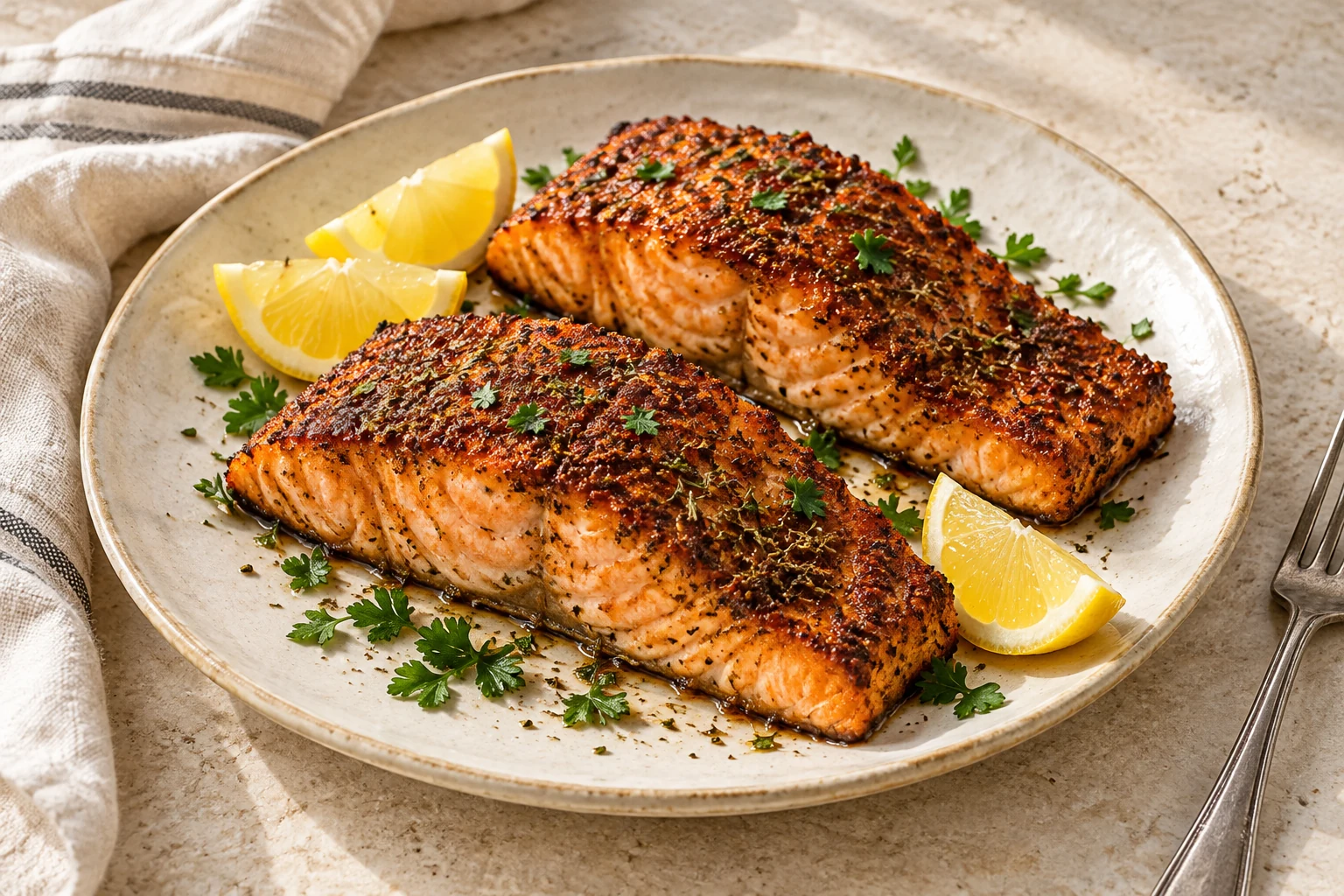
A paprika-rich spice crust, a little cayenne warmth, and juicy salmon underneath. Big flavor from a small collection of pantry spices.
Save to your Saucey Space, or keep a bookmark on this device.
A NOTE FROM THE KITCHEN
Deep color, without a burnt crust.
This Cajun-inspired salmon gets its dark coating from spices and a hot pan. Keep the heat under control: a fragrant, toasted crust is the aim, and the heat can come down as the fish cooks through.
Ready to get started? The ingredients and steps are right below.
LET’S MAKE SOMETHING GOOD
Smoky blackened salmon
Sample recipe awaiting kitchen testing. Timings are estimates.
The good part
Check off each step as you cook.
0 of 4 steps complete
BEHIND THE DISH · Louisiana inspiration · Modern salmon adaptation
Smoky blackened salmonBeyond the plate.
This blackened salmon adapts a modern Louisiana restaurant technique. Its story begins with the fame of Paul Prudhomme’s blackened redfish, while our paprika-rich seasoning and salmon fillets make it a separate home-kitchen version.
ORIGINS & EVOLUTION
Redfish made the technique famous.
Paul Prudhomme opened K-Paul’s in New Orleans in 1979 and brought Louisiana cooking to a national audience in the following decade. Blackened redfish became his especially influential dish. Redfish is the historical reference here; salmon should not be substituted into that origin story.
Our fish develops its dark russet surface from a spice coating and a hot skillet. Smoked paprika, garlic, onion, thyme, oregano, and optional cayenne provide the particular blend. The recipe calls for controlled heat and toasted spices, with no need to turn the coating bitter or burn it black.
CULTURAL IMPACT
A powerful flavor became a shorthand.
Cookbooks, television, tours, and packaged spice blends helped carry Prudhomme’s cooking far beyond his restaurant. Blackening became so recognizable that people outside Louisiana sometimes treated “Cajun” as a synonym for hot and blackened, flattening a much more varied food culture.
A salmon adaptation is part of the technique’s continuing reach. Its connection is strongest when the name points back to that restaurant history while acknowledging the changes on the plate. The spice crust is one approach within Louisiana-inspired cooking, rather than a summary of the region’s food.
SOCIAL HISTORY
Restaurant fashion reaches the fishing grounds.
The appetite for blackened redfish had consequences beyond restaurant queues. During the mid-1980s, commercial red-drum fishing in the Gulf grew sharply as demand increased. Fisheries management documents explicitly connect that expansion to the market for the fashionable dish.
The federal fishery plan prohibited directed commercial harvest in Gulf federal waters for 1987. That history links chefs, customers, fishing crews, and regulators in one food story. It does not establish the environmental merits of any salmon purchase, but it shows how a successful menu item can affect people far from the dining room.
What else sounds good?
There’s a little more inspiration in the kitchen.
Back to the recipes