
Italian · Appetizer · SAMPLE RECIPE
Sicilian caponata
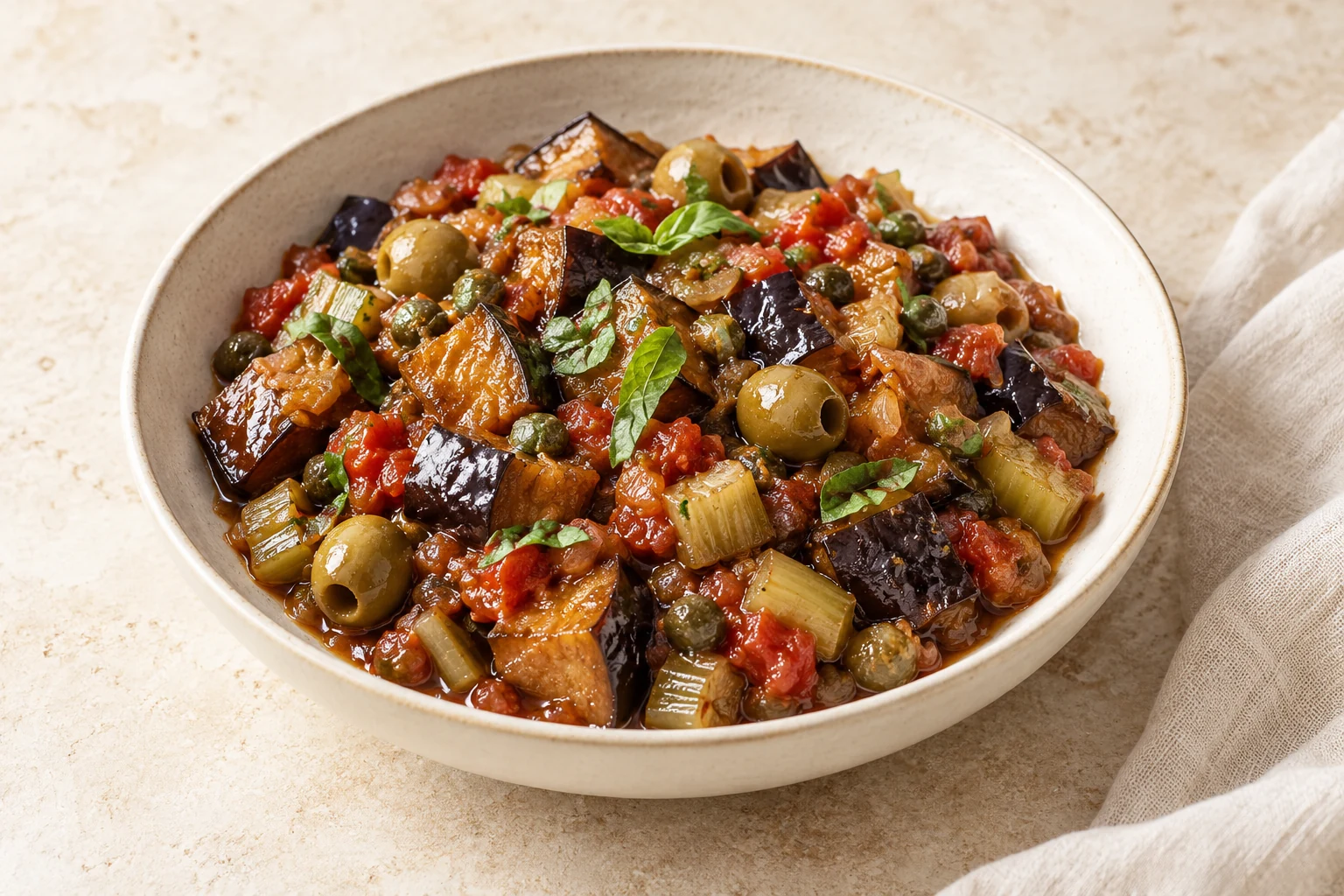
Silky eggplant, celery, olives and capers meet a bright sweet-and-sour tomato dressing in this colorful Sicilian vegetable dish.
Save to your Saucey Space, or keep a bookmark on this device.
A NOTE FROM THE KITCHEN
Find the sweet-and-sour balance.
Sicily has many caponata variations. This version keeps the focus on eggplant, celery, green olives and capers, with no nuts or raisins. The vinegar should bring brightness without drowning out the vegetables; taste after the short rest, when the sauce has settled into them.
Ready to get started? The ingredients and steps are right below.
LET’S MAKE SOMETHING GOOD
Sicilian caponata
Sample recipe awaiting kitchen testing. Timings are estimates.
The good part
Check off each step as you cook.
0 of 4 steps complete
BEHIND THE DISH · Sicily · many local variations
Sicilian caponataBeyond the plate.
Caponata is a Sicilian vegetable dish organized around sweet-and-sour flavor. Its history includes household cooking, elaborate hospitality and a preserving industry that put a regional specialty into portable containers.
ORIGINS & EVOLUTION
A balance with many versions
Eggplant, celery, olives and capers form a familiar combination, but caponata has no single island-wide formula. Versions associated with different Sicilian towns may include peppers, almonds, raisins or honey. Variation is part of the tradition, rather than evidence that one cook has lost the recipe.
A frequently repeated origin story connects the name to capone, a fish supposedly replaced by eggplant in less wealthy households. It is best treated as a story, not an established explanation of every caponata. The dish’s exact beginnings remain uncertain.
CULTURAL IMPACT
Everyday vegetables, festive presentation
Caponata can also become a showpiece. Cooking teacher Eleonora Console, near Mount Etna, served one beneath a dome of chocolate decorated with pine nuts. She associated that elaborate presentation with her family’s special-occasion cooking, showing a very different register from an everyday bowl.
That example helps explain caponata’s range: the sweet-and-sour vegetable base can support both a simple accompaniment and ceremonial hospitality. Our version keeps to eggplant, celery, tomato, olives and capers, without the chocolate, nuts or raisins found in some other preparations.
SOCIAL HISTORY
From the pan to the pantry
Palermo producer Fratelli Contorno dates its family caponatina recipe to 1916. Its account links the diminutive name to small packaging. Commercial preserving made a dish requiring several cooking stages available in a container, adding factory work and distribution to its domestic history.
The company also identifies Sicilian eggplant and olive varieties and capers from Pantelleria among its ingredients. This is one producer’s practice, not a rule for every recipe, but it connects a finished specialty to particular crops and places rather than treating Sicily as one uniform pantry.
What else sounds good?
There’s a little more inspiration in the kitchen.
Back to the recipes