
Thai · Main course · SAMPLE RECIPE
Shrimp pad Thai
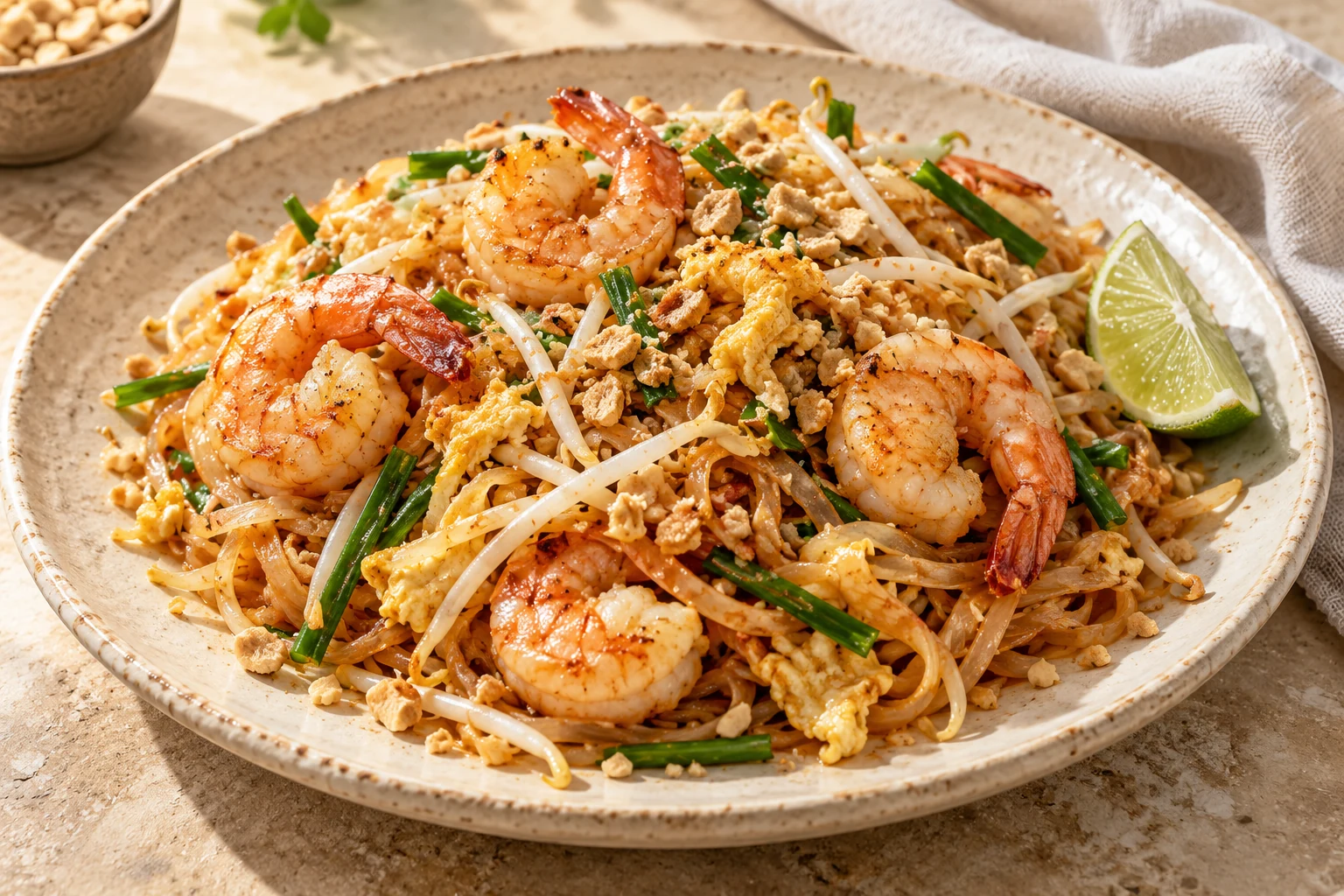
Thailand’s much-loved rice noodles, tossed with shrimp, tamarind, and a little sweetness. Lime, peanuts, and crisp sprouts finish the plate.
Save to your Saucey Space, or keep a bookmark on this device.
A NOTE FROM THE KITCHEN
Have everything ready before the pan gets hot.
The 45-minute rest allowance is for soaking the noodles; your packet may call for 30–60 minutes. This home version uses Thai tamarind purée, which is pourable and less concentrated than dense tamarind concentrate. Taste the sauce for a balance of sour, sweet, and salty before cooking.
Ready to get started? The ingredients and steps are right below.
LET’S MAKE SOMETHING GOOD
Shrimp pad Thai
Sample recipe awaiting kitchen testing. Timings are estimates.
The good part
Check off each step as you cook.
0 of 5 steps complete
BEHIND THE DISH · Thailand
Shrimp pad ThaiBeyond the plate.
Pad Thai brings Chinese-influenced noodle cooking into a distinctly Thai balance of sour, salty, and sweet. Its international fame is clear; its exact relationship with twentieth-century nation-building is more complicated than a single invention story.
ORIGINS & EVOLUTION
Noodles with a contested modern history.
Rice noodles and wok stir-frying connect pad Thai with Chinese migration to Thailand. Tamarind, fish sauce, and palm sugar help give the preparation its familiar flavor. The combination developed through cultural exchange rather than emerging from a cuisine isolated from its neighbors.
Phibunsongkhram’s government promoted noodle eating in the 1940s, but accounts disagree about whether that campaign created today’s pad Thai. Historian Chatichai Muksong distinguishes the earlier fried noodles from later documented pad Thai. Other researchers emphasize nationalist policy. A direct order inventing the exact modern recipe is not a settled fact.
CULTURAL IMPACT
A national symbol with mixed roots.
The dish’s name and public image make it a powerful emblem of Thailand. At the same time, its Chinese connections reveal how national food identities can grow from migration and adaptation. Calling it Thai does not require erasing the cooks and techniques involved in that history.
Its identity also leaves room for individual interpretation. Thai cooks and diners describe different balances of sourness, sweetness, texture, and garnishes. The recognizable dish is held together by those relationships, rather than by one compulsory set of measurements used in every kitchen.
SOCIAL HISTORY
The vendor matters as much as the recipe.
Personal recollections place pad Thai in everyday food selling: a southern Thai village vendor wrapped portions in banana leaves and newspaper, while a Bangkok diner remembered getting noodles after a late movie. These accounts show how a dish becomes memorable through a seller, a journey home, or an evening out.
Our version is adapted for a household skillet and cooked in small batches. It includes fresh shrimp and tofu but omits the dried shrimp and preserved radish found in many Thai preparations. That makes it a simplified version, while keeping tamarind, fish sauce, sugar, rice noodles, and fresh garnishes central.
What else sounds good?
There’s a little more inspiration in the kitchen.
Back to the recipes