
British · Main course · SAMPLE RECIPE
Shepherd’s pie
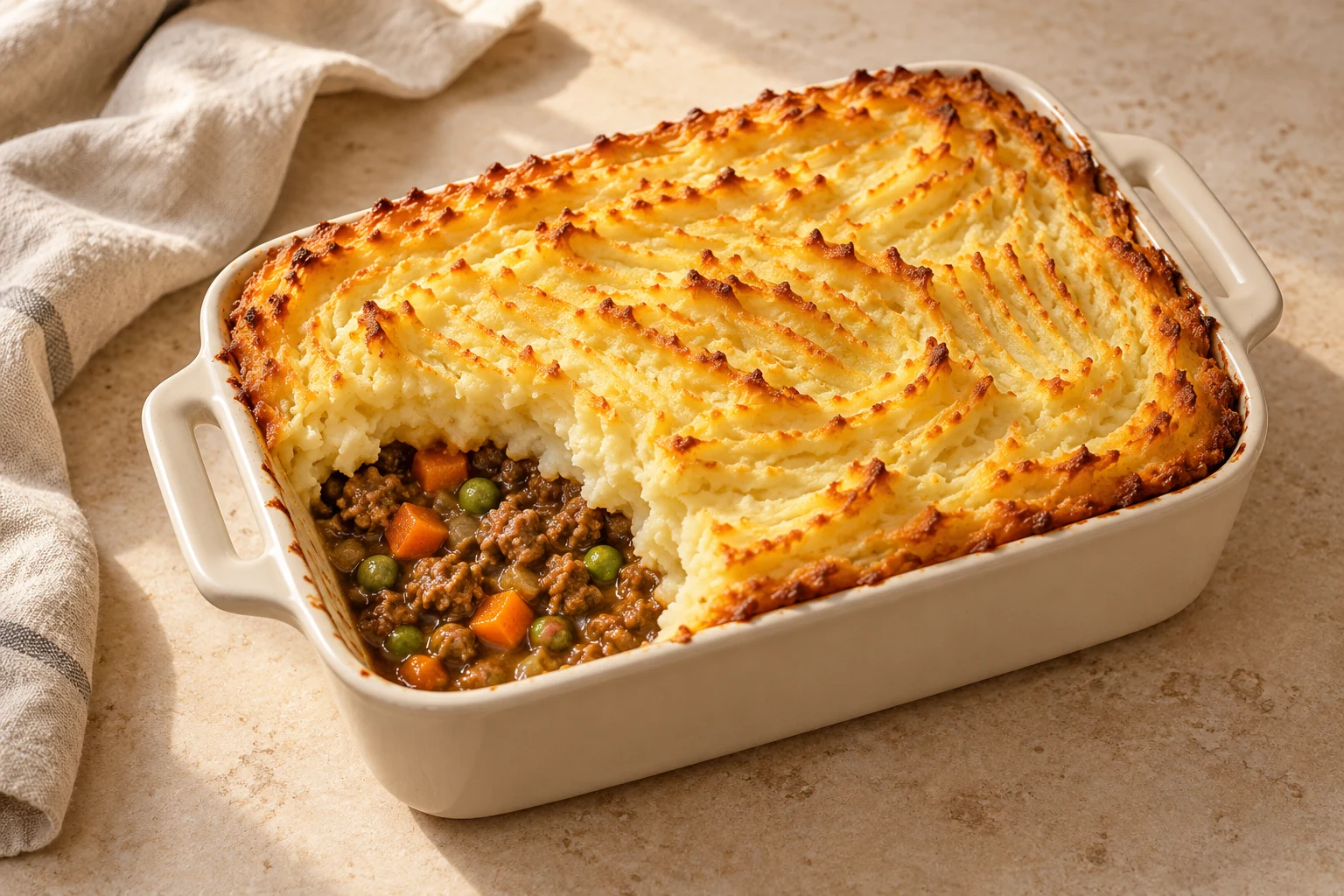
Ground lamb and vegetables in a savory gravy, tucked beneath buttery mashed potatoes and baked until golden at the edges.
Save to your Saucey Space, or keep a bookmark on this device.
A NOTE FROM THE KITCHEN
Lamb makes it shepherd’s pie.
This familiar British-style pie uses ground lamb under mashed potatoes. The closely related beef version is generally called cottage pie. A fairly thick filling helps the potato topping stay in place, and fork marks create little ridges that brown in the oven.
Ready to get started? The ingredients and steps are right below.
LET’S MAKE SOMETHING GOOD
Shepherd’s pie
Sample recipe awaiting kitchen testing. Timings are estimates.
The good part
Check off each step as you cook.
0 of 5 steps complete
BEHIND THE DISH · Britain & Ireland
Shepherd’s pieBeyond the plate.
A browned potato top hides a history of making another meal from meat already cooked. Shepherd’s pie connects nineteenth-century household economy with a familiar British and Irish comfort dish that continues to change.
ORIGINS & EVOLUTION
A potato lid over yesterday’s meat.
A Scottish cookbook published in 1854 gives a recognizable shepherd’s pie: cooked meat, a little gravy, and mashed potatoes browned over the top. It specifies meat of any kind, an instructive difference from the lamb-only definition many cooks use today.
Other nineteenth-century recipes also use cold meat left from an earlier meal. This written evidence supports a history of repurposing cooked food, but it does not prove a single birthplace or inventor. The comforting image of an ancient shepherd carrying the modern casserole is more story than documentation.
CULTURAL IMPACT
A familiar name with changing boundaries.
In common modern usage, shepherd’s pie usually means lamb or mutton, while cottage pie generally means beef. Historical recipes and naming habits are less tidy. The distinction is useful when choosing dinner, without needing to impose it on every old cookbook.
The dish also remains open to thoughtful revision. In West Cork, cookery writer Clodagh McKenna and food historian Regina Sexton developed a version with ground lamb, carrot, tomato paste, and mustard. Their collaboration shows that a well-known comfort dish can be something cooks actively reconsider, rather than simply inherit unchanged.
SOCIAL HISTORY
Economy recorded in the instructions.
The 1854 preparation makes stock from the bones of previously cooked meat before placing the meat beneath its potato covering. That detail gives a concrete picture of household resourcefulness. Both the roast and its bones were made to contribute to another meal.
Our version begins with fresh ground lamb, so it creates its own gravy instead of relying on leftovers. Carrot and peas sit beneath buttery mash, and forked ridges catch color in the oven. The ingredients have changed, but the pleasing arrangement remains: a savory filling protected by a generous, edible potato lid.
What else sounds good?
There’s a little more inspiration in the kitchen.
Back to the recipes