
French · Side · SAMPLE RECIPE
Rustic summer ratatouille
Soft summer vegetables, a generous splash of olive oil, and tomatoes that bring it all together.
Save to your Saucey Space, or keep a bookmark on this device.
A NOTE FROM THE KITCHEN
Give the vegetables their moment.
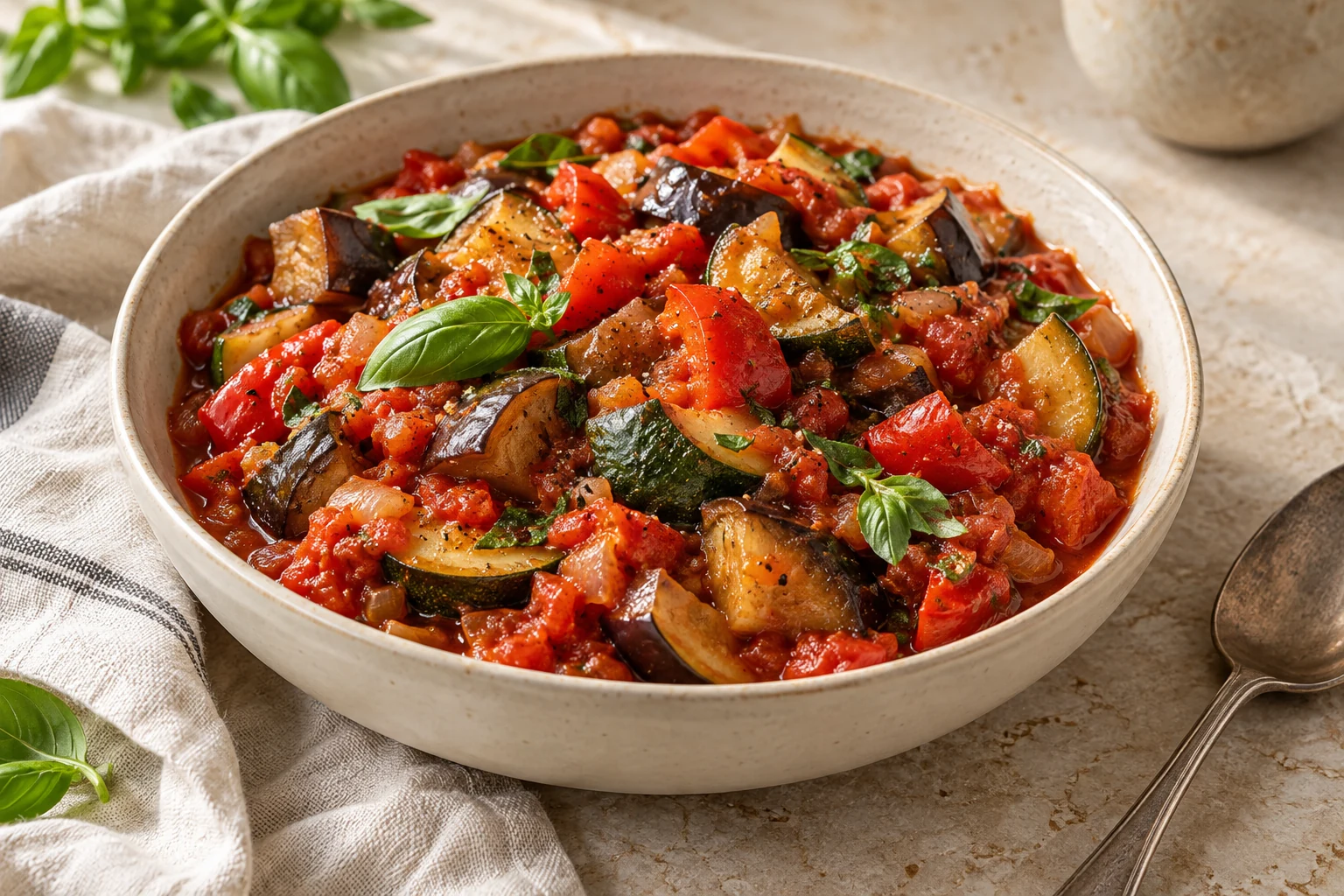
Cook the vegetables in stages so they can take on color before they meet the tomatoes. This rustic version is spoonable and relaxed, lovely alongside bread or a simple main course.
Ready to get started? The ingredients and steps are right below.
LET’S MAKE SOMETHING GOOD
Rustic summer ratatouille
Sample recipe awaiting kitchen testing. Timings are estimates.
The good part
Check off each step as you cook.
0 of 5 steps complete
BEHIND THE DISH · Nice & Provence, France
Rustic summer ratatouilleBeyond the plate.
Ratatouille gives summer vegetables a shared pot without asking them to disappear into it. Its story connects the cooking of southern France with local markets, regional pride, and a remarkably successful journey onto the cinema screen.
ORIGINS & EVOLUTION
Summer vegetables, with a sense of place.
Ratatouille belongs to the vegetable cooking of Provence and is especially associated with Nice, where ratatouille niçoise is part of the local repertoire. Eggplant, zucchini, peppers, tomatoes, onion, garlic, and olive oil form the recognizable combination. A precise inventor or founding moment is harder to establish.
The Niçoise method gives vegetables separate attention before bringing them together. This rustic home version simplifies that approach: we brown the eggplant first, soften onion and pepper, then simmer the vegetables together. It is a contemporary preparation of the regional dish, with chunky vegetables and a spoonable finish.
CULTURAL IMPACT
A local name reaches the big screen.
The 2007 animated film Ratatouille carried the name into a story about ambition, taste, and restaurant cooking in Paris. Its central character, Remy, dreams of becoming a chef. For audiences encountering the word through the film, a southern vegetable dish became the title of a much wider culinary adventure.
Back in Nice, the dish belongs to a living collection of local specialties alongside socca, stuffed vegetables, and pissaladière. That regional setting matters: ratatouille has a particular home even when cooks elsewhere adapt its method or presentation.
SOCIAL HISTORY
Markets and cooks keep a tradition visible.
Nice’s food markets connect local producers with restaurant kitchens. Tomatoes, herbs, olive oil, and other fresh ingredients move through those everyday exchanges. Ratatouille’s mixture of summer produce makes that relationship between growing, shopping, and cooking especially easy to see.
Regional recognition also takes organized work. The Cuisine Nissarde label began in 1995 through a local association and later came under tourism-office management. Its criteria include recipes, ingredient quality, and hospitality. Preserving a dish here involves cooks and civic groups deciding how culinary knowledge will be passed on.
What else sounds good?
There’s a little more inspiration in the kitchen.
Back to the recipes