
Italian · Side · SAMPLE RECIPE
Rosemary focaccia
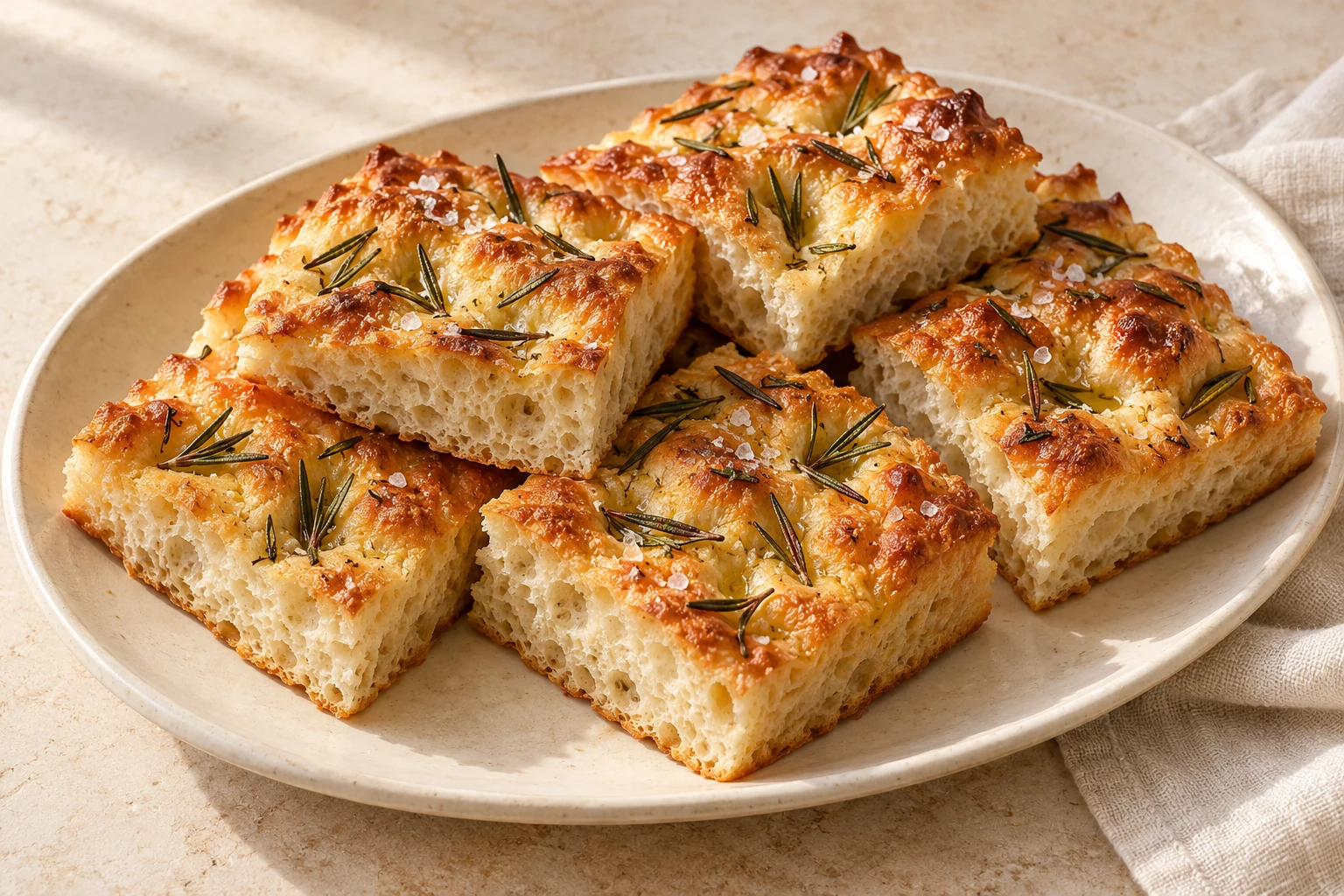
A generous pan of olive-oil bread with an airy center, golden edges and little pockets of rosemary and flaky salt.
Save to your Saucey Space, or keep a bookmark on this device.
A NOTE FROM THE KITCHEN
Let the dough stay soft.
This rosemary-topped pan bread takes inspiration from Ligurian focaccia without claiming to reproduce one town’s exact formula. Its sticky dough needs time and an oiled hand, not a large addition of flour. At the default yield, use a metal 9-by-13-inch pan with sides at least 2 inches high.
Ready to get started? The ingredients and steps are right below.
LET’S MAKE SOMETHING GOOD
Rosemary focaccia
Sample recipe awaiting kitchen testing. Timings are estimates.
The good part
Check off each step as you cook.
0 of 5 steps complete
BEHIND THE DISH · Inspired by Liguria, northwestern Italy
Rosemary focacciaBeyond the plate.
Rosemary focaccia belongs to a broad world of olive-oil breads. Liguria gives that world especially strong local identities, from Genoese bakery slices to Recco’s cheese-filled specialty.
ORIGINS & EVOLUTION
A family of breads, rather than one formula
Genoese focaccia has a long association with the city, although neat stories assigning it one inventor or birthday are difficult to substantiate. Flour, water and olive oil form its foundation; local bakers and households have developed different shapes, textures and toppings.
Rosemary is among the variations recognized in Genoa’s own account of the bread. Our thick rectangular version takes that herb-and-oil combination into a home pan, with a soft dough and two substantial rises. It is not a claim to reproduce every detail of Genoese bakery practice.
CULTURAL IMPACT
Bread that belongs to the whole day
In Genoa, focaccia can accompany morning coffee or cappuccino as well as lunch or an aperitif. That range matters: this is an everyday purchase and familiar habit, not simply a bread reserved for a formal restaurant meal.
Regional names also preserve differences. Recco’s specialty encloses soft cheese between very thin layers, while Sarzana has a sweet festive focaccia with dried fruit and aniseed. Calling all of these simply Italian flatbread would hide much of their local character.
SOCIAL HISTORY
Bakery skills in public life
Ligurian accounts connect Genoese focaccia with sailors and dockworkers, placing it within the food life of a working port. That association is useful context, rather than proof of a single invention for those workers. Historic bakeries and family recipes remain part of its regional story.
Focaccia also provides a reason for communities to gather. Recco’s 2026 festival program paired free portions with markets and music, and included bread-making workshops for primary-school children. Such events make the transmission of craft visible beyond the bakery counter.
What else sounds good?
There’s a little more inspiration in the kitchen.
Back to the recipes