
Italian · Main course · SAMPLE RECIPE
Roasted tomato & garlic rigatoni
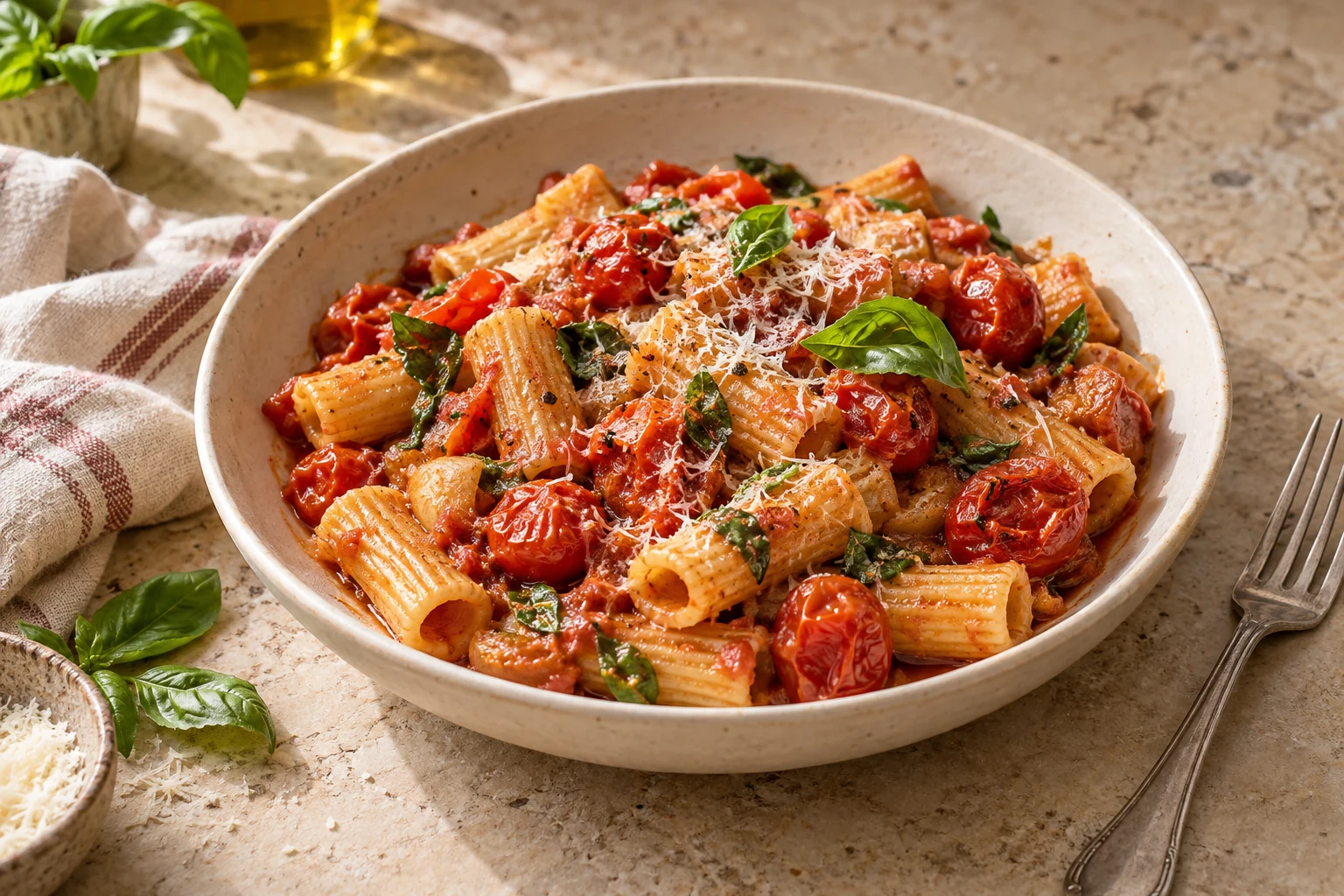
Sweet roasted tomatoes, mellow garlic, and a glossy sauce that finds every little pasta ridge.
Save to your Saucey Space, or keep a bookmark on this device.
A NOTE FROM THE KITCHEN
Small effort. Big, lovely flavor.
Roasting gives the tomatoes time to soften and catch at the edges. Tuck the garlic underneath so it turns mellow. A little starchy pasta water brings everything together.
Ready to get started? The ingredients and steps are right below.
LET’S MAKE SOMETHING GOOD
Roasted tomato & garlic rigatoni
Sample recipe awaiting kitchen testing. Timings are estimates.
The good part
Check off each step as you cook.
0 of 5 steps complete
BEHIND THE DISH · Italy · contemporary home version
Roasted tomato & garlic rigatoniBeyond the plate.
Roasted tomatoes, garlic, and ridged pasta make a familiar combination feel generous. Behind this easy bowl lies a longer story of an American crop, Italian pasta making, and the work that turned seasonal ingredients into everyday food.
ORIGINS & EVOLUTION
A modern roast, an older partnership.
This roasted cherry-tomato rigatoni is a contemporary home recipe within the wider Italian tradition of pasta with tomatoes. There is no documented inventor of this exact combination. Its oven-roasted sauce is our practical interpretation, with softened garlic, basil, and Parmesan brought together around a short pasta shape.
Tomatoes reached Europe from the Americas in the sixteenth century, and their place in Italian cooking developed gradually. By 1839, Ippolito Cavalcanti had published a Neapolitan recipe pairing vermicelli with tomatoes. That is a useful milestone in the written record, rather than proof that nobody had combined them earlier.
CULTURAL IMPACT
A pairing that became an identity.
Pasta and tomato sauce now seem inseparable, but pasta had a long life with cheese and other accompaniments before tomatoes became familiar partners. Their eventual pairing shows how something introduced from elsewhere can become deeply embedded in a region’s cooking.
That identity also reached beyond Italy. Pasta became so closely associated with Italians that names derived from macaroni were applied to Italian emigrants. A simple meal could carry both a sense of belonging and the stereotypes outsiders attached to a community.
SOCIAL HISTORY
The people behind an everyday bowl.
Pasta’s affordability was shaped by equipment as well as taste. Mechanical kneading and pressing increased production around Naples in the seventeenth century. Street sellers served inexpensive portions, making pasta part of urban life beyond wealthy dining rooms.
Tomatoes created another working landscape. By the late nineteenth century, growers and preserving factories around Parma were building a substantial industry. Our fresh-roasted sauce takes a different route, but its familiar ingredients connect to that history of farming, processing, and making food available to more households.
What else sounds good?
There’s a little more inspiration in the kitchen.
Back to the recipes