
Italian · Soup · SAMPLE RECIPE
Tuscan-style ribollita
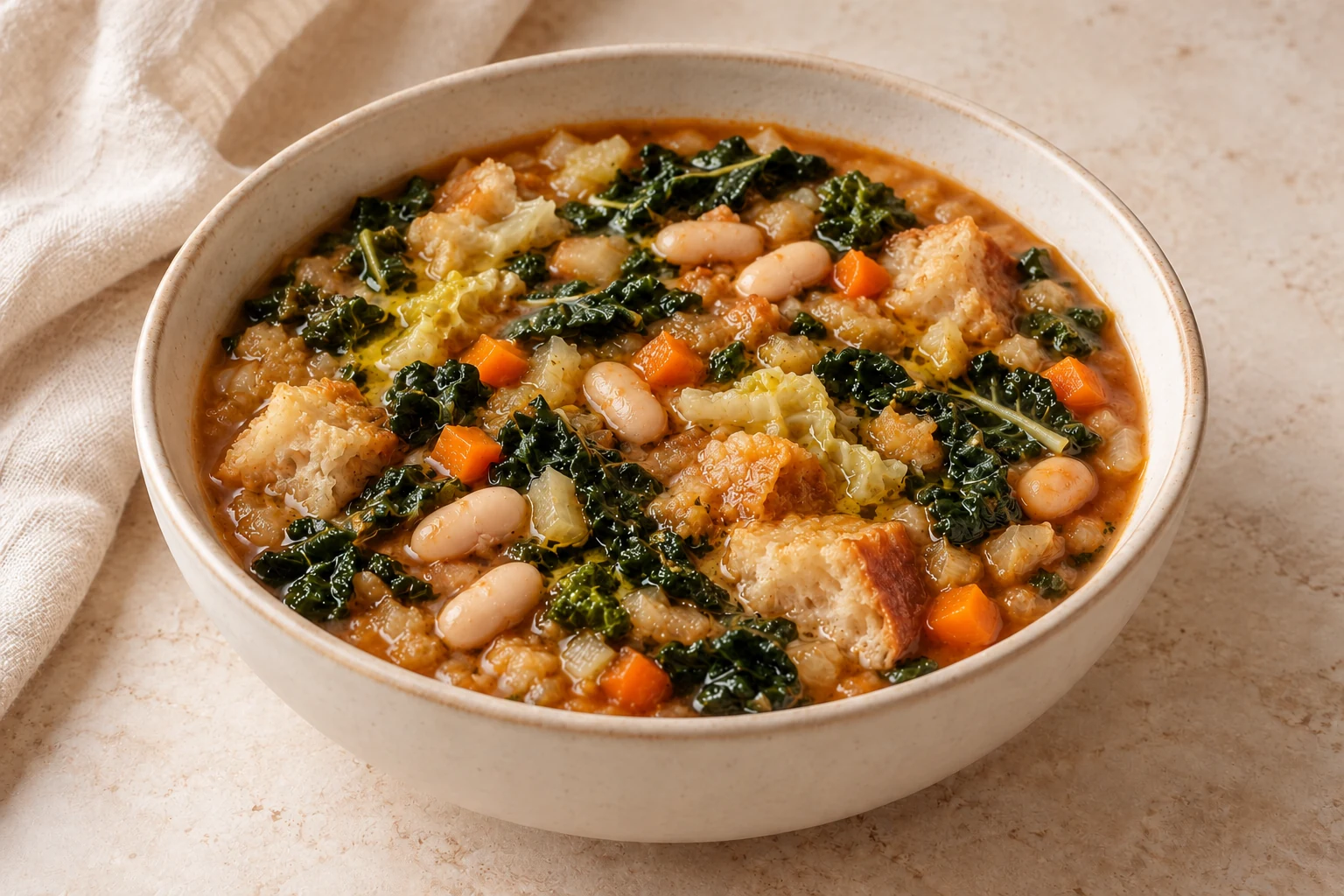
Kale, cabbage, white beans, and rustic bread simmer into a thick, comforting Tuscan-style soup.
Save to your Saucey Space, or keep a bookmark on this device.
A NOTE FROM THE KITCHEN
A same-day version of a reheated classic.
Ribollita takes its name from reheating bread-and-vegetable soup. This practical same-day adaptation uses cooked beans and lets the bread soften in the pot; no overnight wait is needed. Choose sturdy country bread that is dry but free of mold.
Ready to get started? The ingredients and steps are right below.
LET’S MAKE SOMETHING GOOD
Tuscan-style ribollita
Sample recipe awaiting kitchen testing. Timings are estimates.
The good part
Check off each step as you cook.
0 of 4 steps complete
BEHIND THE DISH · Tuscany
Tuscan-style ribollitaBeyond the plate.
Ribollita makes old bread part of the meal again. Its history concerns resourcefulness, rural hardship, and the later celebration of everyday Tuscan cooking.
ORIGINS & EVOLUTION
A second life for bread soup
The name refers to boiling again: a bread-and-vegetable soup returned to the heat becomes thicker as its ingredients mingle. That reheating is central to the usual account of ribollita, although related bread soups can be served on the day they are made.
Bread is structural here, absorbing liquid and changing the body of the soup. Cannellini beans and dark Tuscan kale are familiar companions. Our same-day adaptation softens the bread directly in the pot and uses already-cooked beans; it does not conceal an overnight waiting period.
CULTURAL IMPACT
A regional dish with household variations
Prato’s bread-soup recipe layers bread and vegetables before resting them together, then recommends reheating the following day. This is a useful reminder that a named regional dish can contain different household techniques. Layering, stirring, and the final thickness all shape the eating experience.
Ribollita has also become a recognizable restaurant expression of Tuscany. Its presence on osteria menus and in heritage tourism gives practical home cooking a new audience. The change is worth noticing: food once valued for making ingredients last can later be sold as a taste of place.
SOCIAL HISTORY
Thrift without romanticizing scarcity
The Siena area’s cultural record connects ribollita with mezzadria, the rural sharecropping system, and with the need to recover leftovers. Bread was too valuable to discard casually. Celebrating the resulting skill should not obscure the hunger and economic constraint behind that resourcefulness.
There is also no reason to treat every ingredient change as a failure of tradition. The ability to adjust to what was available helped sustain this cooking. Our cabbage, kale, and bean combination keeps that practical spirit, while the recipe identifies its modern shortcut openly.
What else sounds good?
There’s a little more inspiration in the kitchen.
Back to the recipes