
Italian · Main course · SAMPLE RECIPE
Potato gnocchi with sage butter
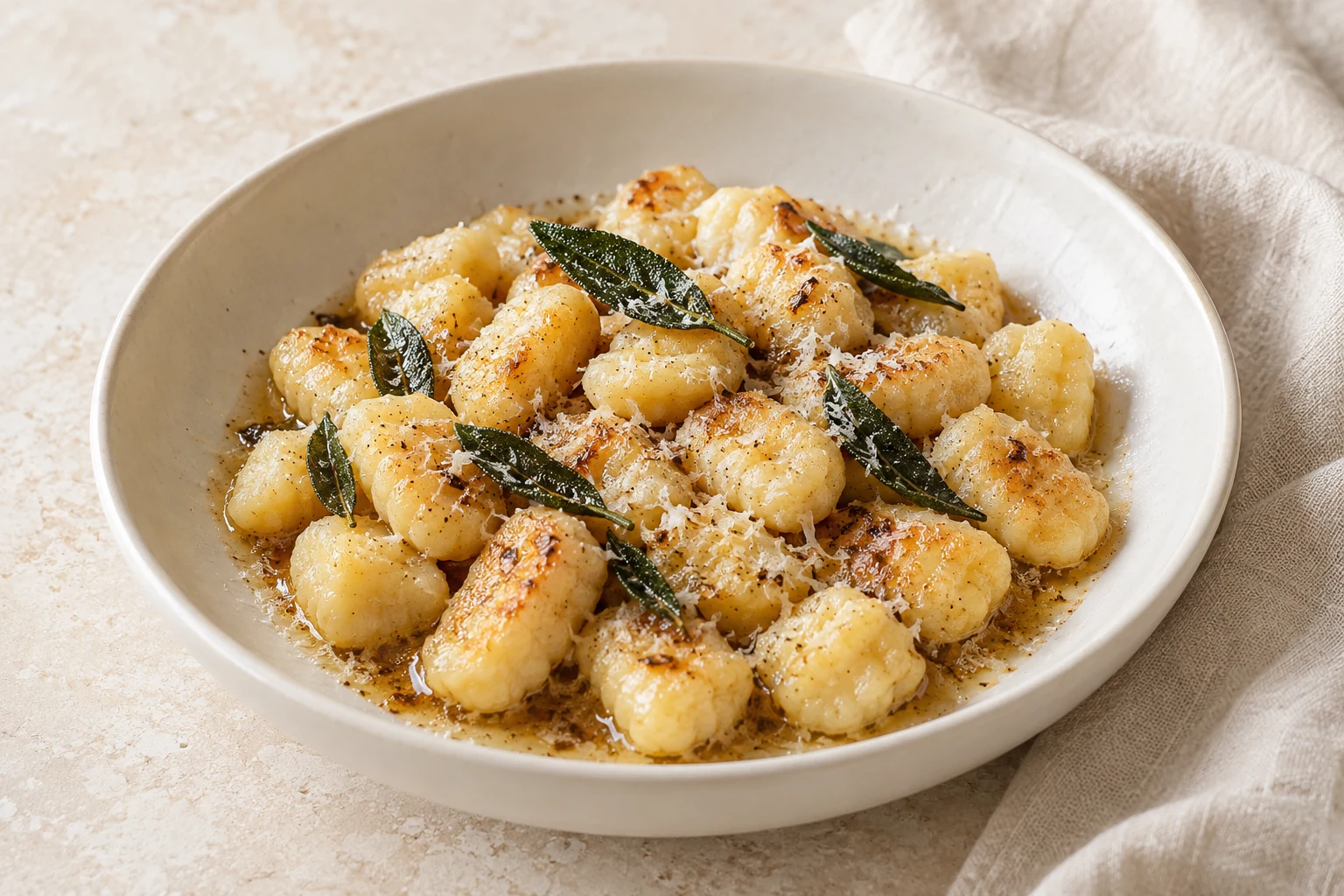
Soft potato dumplings tossed in nutty brown butter with crisp sage and a light scattering of Parmesan.
Save to your Saucey Space, or keep a bookmark on this device.
A NOTE FROM THE KITCHEN
Dry potatoes need less flour.
Baking the potatoes keeps water out of the dough. The timing includes baking, a 15-minute cooling period, shaping, and cooking in batches. Add just enough flour for a soft dough that can be rolled; dense kneading and excess flour make heavier dumplings.
Ready to get started? The ingredients and steps are right below.
LET’S MAKE SOMETHING GOOD
Potato gnocchi with sage butter
Sample recipe awaiting kitchen testing. Timings are estimates.
The good part
Check off each step as you cook.
0 of 5 steps complete
BEHIND THE DISH · Northern Italy, with a Verona connection
Potato gnocchi with sage butterBeyond the plate.
Potato gnocchi turn a handful of ingredients into a meal shaped by hand. Their history reaches from family kitchens to Verona’s exuberant carnival.
ORIGINS & EVOLUTION
One branch of a dumpling family
Gnocchi are a family of dumplings, not a single fixed potato recipe. Verona’s food history includes earlier flour-and-water forms, with potatoes entering the local tradition later. It would therefore be misleading to imagine every older mention of gnocchi as the dumplings pictured here.
Modern potato versions still differ in their use of egg, flour, and cooking method. This recipe bakes the potatoes to limit moisture, then shapes a soft dough with egg. Sage butter provides a simple finish that leaves the texture of the dumplings prominent.
CULTURAL IMPACT
A dumpling becomes a carnival emblem
Verona’s Bacanal del Gnoco gives the dish a spectacular public role. Papà del Gnoco, the festival’s bearded figurehead, carries a giant fork topped with a dumpling. Residents of the San Zeno district elect him, connecting food symbolism with neighborhood participation.
The city preserves several explanations for the carnival’s beginnings. One influential tradition links it to hunger, unrest, and food distributions in the sixteenth century. Those competing accounts deserve to remain visible; the festival is not proof of a single inventor of potato gnocchi.
SOCIAL HISTORY
Hands around a kitchen table
Gnocchi making can also be remembered through ordinary family labor. Cook Lidia Bastianich describes helping her mother and grandmother prepare them for Sunday dinner. Such recollections show how a dish is learned through doing: handling dough, watching its softness, and sharing the shaping.
A carnival lunch and a family work session give the same small dumpling different social lives. Neither makes every household identical. In this kitchen, rolling and ridging are an invitation to take part, and a test dumpling helps the cook adjust before serving everyone.
What else sounds good?
There’s a little more inspiration in the kitchen.
Back to the recipes