
Portuguese · Dessert · SAMPLE RECIPE
Pastéis de nata · Portuguese custard tarts
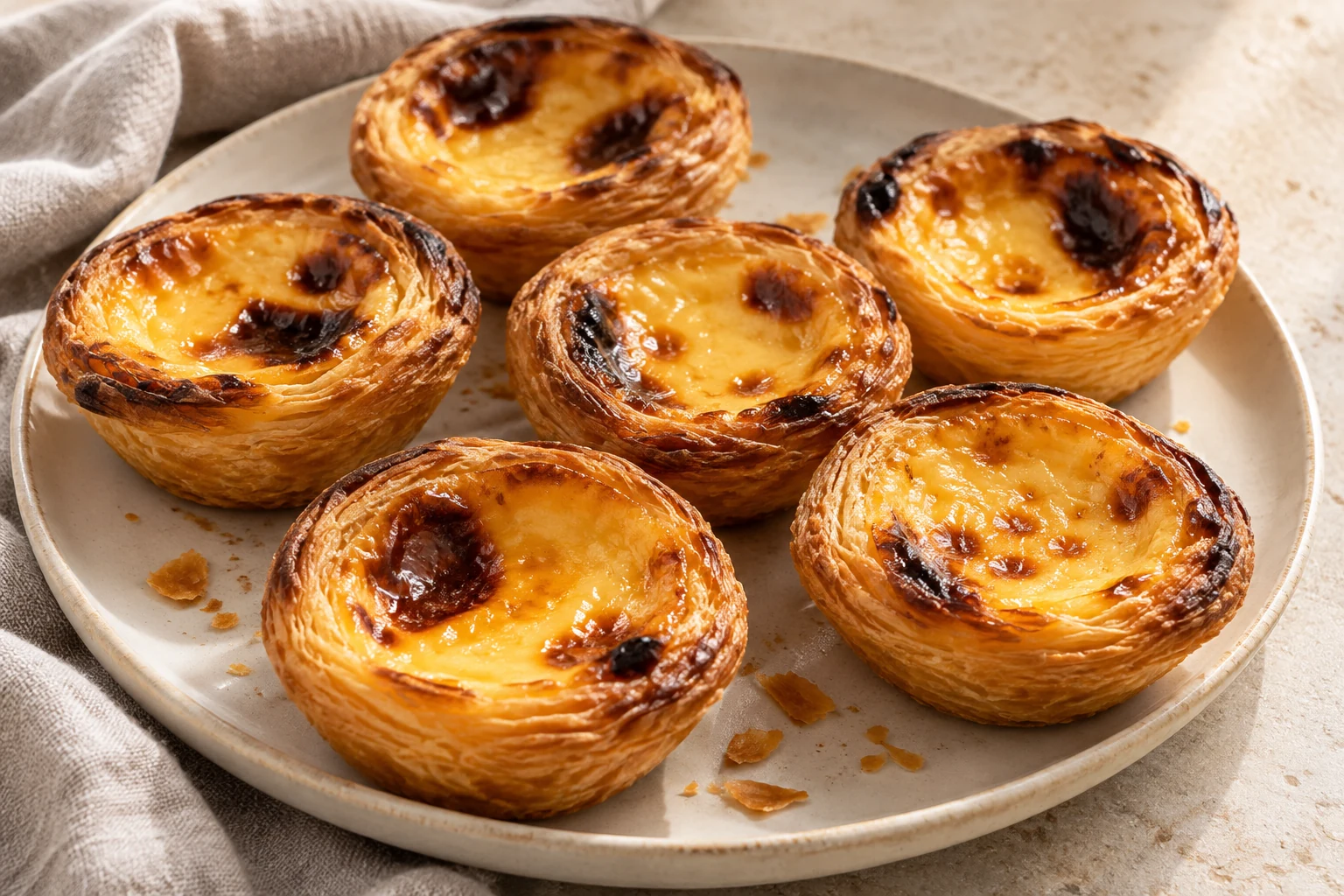
Flaky pastry cups filled with lemon-and-cinnamon-scented egg custard. Their golden, irregularly blistered tops make a lovely little bakery-style treat at home.
Save to your Saucey Space, or keep a bookmark on this device.
A NOTE FROM THE KITCHEN
A home-oven shortcut with ready-made pastry.
The base batch makes twelve tarts in a standard metal muffin pan. Use all-butter puff pastry that is already thawed and cold. This is a home adaptation, not the proprietary Pastéis de Belém recipe. The pan must be rated for 475°F / 245°C; avoid paper liners, silicone molds, and glass at this temperature. Commercial ovens create darker tops than some home ovens can achieve.
Ready to get started? The ingredients and steps are right below.
LET’S MAKE SOMETHING GOOD
Pastéis de nata · Portuguese custard tarts
Sample recipe awaiting kitchen testing. Timings are estimates.
The good part
Check off each step as you cook.
0 of 6 steps complete
BEHIND THE DISH · Portuguese pastelaria traditions
Pastéis de nata · Portuguese custard tartsBeyond the plate.
A small pastry shell carries rich egg custard beneath a naturally mottled surface.
ORIGINS & EVOLUTION
Custard and crisp pastry together.
Pastéis de nata are closely associated with Portuguese pastry shops. A flaky shell and egg-yolk custard form the recognizable combination, with high oven heat producing browned patches on the filling. Pastéis de Belém names a particular bakery’s famous version, not every tart made in this style.
CULTURAL CONTEXT
A little tart, served simply.
These pastries are often eaten warm, when the contrast between crisp layers and soft custard is most noticeable. Cinnamon or sugar may be offered alongside, but neither is needed for every serving. Their color and shape vary with the baker’s molds and oven.
AT THE TABLE
A practical home-oven version.
We use cold all-butter puff pastry and a standard metal muffin pan. Lemon peel and cinnamon perfume the syrup before it is mixed with the milk base and yolks. The result is a home adaptation; its browning will depend on the oven, and the custard must be fully cooked.
What else sounds good?
There’s a little more inspiration in the kitchen.
Back to the recipes