
Brazilian · Snack · SAMPLE RECIPE
Pão de queijo
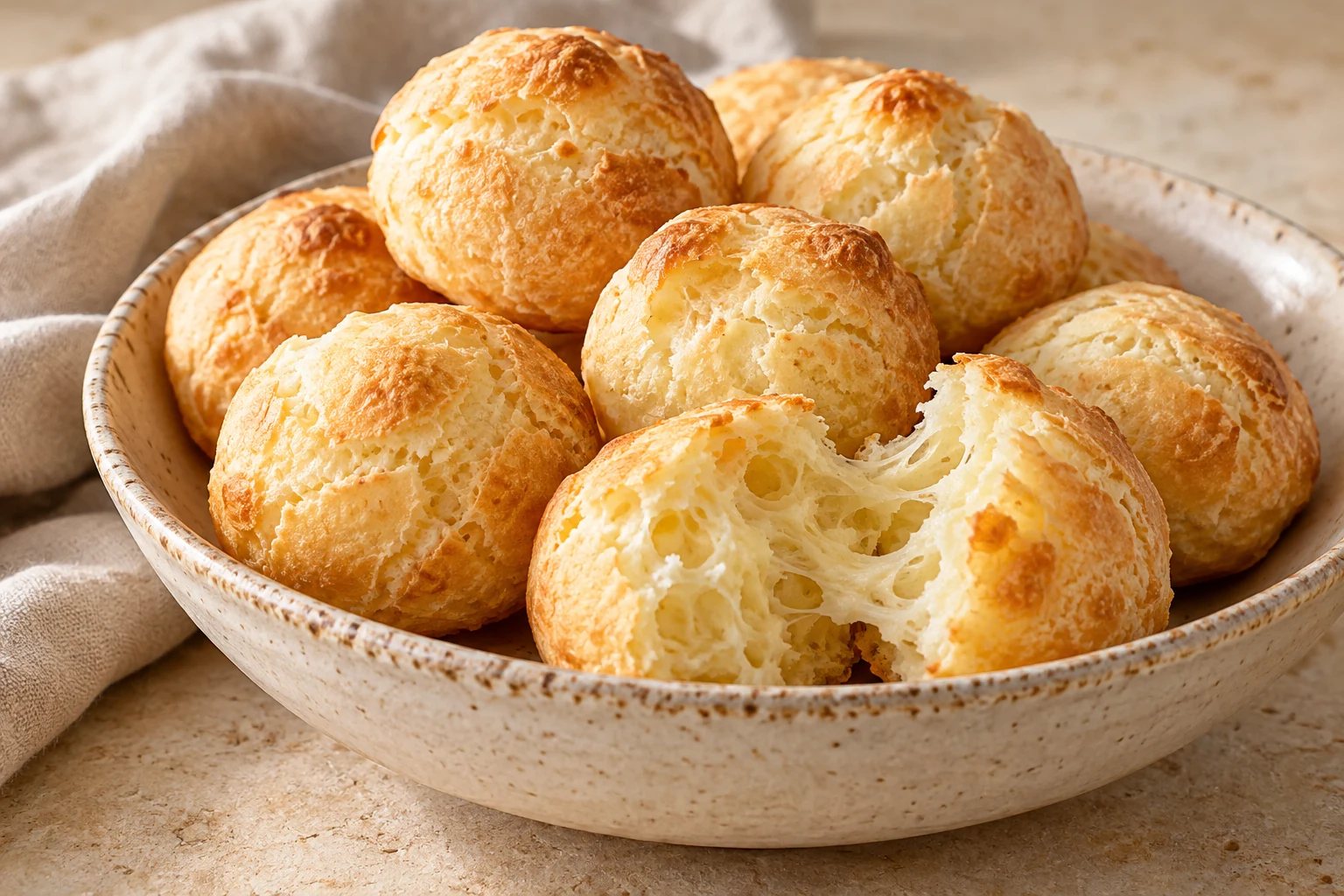
Brazil’s little cheese breads, with lightly golden shells and soft, chewy centers. Best warm, when one has a way of becoming two.
Save to your Saucey Space, or keep a bookmark on this device.
A NOTE FROM THE KITCHEN
Tapioca makes the texture.
Use tapioca starch, sometimes labeled tapioca flour; whole cassava flour behaves differently and will not give the same result. This home version pairs Parmesan with mozzarella. The recipe makes about 18 small rolls, or three per serving.
Ready to get started? The ingredients and steps are right below.
LET’S MAKE SOMETHING GOOD
Pão de queijo
Sample recipe awaiting kitchen testing. Timings are estimates.
The good part
Check off each step as you cook.
0 of 4 steps complete
BEHIND THE DISH · Minas Gerais, Brazil
Pão de queijoBeyond the plate.
Pão de queijo is tied to Minas Gerais, where cheese breads can express welcome as readily as appetite. Its social meaning is better documented than the competing stories about who first made it.
ORIGINS & EVOLUTION
Ingredients have histories; invention is harder to pin down.
Cassava starch and cheese meet in a recipe associated with Minas Gerais. The wider cuisine draws on Indigenous knowledge of local crops, Portuguese food practices, and the work and knowledge of African people brought to Brazil under slavery. That broader history does not establish a single pão de queijo inventor.
Popular accounts sometimes identify enslaved cooks using kitchen remnants as its origin. The evidence is less tidy. Sociologist Mônica Chaves Abdala notes gaps in the written record and connects the development of regional home baking with expanding dairy supplies and farm abundance, complicating a simple story of leftovers and scarcity.
CULTURAL IMPACT
A small bread carries a regional identity.
In Minas, pão de queijo became an emblem of hospitality and everyday belonging, often served with coffee. Its meaning comes from repeated experiences of being offered food at home. As it travels beyond the state and country, it can carry those associations of place and memory with it.
Local recognition can be very concrete. Paracatu registered its way of making pão de queijo as cultural heritage, emphasizing the practice and its historical and symbolic value. The focus on how people make the bread gives the makers a place in the story alongside the finished snack.
SOCIAL HISTORY
Hospitality also supports livelihoods.
Pão de queijo belongs to a wider culture of quitandas, the home baking served at afternoon or evening refreshments. That setting connects kitchen work with welcoming visitors. It also helps explain why a small food can become a strong marker of regional identity without requiring a grand ceremonial occasion.
In Paracatu, local accounts describe small backyard production businesses and efforts to strengthen their production and management skills. Home food and paid work overlap here. Our recipe is an accessible household adaptation, using tapioca starch with Parmesan and mozzarella rather than presenting those cheeses as the traditional Minas combination.
What else sounds good?
There’s a little more inspiration in the kitchen.
Back to the recipes