
Italian · Main course · SAMPLE RECIPE
Orecchiette with broccoli rabe
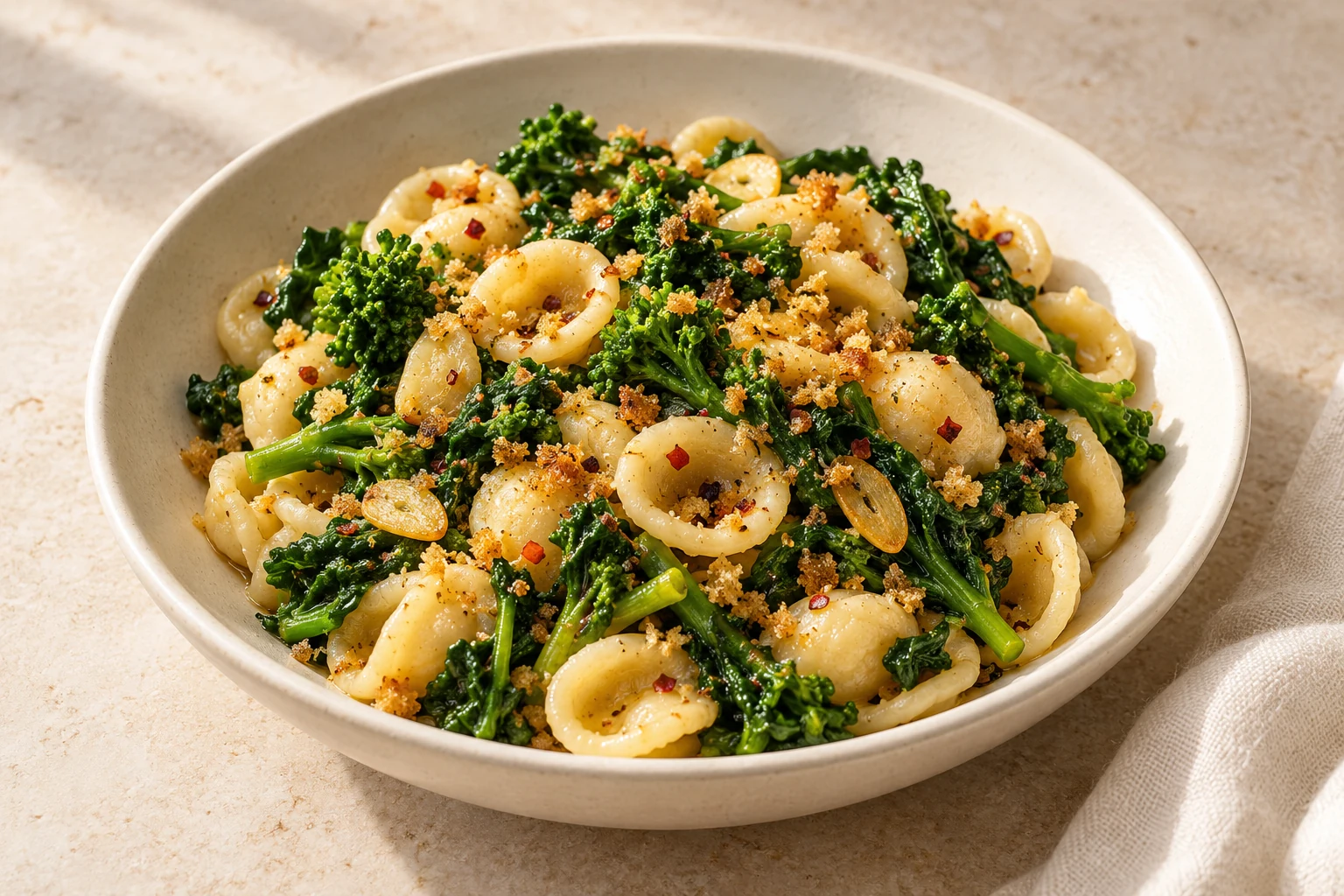
Small pasta ears hold tender, pleasantly bitter greens, garlic, and a savory anchovy dressing, with golden breadcrumbs scattered over the top.
Save to your Saucey Space, or keep a bookmark on this device.
A NOTE FROM THE KITCHEN
Bitter greens and a savory dressing.
This Puglian pasta pairs broccoli rabe with garlic and anchovy. The fish melts into the oil instead of appearing as a topping. We use dried orecchiette for convenience, finish with toasted breadcrumbs, and leave out cheese.
Ready to get started? The ingredients and steps are right below.
LET’S MAKE SOMETHING GOOD
Orecchiette with broccoli rabe
Sample recipe awaiting kitchen testing. Timings are estimates.
The good part
Check off each step as you cook.
0 of 4 steps complete
BEHIND THE DISH · Puglia, especially Bari, Italy
Orecchiette with broccoli rabeBeyond the plate.
Orecchiette with broccoli rabe brings the flavors of Puglia into one bowl: wheat pasta, assertive greens, olive oil, and a savory dressing. Its story also leads into Bari’s streets, where making pasta can be household knowledge, paid work, and a public expression of place.
ORIGINS & EVOLUTION
A shape with a regional home.
The traditional pasta begins with durum-wheat semolina and water, without eggs. Small pieces of dough are dragged and turned to create a hollow with a textured surface. Its strong association with Puglia is clearer than any single, securely established invention story.
Broccoli rabe, or cime di rapa, is a characteristic partner. Garlic, chile, and anchovy make a dressing that balances the greens’ bitterness. Preparations vary in their finishing details; our version includes toasted breadcrumbs and uses purchased dried orecchiette rather than freshly shaped pasta.
CULTURAL IMPACT
Pasta making becomes part of the city’s image.
In Bari’s old town, women shaping orecchiette in the lanes have become an emblem of local food culture. Visitors encounter the making as well as the finished dish. Repeated movements of a knife and thumb become a visible introduction to the region’s cooking.
That attention can reveal work that a restaurant plate otherwise hides. The little hollows are made individually, while the rough surface helps carry the sauce. Watching the process makes the relationship between a pasta’s form and the cook’s movements easier to understand.
SOCIAL HISTORY
A living trade, not only a picturesque scene.
Fresh-pasta making in Bari also supports direct sales from domestic production. In December 2024, the municipality began mapping women working in this trade and announced voluntary training with health authorities and business associations to help producers operate within the relevant rules.
The announcement linked preserving local identity with the pressures of growing tourism. It is a useful reminder that traditional food involves practical questions about income, skills, and working conditions. The people producing it need recognition as workers as well as symbols of heritage.
What else sounds good?
There’s a little more inspiration in the kitchen.
Back to the recipes