
Greek · Main course · SAMPLE RECIPE
Moussaka · eggplant, beef & creamy béchamel
Layers of roasted eggplant, tender potato, and gently spiced beef beneath a golden béchamel topping. A generous Greek bake for a table with time to linger.
Save to your Saucey Space, or keep a bookmark on this device.
A NOTE FROM THE KITCHEN
Build the layers in a deep baking dish.
The base batch fits a 9 × 13-inch / 23 × 33 cm dish at least 2½ inches deep. This home version roasts the vegetables instead of frying them and uses beef. Resting the finished bake helps the layers hold together when lifted onto plates.
Ready to get started? The ingredients and steps are right below.
LET’S MAKE SOMETHING GOOD
Moussaka · eggplant, beef & creamy béchamel
Sample recipe awaiting kitchen testing. Timings are estimates.
The good part
Check off each step as you cook.
0 of 6 steps complete
BEHIND THE DISH · Greece
Moussaka · eggplant, beef & creamy béchamelBeyond the plate.
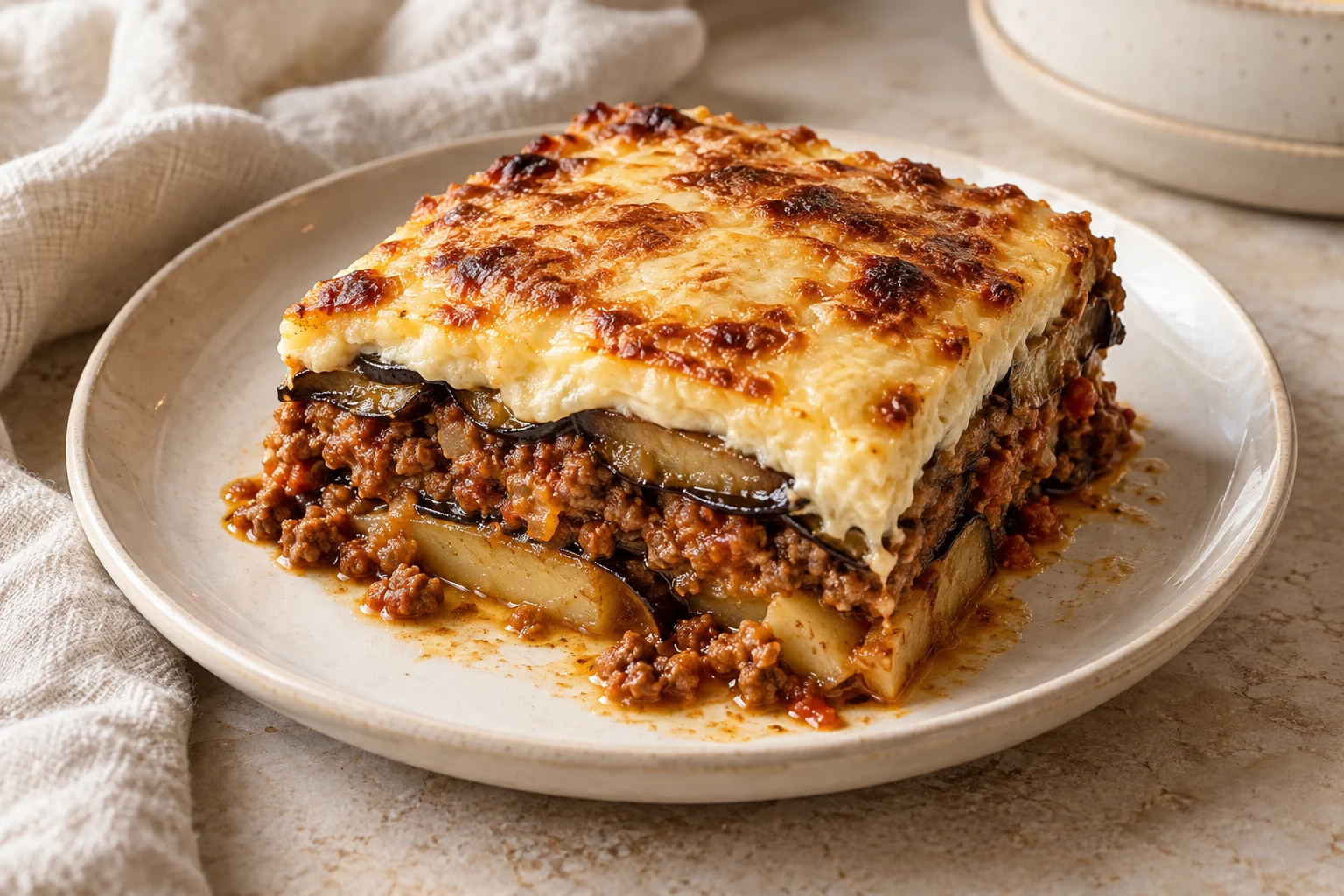
A browned creamy top gives way to vegetables and a warmly seasoned meat sauce.
ORIGINS & EVOLUTION
The familiar Greek layered bake.
Greek moussaka commonly layers eggplant, potato, and minced meat beneath béchamel. The name belongs to a wider family of regional preparations, so this layered form should not be treated as the only dish called moussaka.
CULTURAL CONTEXT
A centerpiece from the oven.
Moussaka is familiar in Greek home cooking and tavernas. It rewards preparation in stages: vegetables, meat sauce, and topping become a complete dish after their final time in the oven.
AT THE TABLE
Our roasted-vegetable version.
Here, the eggplant and potatoes roast while the beef sauce simmers. A measured resting period allows the creamy top and lower layers to settle. The first serving may be less tidy than the photograph, and that is perfectly normal.
What else sounds good?
There’s a little more inspiration in the kitchen.
Back to the recipes