
American · Drinks · SAMPLE RECIPE
Classic Moscow mule
Vodka, fresh lime, and lively ginger beer meet over ice in a crisp, spicy highball that takes only a few minutes to build.
Save to your Saucey Space, or keep a bookmark on this device.
A NOTE FROM THE KITCHEN
Let the ginger beer bring the spice.
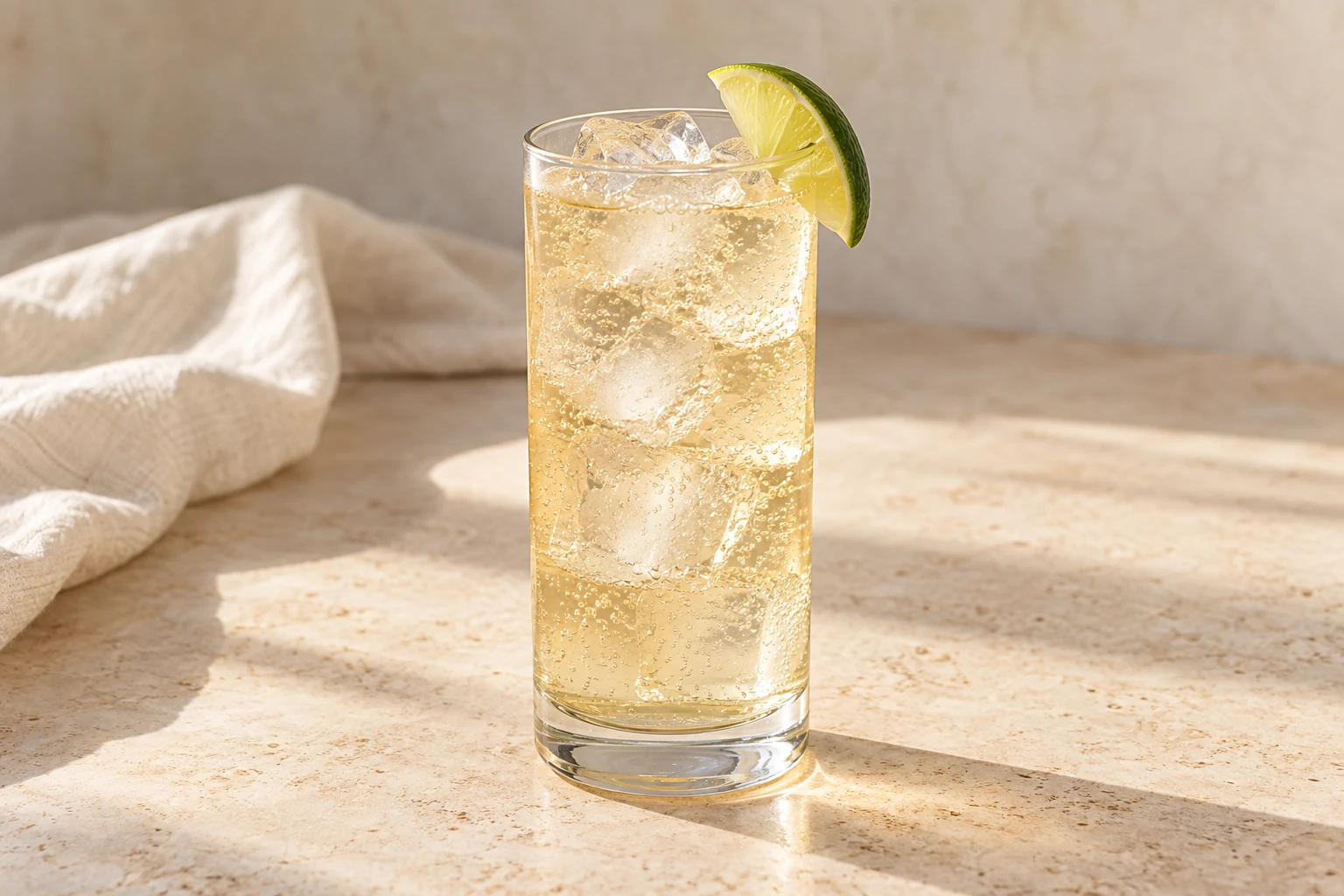
Contains alcohol from vodka, even though the ginger beer specified here is non-alcoholic. This American cocktail is built directly in the serving glass. A clear tall glass makes it easy to see the ice and bubbles.
Ready to get started? The ingredients and steps are right below.
LET’S MAKE SOMETHING GOOD
Classic Moscow mule
Sample recipe awaiting kitchen testing. Timings are estimates. Contains alcohol.
The good part
Check off each step as you cook.
0 of 3 steps complete
BEHIND THE DISH · United States
Classic Moscow muleBeyond the plate.
Despite its name, the Moscow mule belongs to American cocktail history. Vodka, ginger beer, and lime became a recognizable combination through bar service and promotion, with the copper mug eventually becoming almost as familiar as the drink itself.
ORIGINS & EVOLUTION
A business story with competing tellings.
The usual account places the drink around 1941 and connects Jack Morgan’s Cock ’n Bull business with John Martin’s efforts to sell Smirnoff vodka. Some versions locate the crucial meeting in Los Angeles, others in New York. The precise room and first mixer remain uncertain.
Cock ’n Bull bartender Wes Price also claimed authorship, saying he combined stock that needed selling. A 1955 account instead described Morgan asking his bartending team to find an appealing partner for ginger beer. These stories agree more readily about commercial motives than about who deserves the invention credit.
CULTURAL IMPACT
The serving vessel becomes an advertisement.
Martin later recalled promoting the drink with instant photographs. He would offer a bartender a taste, photograph the encounter, and carry another print to the next bar. In that account, seeing another bartender try the drink helped make an unfamiliar product feel less of a gamble.
The copper mug gave that promotion a recognizable object. Stories about who supplied the original mugs conflict. The accessory cannot settle the origin question, but it illustrates how presentation helps customers identify a drink before knowing its ingredients.
SOCIAL HISTORY
Changing habits behind an American bar.
In the 1955 account, vodka seller Rudolph Kunett discussed Americans’ suspicions about vodka and praised its usefulness as a mixer. His comments are a sales perspective, rather than neutral advice, but they reveal the work of persuading drinkers to try a spirit through a familiar flavored beverage.
The construction works at home: measure vodka and lime over ice, then add cold ginger beer. Our version uses a tall glass and explicitly non-alcoholic ginger beer; vodka still makes the finished drink alcoholic. Gentle mixing keeps the bubbles lively.
What else sounds good?
There’s a little more inspiration in the kitchen.
Back to the recipes