
Moroccan · Main course · SAMPLE RECIPE
Vegetable & chickpea tagine
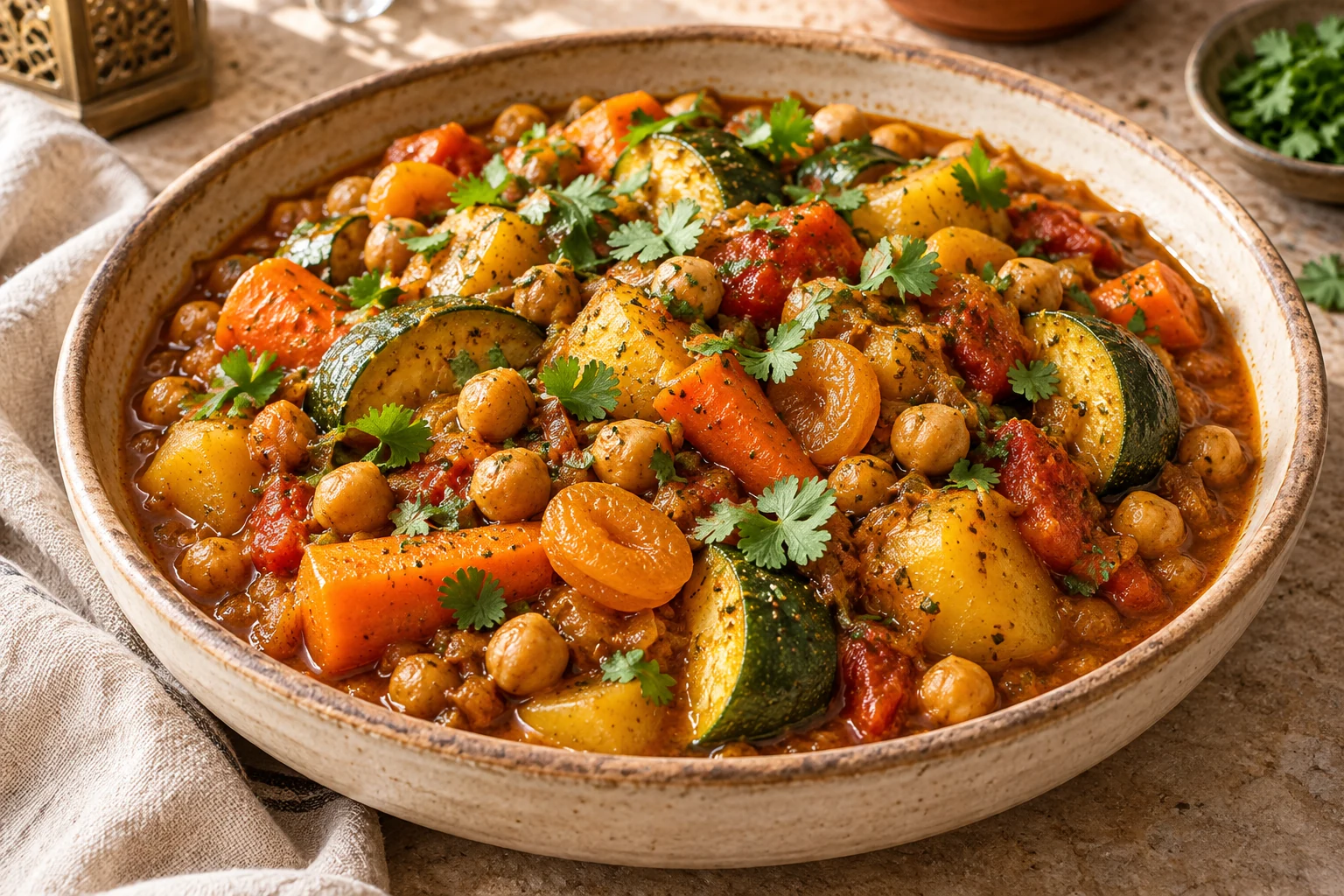
A vegetable-filled taste of Morocco, with chickpeas, warming spices, and a few sweet apricots. Bring a spoon and some bread for the broth.
Save to your Saucey Space, or keep a bookmark on this device.
A NOTE FROM THE KITCHEN
A gentle simmer brings it together.
A tagine is both a cooking vessel and a slowly cooked dish. This vegetable-and-chickpea home version works in a heavy lidded pot. Add the firmer vegetables first so the zucchini stays in generous pieces rather than disappearing into the broth.
Ready to get started? The ingredients and steps are right below.
LET’S MAKE SOMETHING GOOD
Vegetable & chickpea tagine
Sample recipe awaiting kitchen testing. Timings are estimates.
The good part
Check off each step as you cook.
0 of 4 steps complete
BEHIND THE DISH · Morocco
Vegetable & chickpea tagineBeyond the plate.
A tagine is a cooking vessel and a family of dishes, not one fixed stew. Our vegetable-and-chickpea version draws on that broad Moroccan tradition, in which the pot, the sauce, and the way a meal is shared all matter.
ORIGINS & EVOLUTION
A dish named for its vessel.
The familiar earthenware tagine has a shallow base and a tall, conical cover. The same word describes preparations cooked in it. That link between object and meal is a useful starting point: tagine names a way of cooking as much as a list of ingredients.
Moroccan tagines can include meat, poultry, fish, or vegetables, with different spices and accompaniments. Nuts and dried fruits appear in some combinations. Such variety makes a single origin story for every tagine unhelpful, and our chickpea, vegetable, and apricot mixture should not be mistaken for one historically fixed national recipe.
CULTURAL IMPACT
One recognizable pot, many local kitchens.
Morocco’s cooking reflects Amazigh, Arab-Andalusian, and Jewish culinary traditions. The variety of tagines belongs within that wider history. A recognizable vessel can bring these different dishes under a shared name without making their regional or household distinctions disappear.
Modern practice also extends beyond clay cookware. Moroccan recipes may give instructions for a conventional pot or pressure cooker as well as a tagine. The dish’s identity can survive a change of equipment, even though cooking time, liquid, and the resulting sauce need attention.
SOCIAL HISTORY
Bread connects the diners to the dish.
A common way to serve a tagine is communally, with bread used to take food and sauce from the shared vessel or platter. The bread is therefore part of the meal’s practical arrangement. Serving and eating remain connected rather than becoming two completely separate stages.
That social setting also depends on the knowledge of home cooks: how vegetables are arranged, when tenderness is right, and how much sauce to leave. Our adaptation uses a heavy lidded pot and adds the zucchini later than the carrots and potato. It can be served with bread, or portioned into bowls as suggested here.
What else sounds good?
There’s a little more inspiration in the kitchen.
Back to the recipes