
Japanese · Dessert · SAMPLE RECIPE
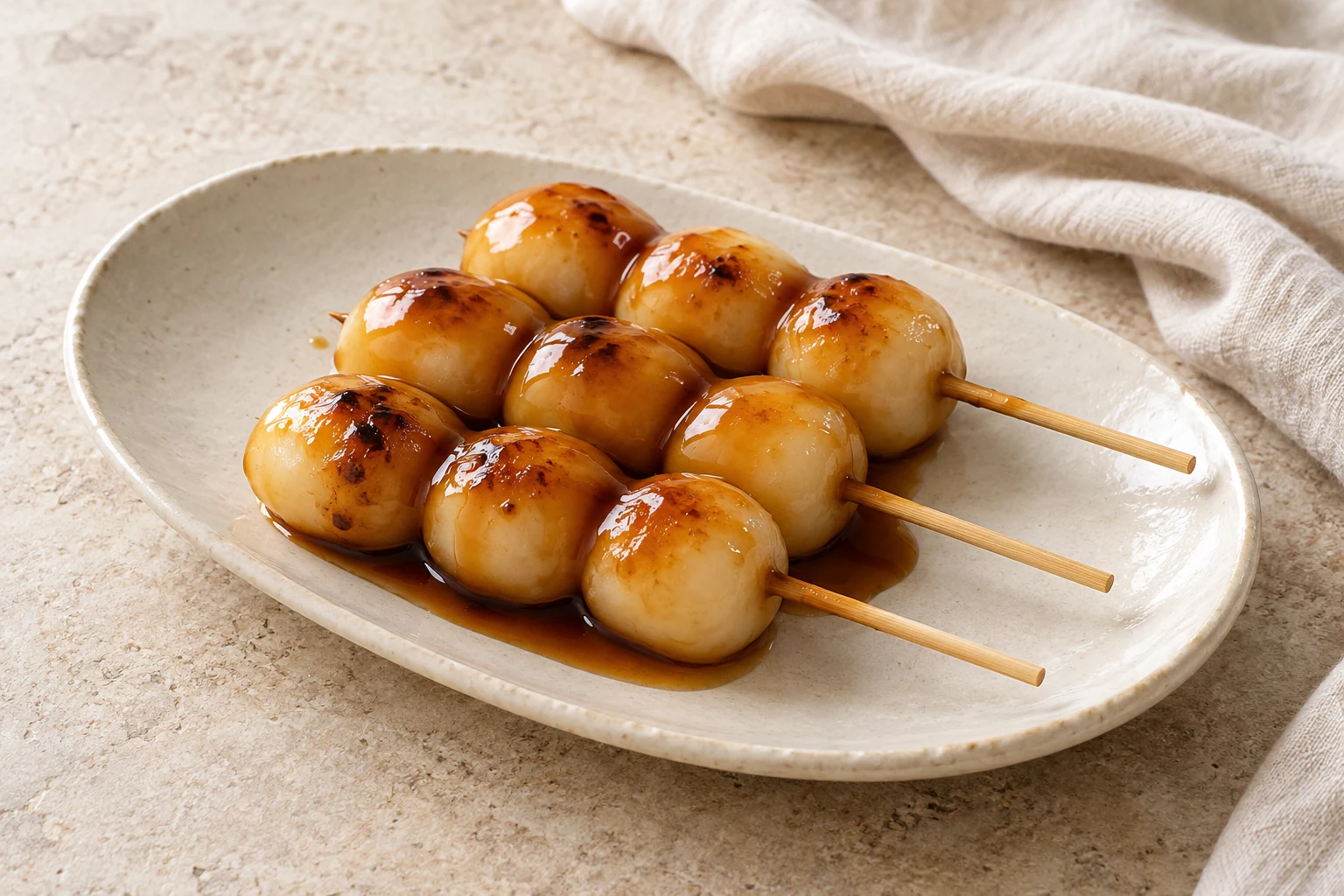
Mitarashi dango · rice dumplings in sweet soy glaze
Springy rice-flour dumplings brushed with a glossy, gently salty-sweet sauce. A small Japanese sweet with a lovely chewy bite.
Save to your Saucey Space, or keep a bookmark on this device.
A NOTE FROM THE KITCHEN
Two rice flours give a balanced texture.
Use shiratamako glutinous rice flour and joshinko non-glutinous rice flour from a Japanese grocer. Ordinary wheat flour is not a substitute. The base batch makes about eight small skewers, with four dumplings on each. Short bamboo skewers are useful for serving.
Ready to get started? The ingredients and steps are right below.
LET’S MAKE SOMETHING GOOD
Mitarashi dango · rice dumplings in sweet soy glaze
Sample recipe awaiting kitchen testing. Timings are estimates.
The good part
Check off each step as you cook.
0 of 5 steps complete
BEHIND THE DISH · Japanese rice-flour sweets
Mitarashi dango · rice dumplings in sweet soy glazeBeyond the plate.
Springy dumplings and a glossy soy glaze bring sweetness and savoriness into the same small bite.
ORIGINS & EVOLUTION
One form of dango.
Dango are rice-flour dumplings with many regional and seasonal forms. Mitarashi dango is recognized by its sweet soy-based glaze, often served on a short skewer. It is distinct from filled mochi sweets such as daifuku.
CULTURAL CONTEXT
A small treat to enjoy freshly made.
Dango can be found at sweet shops and snack stalls. The texture matters as much as the sauce: the dumplings should have a yielding, springy chew, and their softness changes as they stand.
AT THE TABLE
A blend of two rice flours.
Our dough combines shiratamako and joshinko for a balance of softness and structure. The dumplings are boiled, briefly cooled, and optionally toasted before glazing. A thin coating is enough to carry the sauce through each bite.
What else sounds good?
There’s a little more inspiration in the kitchen.
Back to the recipes