
Japanese · Main course · SAMPLE RECIPE
Miso & ginger roasted salmon
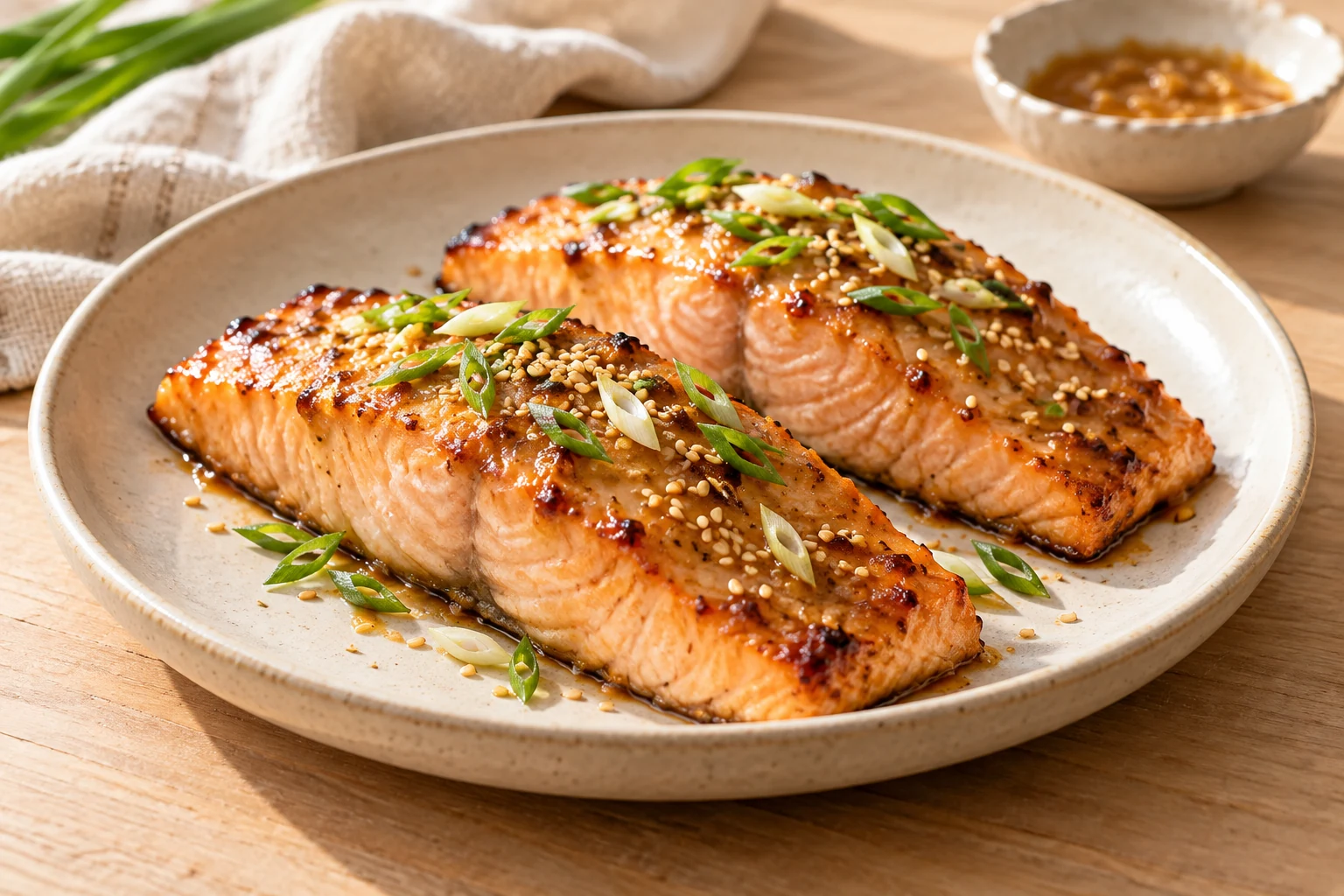
White miso, ginger, and a touch of honey give this salmon a savory golden coat. A short chilled marinade makes room for a little extra flavor.
Save to your Saucey Space, or keep a bookmark on this device.
A NOTE FROM THE KITCHEN
A thin coat is plenty.
Miso is concentrated and salty, so the fish needs no extra salt here. This Japanese-inspired preparation uses a thin layer of marinade to flavor the salmon while avoiding a heavy crust.
Ready to get started? The ingredients and steps are right below.
LET’S MAKE SOMETHING GOOD
Miso & ginger roasted salmon
Sample recipe awaiting kitchen testing. Timings are estimates.
The good part
Check off each step as you cook.
0 of 4 steps complete
BEHIND THE DISH · Japan · Kyoto connections
Miso & ginger roasted salmonBeyond the plate.
Our miso-ginger salmon is a modern preparation inspired by Japanese miso-seasoned fish. The deeper history belongs to fermentation, regional tastes, and the makers who turned a few agricultural ingredients into a remarkably varied family of seasonings.
ORIGINS & EVOLUTION
Fermentation does the patient work.
Miso is made with soybeans, salt, and koji, which may be prepared from rice, barley, or soybeans. Differences in ingredients, proportions, and aging create distinct flavors. In medieval Japan, increasing soybean production helped miso-making extend beyond temples into village households.
Kyoto’s sweet white miso offers one reference point for fish preparation. Saikyo-zuke, fish marinated in sweet miso, remains part of the city’s food trade. Our recipe uses white miso with ginger, honey, and vinegar for a short refrigerated marinade, without claiming to recreate an old Kyoto formula.
CULTURAL IMPACT
A seasoning can carry a place.
Miso is not one uniform taste. Kyoto’s pale, sweet Saikyo style sits alongside the stronger profiles of other regional misos. Its generous use of rice and relatively gentle saltiness connected it with the refined cooking of the old capital.
Sweet white miso also had a place in palace ceremonies and rituals, where it was valued as a delicacy and flavoring. That setting helps explain why miso can signify far more than a bowl of soup. Its character can organize an entire dish, including the savory coating on this salmon.
SOCIAL HISTORY
From household making to the market counter.
Miso’s history crosses different settings: temple production, village kitchens, specialist makers, and formal dining. These are connected traditions, but they should not be collapsed into one ancient recipe. A modern tub of white miso gives a home cook access to work that happened well before dinner began.
At Kyoto’s Nishiki Market, Tsunori sells sweet-miso-marinated fish year-round, with particular enthusiasm for winter fish. That is a living relationship between a seasoning, a seller, and the season. Our quick salmon preparation borrows the pairing while following its own timetable.
What else sounds good?
There’s a little more inspiration in the kitchen.
Back to the recipes