
Italian · Soup · SAMPLE RECIPE
Vegetable & cannellini minestrone
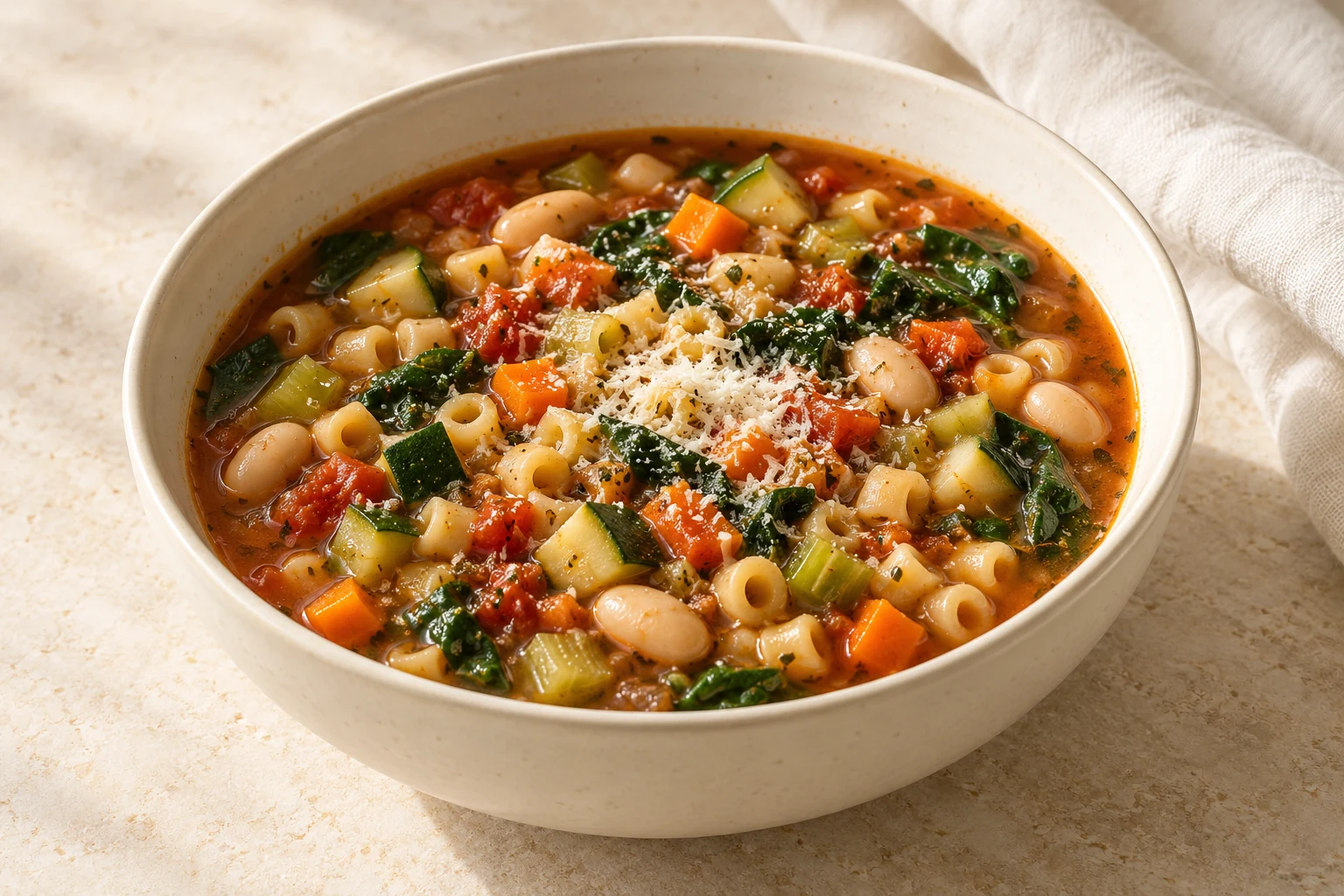
A generous vegetable soup with white beans, little pasta tubes, and a savory tomato broth finished with Parmesan.
Save to your Saucey Space, or keep a bookmark on this device.
A NOTE FROM THE KITCHEN
A seasonal soup with room to vary.
Minestrone has many regional and household forms. This brothy home version combines zucchini and spinach with canned beans and ditalini. Cut the firm vegetables small so they become tender before the pasta goes in.
Ready to get started? The ingredients and steps are right below.
LET’S MAKE SOMETHING GOOD
Vegetable & cannellini minestrone
Sample recipe awaiting kitchen testing. Timings are estimates.
The good part
Check off each step as you cook.
0 of 4 steps complete
BEHIND THE DISH · Italy, with many regional versions
Vegetable & cannellini minestroneBeyond the plate.
Minestrone is better understood as a changing conversation between vegetables, beans, and the pantry than as one national recipe with an unalterable ingredient list.
ORIGINS & EVOLUTION
A tradition that makes room
Pellegrino Artusi’s minestrone entry explicitly allowed cooks to adapt it to local tastes and available vegetables. His recollection of ordering it in a Livorno trattoria in 1855 also places the soup beyond the private kitchen. Neither detail establishes a single birthplace.
The useful continuity is a way of cooking: combine several vegetables, give firmer ones enough time, and add a substantial element such as beans or pasta. Our version uses canned cannellini and ditalini for a comparatively quick, brothy meal.
CULTURAL IMPACT
The region changes the bowl
Genoese minestrone illustrates how a regional identity can emerge from that flexible framework. Genoa’s municipal recipe adds pesto after the pasta has cooked. The basil mixture changes the aroma of the entire pot, making the finishing step as distinctive as the vegetables.
Local pasta choices matter too. Genoese cooks use small shapes including bricchetti, slender little pieces suited to the spoon. Our ditalini version does not claim to reproduce that preparation: it belongs to the wider soup family, with a different balance of broth and vegetables.
SOCIAL HISTORY
Season, memory, and everyday effort
In a Genoese cook’s account, making minestrone for her son becomes a way to pass on the flavors she remembers from childhood. That personal testimony gives the soup a social history beyond a list of nutrients: familiar smells can connect generations through an ordinary meal.
Vegetable soup also requires real kitchen work, especially washing and chopping. Seasonal substitutions change both the flavor and that work. This recipe uses prepared stock and cooked beans to make the task more manageable, while still leaving the vegetables distinct rather than blending them away.
What else sounds good?
There’s a little more inspiration in the kitchen.
Back to the recipes