Mexican · Drinks · SAMPLE RECIPE
Cinnamon Mexican hot chocolate
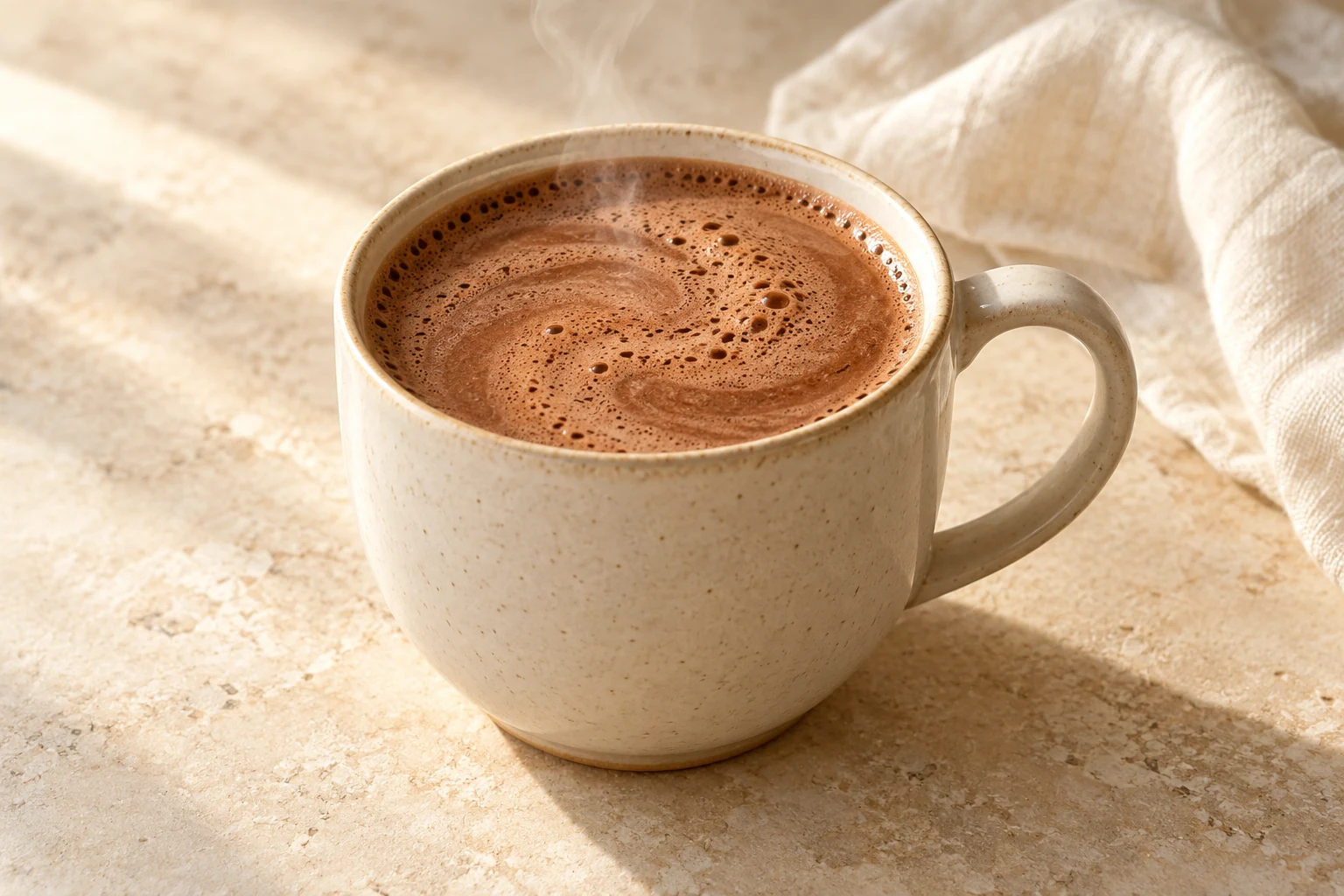
A warm, lightly frothy mug of milk, dark chocolate, cocoa, and cinnamon with an adjustable touch of sweetness.
Save to your Saucey Space, or keep a bookmark on this device.
A NOTE FROM THE KITCHEN
A simple Mexican-inspired mug.
Cocoa powder and dark chocolate make this an accessible adaptation of cinnamon-scented drinking chocolate. It makes about 2 cups and is not a reconstruction of an ancient cacao drink. A brief whisk at the end gives it a soft cap of bubbles.
Ready to get started? The ingredients and steps are right below.
LET’S MAKE SOMETHING GOOD
Cinnamon Mexican hot chocolate
Sample recipe awaiting kitchen testing. Timings are estimates.
The good part
Check off each step as you cook.
0 of 3 steps complete
BEHIND THE DISH · Mexico
Cinnamon Mexican hot chocolateBeyond the plate.
Mexican drinking chocolate carries a long history of cacao preparation, but today’s cinnamon-scented mug is one expression of it. Ingredients, tools, and occasions have changed across centuries, while the pleasure of a carefully worked foam remains a recurring theme.
ORIGINS & EVOLUTION
Cacao drinks precede the modern mug.
Ancient Maya communities prepared cacao as a drink, with ingredients and seasonings that differed from modern hot chocolate. Surviving images show liquid poured from one vessel into another to create froth. The foam was an intended feature, created through technique rather than a whipped-cream topping.
Colonial exchange brought further combinations. Cinnamon joined a world of cacao seasonings that already included vanilla, flowers, and chile; sugar and milk became part of later preparations. Our cocoa powder, dark chocolate, milk, and cinnamon are a convenient modern adaptation, not an unchanged ancient formula.
CULTURAL IMPACT
Tools give chocolate its character.
The molinillo is a wooden beater used to mix chocolate and raise foam by turning its handle between the palms. It belongs to a larger material culture of preparation and serving: grinding stones, gourds, chocolate pots, and cups all shaped the experience of the drink.
Specialized serving vessels could also express status and taste. Silver, copper, and porcelain chocolate equipment joined older gourd vessels over time. The history therefore includes the people who ground the cacao and made the utensils, as well as the people who enjoyed the finished cup.
SOCIAL HISTORY
A cup enters everyday routines.
An observer visiting New Spain in 1763 described chocolate consumed in the morning and afternoon by people in many occupations, including servants and muleteers. His account places it in repeated daily routines. It offers a broader social picture than imagining cacao only as a royal luxury.
Memories of mid-twentieth-century Pichucalco in Chiapas describe chocolate at merienda, the afternoon meal, accompanied by breads and pastries. Some drinkers preferred bitter cacao tablets dissolved in water or milk; others chose sweet chocolate. Personal preference was already part of deciding what belonged in the cup.
What else sounds good?
There’s a little more inspiration in the kitchen.
Back to the recipes