
Mexican · Drinks · SAMPLE RECIPE
Cinnamon rice horchata
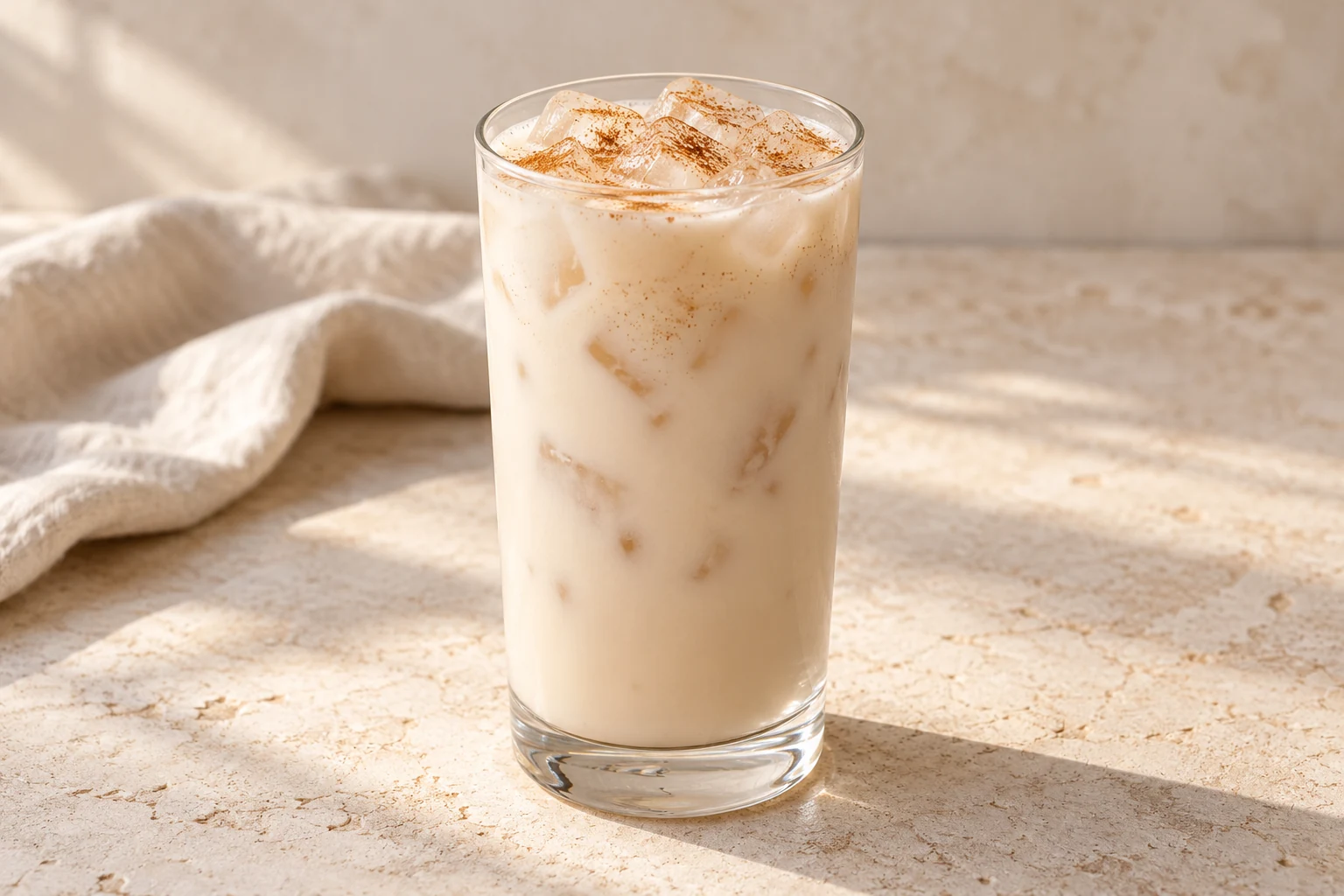
A cool rice drink with delicate cinnamon, gentle sweetness, and a splash of milk for a creamy finish.
Save to your Saucey Space, or keep a bookmark on this device.
A NOTE FROM THE KITCHEN
Give the rice a cold overnight soak.
The 8-hour soaking time is included in the chilling time. Keep the rice in the refrigerator throughout the soak. This milk-enriched version makes roughly 4 cups before ice; the final yield depends on how thoroughly you strain it.
Ready to get started? The ingredients and steps are right below.
LET’S MAKE SOMETHING GOOD
Cinnamon rice horchata
Sample recipe awaiting kitchen testing. Timings are estimates.
The good part
Check off each step as you cook.
0 of 4 steps complete
BEHIND THE DISH · Mexico, with Mediterranean antecedents
Cinnamon rice horchataBeyond the plate.
Mexican horchata belongs to the broad company of aguas frescas, yet its name reaches beyond rice. Its history is one of changing ingredients and regional preferences, with a familiar pale glass holding several possible recipes.
ORIGINS & EVOLUTION
A traveling name changes ingredients.
The word horchata has a linguistic connection to barley: it descends from a Latin term for a barley preparation. Spanish usage became associated with chufa, or tiger nut, while Mexican usage includes drinks made with rice or melon seeds. The shared name does not require an identical ingredient.
The drink’s Mediterranean antecedents reached Mexico through Spanish contact and were adapted there. Rice soaked in water, ground, sweetened, and scented with cinnamon became a familiar Mexican form. Milk enriches many versions, including ours, but it is not essential to every horchata.
CULTURAL IMPACT
Regional variation fills the pitcher.
In Oaxaca, rice and almond preparations can acquire local fruit, including jiotilla, which gives the drink a pink tone. Coconut versions appear in coastal areas including Veracruz, Tabasco, and Campeche. These variations show that horchata is a flexible family with distinct local expressions.
That flexibility also explains why two pale glasses can taste quite different. Rice, nuts, seeds, dairy, fruit, and the balance of water and sweetness all affect the result. Our cinnamon-and-rice version is deliberately simple, leaving room to recognize the grain rather than hiding it beneath several additions.
SOCIAL HISTORY
An everyday accompaniment can be a gift.
Aguas frescas accompany Mexican meals and antojitos throughout the year. Horchata, jamaica, and tamarind are such familiar choices that preferences become a friendly point of conversation. Choosing a pitcher is part of the meal’s shared decisions, alongside deciding what to eat.
Horchata also appears in specific acts of hospitality. In Querétaro, rice horchata is offered to people visiting altars of Dolores. This local custom gives the drink a role beyond refreshment: it becomes something prepared and given during a communal observance, linking kitchen work with participation.
What else sounds good?
There’s a little more inspiration in the kitchen.
Back to the recipes