
Indian · Drinks · SAMPLE RECIPE
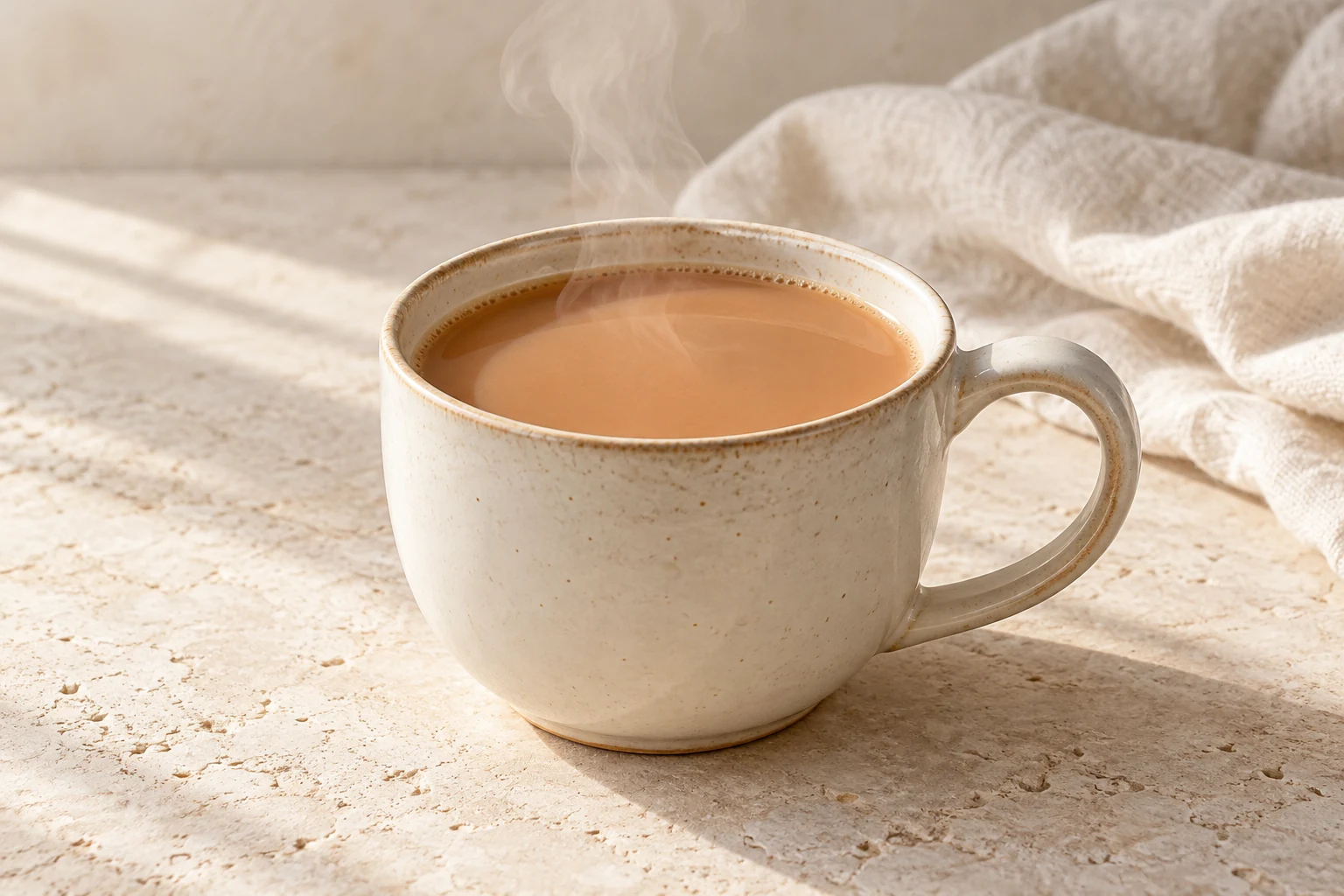
Ginger & cardamom masala chai
Strong black tea simmered with milk, fresh ginger, cardamom, and a warm thread of cinnamon.
Save to your Saucey Space, or keep a bookmark on this device.
A NOTE FROM THE KITCHEN
A fragrant saucepan brew.
Masala chai varies from kitchen to kitchen. This version gives the spices a head start in water, then adds black tea and milk. It makes about 2 cups after simmering and straining. Black tea contains caffeine.
Ready to get started? The ingredients and steps are right below.
LET’S MAKE SOMETHING GOOD
Ginger & cardamom masala chai
Sample recipe awaiting kitchen testing. Timings are estimates.
The good part
Check off each step as you cook.
0 of 4 steps complete
BEHIND THE DISH · India
Ginger & cardamom masala chaiBeyond the plate.
Masala chai is a saucepan drink with a history much larger than its spice blend. Its rise connects colonial plantations and advertising with Indian households, street vendors, and the personal routines that make a cup taste like home.
ORIGINS & EVOLUTION
An export crop becomes an everyday drink.
Commercial tea cultivation expanded in India during the nineteenth century under British rule, initially with an export market in mind. Tea’s later place in Indian daily life was not automatic. Producers and marketing bodies worked to encourage domestic consumption through twentieth-century advertising campaigns.
Advertisements increasingly portrayed tea as an Indian product and a shared pleasure. Cheaper CTC tea, made by crushing, tearing, and curling the leaves, helped broaden access in the 1960s. This history is more useful for understanding modern masala chai than legends that assign the complete milk-and-tea recipe an ancient royal inventor.
CULTURAL IMPACT
A common name allows personal recipes.
Chai means tea in Hindi; masala identifies the spices. Black tea, milk, sugar, and aromatics such as ginger or cardamom are simmered and strained, but their proportions vary. A pot with a strong ginger edge and a milder, milkier cup can both belong to this living tradition.
Tea without a spice mixture also has its place. Accounts of northern Indian family kitchens describe everyday milk tea, with ginger or cardamom sometimes added for a special cup. Our measured blend of ginger, cardamom, cinnamon, cloves, and pepper is one approachable home version.
SOCIAL HISTORY
The pause belongs to many settings.
Chai is sold by street vendors, in shops, and on trains. Its small serving fits a brief interruption in work or travel. The public cup and the household saucepan are connected parts of tea culture, even when their ingredients, vessels, and rhythms differ.
Family memories give these routines more detail. One Gujarati household prepared tea at separate times for relatives, farmworkers, and visitors. Later, the same family’s tea ritual continued after migration. Such accounts show how making and sharing chai can organize a day and carry familiar habits into a new home.
What else sounds good?
There’s a little more inspiration in the kitchen.
Back to the recipes