
Italian · Main course · SAMPLE RECIPE
Margherita pizza
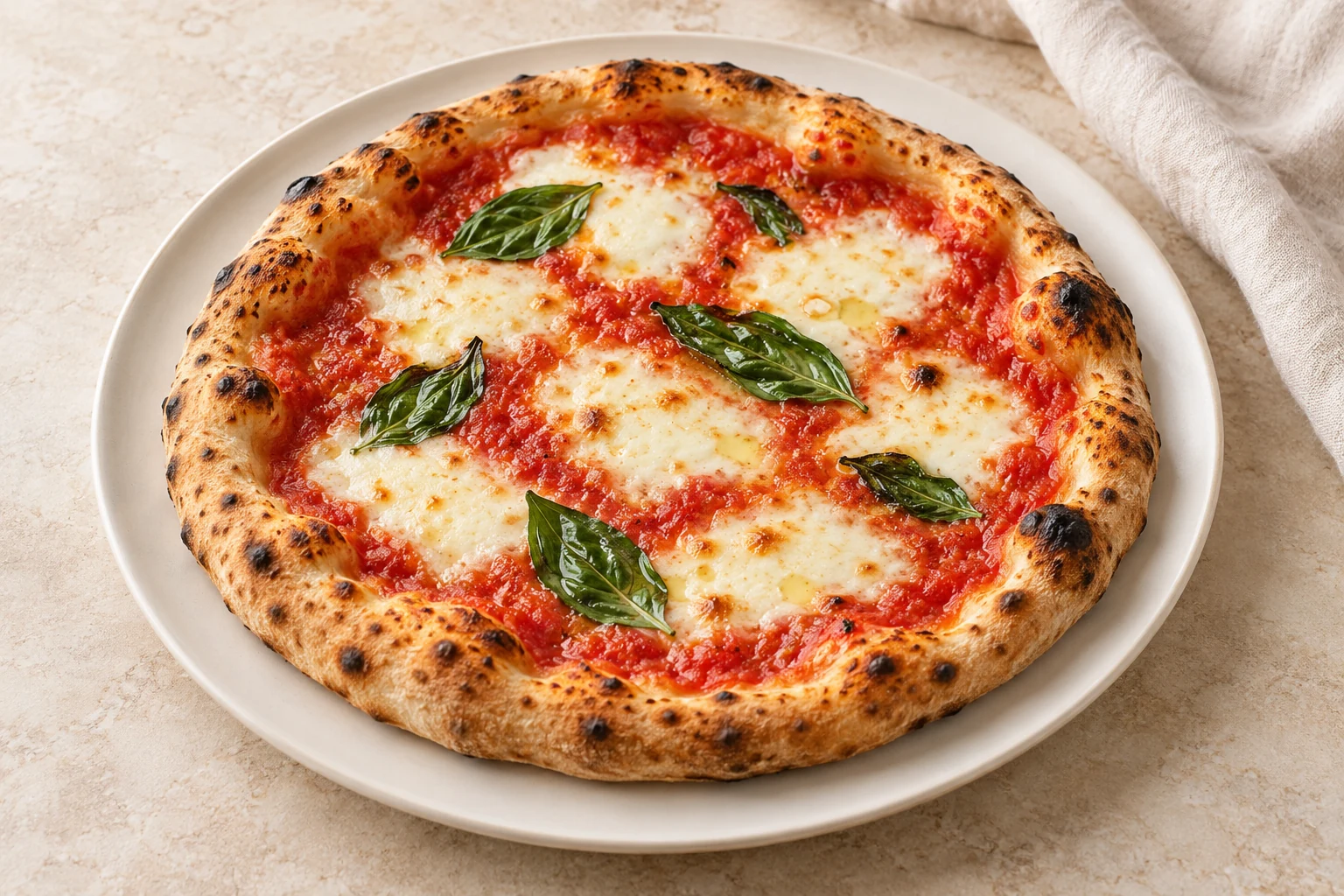
A crisp-edged homemade pizza with bright tomato sauce, creamy mozzarella and fresh basil, made with a simple same-day dough.
Save to your Saucey Space, or keep a bookmark on this device.
A NOTE FROM THE KITCHEN
A hot oven, a light hand with toppings.
This home-oven version makes two roughly 10-inch pizzas at the default yield. It uses a same-day dough and a little olive oil; it is an adaptation of the Neapolitan combination, not a wood-fired pizzeria method. Drain the mozzarella well so its moisture does not swamp the thin center.
Ready to get started? The ingredients and steps are right below.
LET’S MAKE SOMETHING GOOD
Margherita pizza
Sample recipe awaiting kitchen testing. Timings are estimates.
The good part
Check off each step as you cook.
0 of 5 steps complete
BEHIND THE DISH · Naples, Campania
Margherita pizzaBeyond the plate.
Tomato, mozzarella and basil make a familiar pizza, but its story involves street vendors, skilled trades, royal legends and the movement of people within Italy.
ORIGINS & EVOLUTION
A city of bakers before the royal story
Pizza already belonged to Naples’s food economy well before the famous royal visit. Eighteenth-century accounts describe small ovens supplying street sellers; records from the early nineteenth century show pizza-making established as a profession. Margherita developed within this broader culture of topped dough.
The familiar account credits Raffaele Esposito with honoring Queen Margherita in 1889. It is a celebrated origin story, not a secure starting date. Historical research has challenged the supporting documents and traced conflicting versions of royal pizza encounters.
CULTURAL IMPACT
A local dish in national colors
Red tomatoes, white mozzarella and green basil echo Italy’s flag. That visual connection helps explain the appeal of a story bringing a queen and a Neapolitan food together. Its symbolism can be meaningful without making every detail of the legend historically reliable.
In 2017, UNESCO recognized the art of the Neapolitan pizzaiuolo. The recognition concerns a living practice: handling dough, managing the oven and passing skills between generations. It also acknowledges the social gathering that surrounds the maker’s work.
SOCIAL HISTORY
Work, streets and migration
Pizza’s early street trade required more than a baker: sellers carried warm food away from the oven to reach customers. Thinking about those linked jobs shifts attention from a single supposed inventor toward the everyday organization of feeding a city.
After the Second World War, migration from southern Italy to northern industrial cities helped carry regional food businesses into new settings. Pizza’s expansion across Italy was therefore connected to families seeking work, as well as to changing tastes and restaurant culture.
What else sounds good?
There’s a little more inspiration in the kitchen.
Back to the recipes