
American · Drinks · SAMPLE RECIPE
Classic rye Manhattan
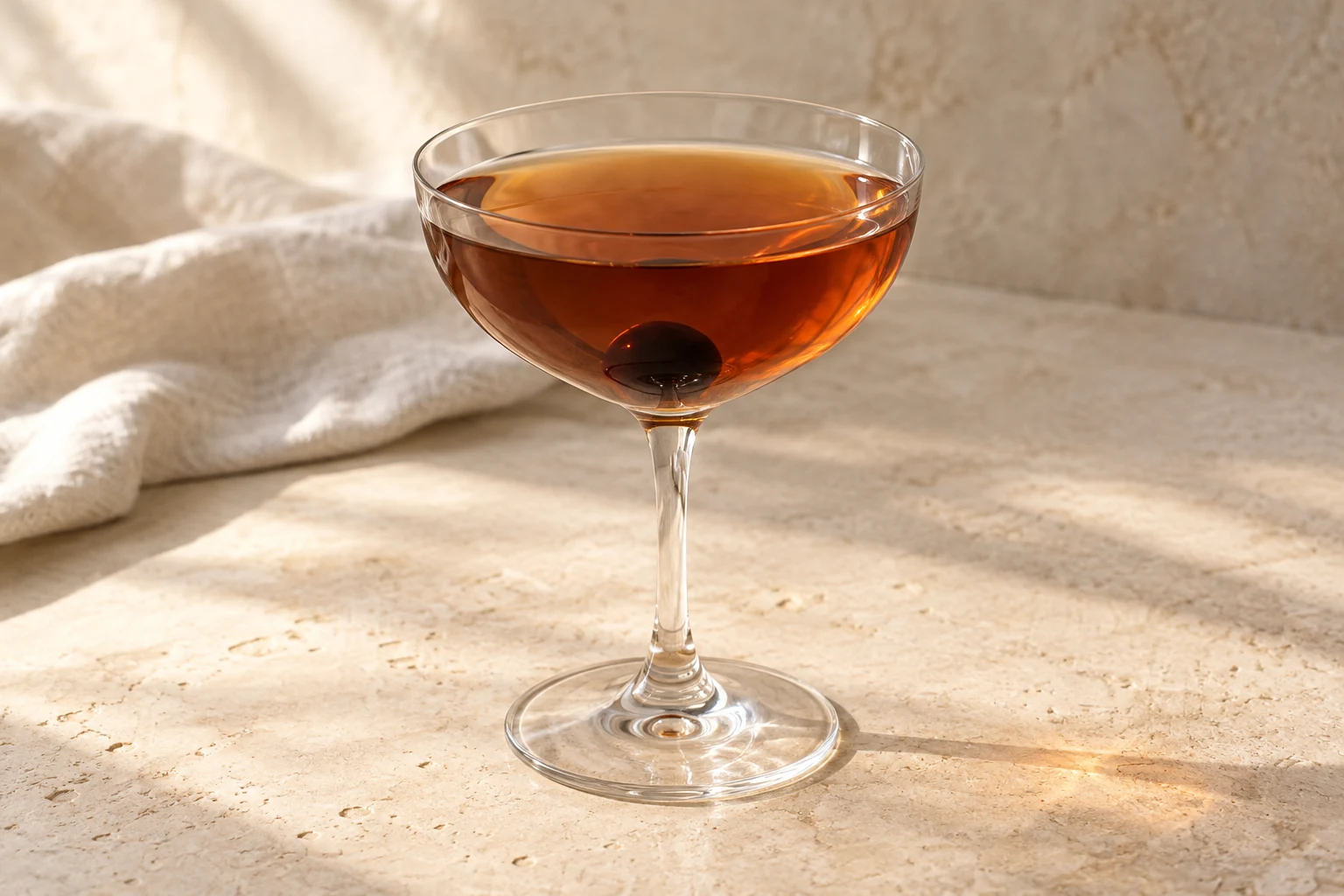
Rye whiskey and sweet vermouth meet aromatic bitters in a smooth, deep amber cocktail, served cold with a preserved cherry.
Save to your Saucey Space, or keep a bookmark on this device.
A NOTE FROM THE KITCHEN
Stir for a clear, chilled finish.
Contains alcohol. This rye-led home version uses twice as much whiskey as sweet red vermouth. It is strained into a coupe without serving ice.
Ready to get started? The ingredients and steps are right below.
LET’S MAKE SOMETHING GOOD
Classic rye Manhattan
Sample recipe awaiting kitchen testing. Timings are estimates. Contains alcohol.
The good part
Check off each step as you cook.
0 of 3 steps complete
BEHIND THE DISH · New York City, United States
Classic rye ManhattanBeyond the plate.
The Manhattan links American whiskey with vermouth. Its written history is firmer than its invention stories: bar manuals and newspapers reveal a fashionable mixture still taking shape.
ORIGINS & EVOLUTION
The evidence begins before the legend settles.
An 1882 newspaper account described whiskey, vermouth, and bitters circulating under several names, including Manhattan, Turf Club, and Jockey Club. It shows a recognizable combination entering public conversation, without securely naming an inventor or giving a trustworthy account of its very first serving.
The Manhattan Club later claimed the drink, and stories attached it to a banquet honoring Samuel Tilden. The more elaborate tale involving Winston Churchill’s mother is unreliable. The sensible distinction is between a possible club connection and a detailed celebration story that the surviving evidence does not establish.
CULTURAL IMPACT
A published name could hold several recipes.
An 1884 bar manual printed two Manhattans. One combined equal measures of whiskey and French vermouth with bitters and gum syrup. The other paired whiskey with Italian vermouth and included a little orange liqueur. Even within one book, the name allowed different balances and seasonings.
The same page described a Martinez by substituting gin for whiskey. Read together, these instructions reveal bartenders organizing drinks through relationships between ingredients. They also caution against projecting today’s familiar whiskey-heavy Manhattan backward as an exact formula that every early bartender must have followed.
SOCIAL HISTORY
A cocktail moved beyond its namesake borough.
Late nineteenth-century reporting placed cocktails in Brooklyn club life as well as Manhattan. A December 1883 report from Chicago also discussed the Manhattan as a popular order, although its stated ingredients were inconsistent with the whiskey formula. Recognition of a name could travel faster than agreement about its contents.
Printed manuals offered working bartenders something more repeatable. Our version belongs to the modern stirred style: rye, sweet red vermouth, aromatic bitters, and a preserved cherry. Its clear appearance comes from stirring and straining, while the absence of serving ice makes a chilled glass especially useful.
What else sounds good?
There’s a little more inspiration in the kitchen.
Back to the recipes