
Peruvian · Main course · SAMPLE RECIPE
Lomo saltado
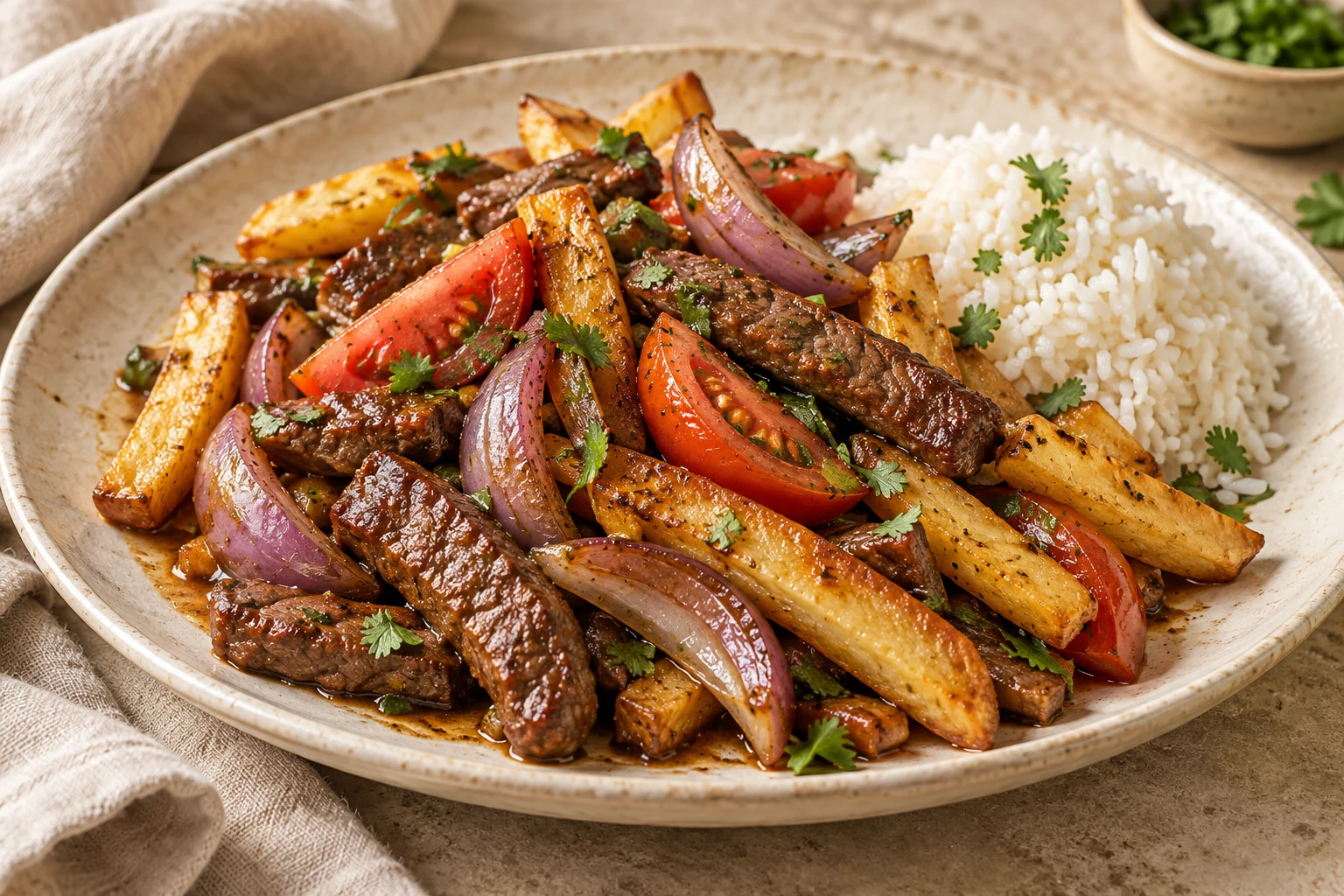
Peru’s lively beef stir-fry brings together juicy tomatoes, red onion, and golden fries. A splash of soy sauce ties it all together.
Save to your Saucey Space, or keep a bookmark on this device.
A NOTE FROM THE KITCHEN
A hot pan, a little room.
Lomo saltado reflects Peru’s Chinese-influenced cooking traditions. Sear the beef in batches so it browns instead of steaming. This home version uses oven-cooked fries, adding them at the end to keep their edges crisp.
Ready to get started? The ingredients and steps are right below.
LET’S MAKE SOMETHING GOOD
Lomo saltado
Sample recipe awaiting kitchen testing. Timings are estimates.
The good part
Check off each step as you cook.
0 of 4 steps complete
BEHIND THE DISH · Lima, Peru
Lomo saltadoBeyond the plate.
Beef, onion, tomato, soy sauce, potatoes, and rice meet in a dish that makes cultural exchange tangible. Lomo saltado belongs to Peru’s own cooking tradition while revealing the lasting influence of Chinese cooks and communities.
ORIGINS & EVOLUTION
Lima’s kitchens learn a different kind of heat.
Accounts of lomo saltado trace its development to Lima in the late nineteenth century, when Cantonese cooks brought wok techniques into local kitchens. The dish combines quickly cooked beef and vegetables with Peruvian ingredients and accompaniments. No single inventor is needed to explain that gradual culinary exchange.
Even descriptions of its early composition differ about when potatoes joined the plate. What is firmly recognizable in the established dish is the combination of beef, red onion, tomato, a savory sauce, fries, and often rice. Its identity comes from their meeting, rather than an unchanged original formula.
CULTURAL IMPACT
Chinese influence becomes Peruvian identity.
Chifa names the Chinese-Peruvian cooking tradition that grew from migration and local adaptation. Lomo saltado illustrates the reach of that exchange beyond a single restaurant category. The wok and soy sauce became part of a dish widely presented as representative of Peru itself.
That recognition is visible in civic life as well as tourism. Lima’s municipality organized a lomo saltado competition for the city’s anniversary in 2017, bringing restaurant cooks into a public celebration. A familiar meal became a way to express pride in the capital’s culinary identity.
SOCIAL HISTORY
Migration includes work, settlement, and cooking.
Organized Chinese migration to Peru began in 1849. Many newcomers worked on coastal estates, and food businesses later became an important setting for Chinese-Peruvian exchange. Remembering those workers and cooks makes the dish’s history more specific than a general claim that flavors from different countries happened to mix.
Cooking also changes with its setting. A household skillet does not behave like a restaurant wok, so our recipe sears the beef in small batches and cooks the fries in the oven. It keeps the onions and tomatoes in generous pieces, then brings everything together near serving time.
What else sounds good?
There’s a little more inspiration in the kitchen.
Back to the recipes