Italian · Main course · SAMPLE RECIPE
Tagliata with arugula & Parmesan
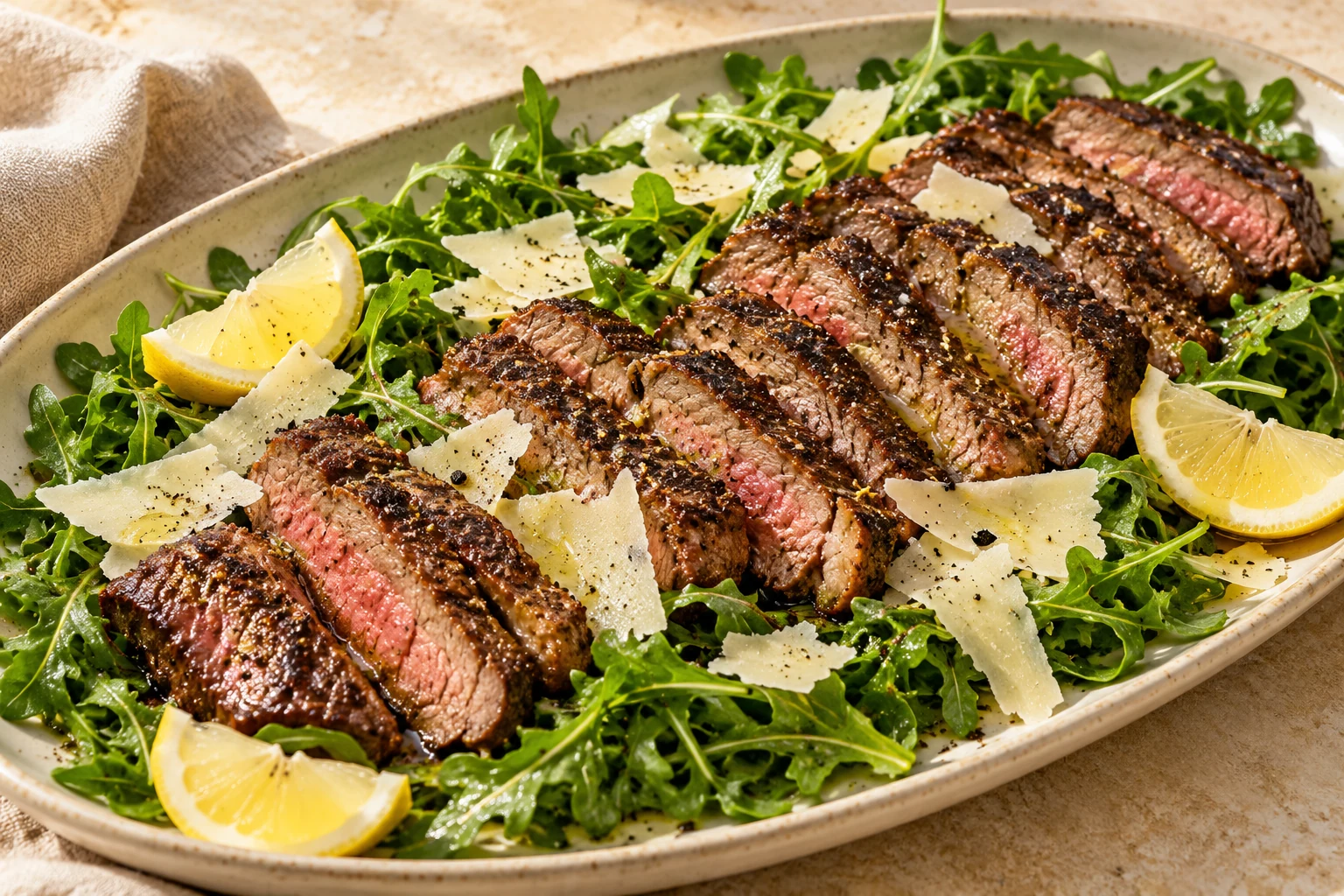
Italian-style sliced steak over peppery arugula, with Parmesan and lemon. A short ingredient list and a generous platter for the table.
Save to your Saucey Space, or keep a bookmark on this device.
A NOTE FROM THE KITCHEN
Slice at the last moment.
Tagliata is about cooking the steak whole and slicing it for serving. Rest it first, then arrange the warm slices over the dressed greens. The arugula softens slightly beneath the beef without losing all of its bite.
Ready to get started? The ingredients and steps are right below.
LET’S MAKE SOMETHING GOOD
Tagliata with arugula & Parmesan
Sample recipe awaiting kitchen testing. Timings are estimates.
The good part
Check off each step as you cook.
0 of 4 steps complete
BEHIND THE DISH · Italy · Tuscany
Tagliata with arugula & ParmesanBeyond the plate.
Tagliata makes the final cut part of the presentation: a whole steak becomes a platter of warm slices. Arugula, olive oil, and shaved cheese connect this version with Tuscan serving traditions and with the agricultural landscape behind the beef.
ORIGINS & EVOLUTION
A name that describes the serving.
Tagliata refers to meat that is cut after cooking. In Tuscan preparations, a grilled steak may be rested, sliced, and arranged with arugula and Parmesan or grana, sometimes with an aromatic olive-oil dressing. The useful starting point is this method, rather than a story about one inventor.
Chianina beef has a strong place in Tuscany’s steak cooking, including both large bistecche and sliced tagliata. These presentations can overlap, but they are not identical: the name tagliata draws attention to the sliced serving. Our recipe uses accessible boneless sirloin or strip steak without requiring a particular cattle breed.
CULTURAL IMPACT
A regional landscape on the plate.
Tuscany’s food identity includes the connection between cattle, countryside, and the table. Chianina takes its name from the Chiana Valley, and the breed’s distinctive white cattle remain closely associated with the area. A steak dish can therefore carry a sense of place as well as a cooking technique.
Tagliata offers a flexible way to present that beef. Documented Tuscan versions include peppercorn-scented oil, herbs, tomatoes, and shaved cheese. Our lemon-and-arugula arrangement chooses a short list of finishing ingredients, with the warm slices spread over the greens and the cheese added at the end.
SOCIAL HISTORY
Before the steak, there was farm work.
The cattle behind Tuscany’s celebrated beef were once important working animals. Chianina oxen supplied strength for agricultural labor; as farming became mechanized, breeders increasingly emphasized beef production. The breed’s history therefore includes a change in how rural households and farms used and valued their animals.
That agricultural shift is background to Tuscan beef cooking, not a date for tagliata’s invention. It adds another layer to the familiar restaurant plate: behind the carefully sliced meat are breeders, farm labor, and changes in rural technology. The ingredients carry histories that extend beyond the dining room.
What else sounds good?
There’s a little more inspiration in the kitchen.
Back to the recipes