Japanese · Drinks · SAMPLE RECIPE
Iced matcha latte
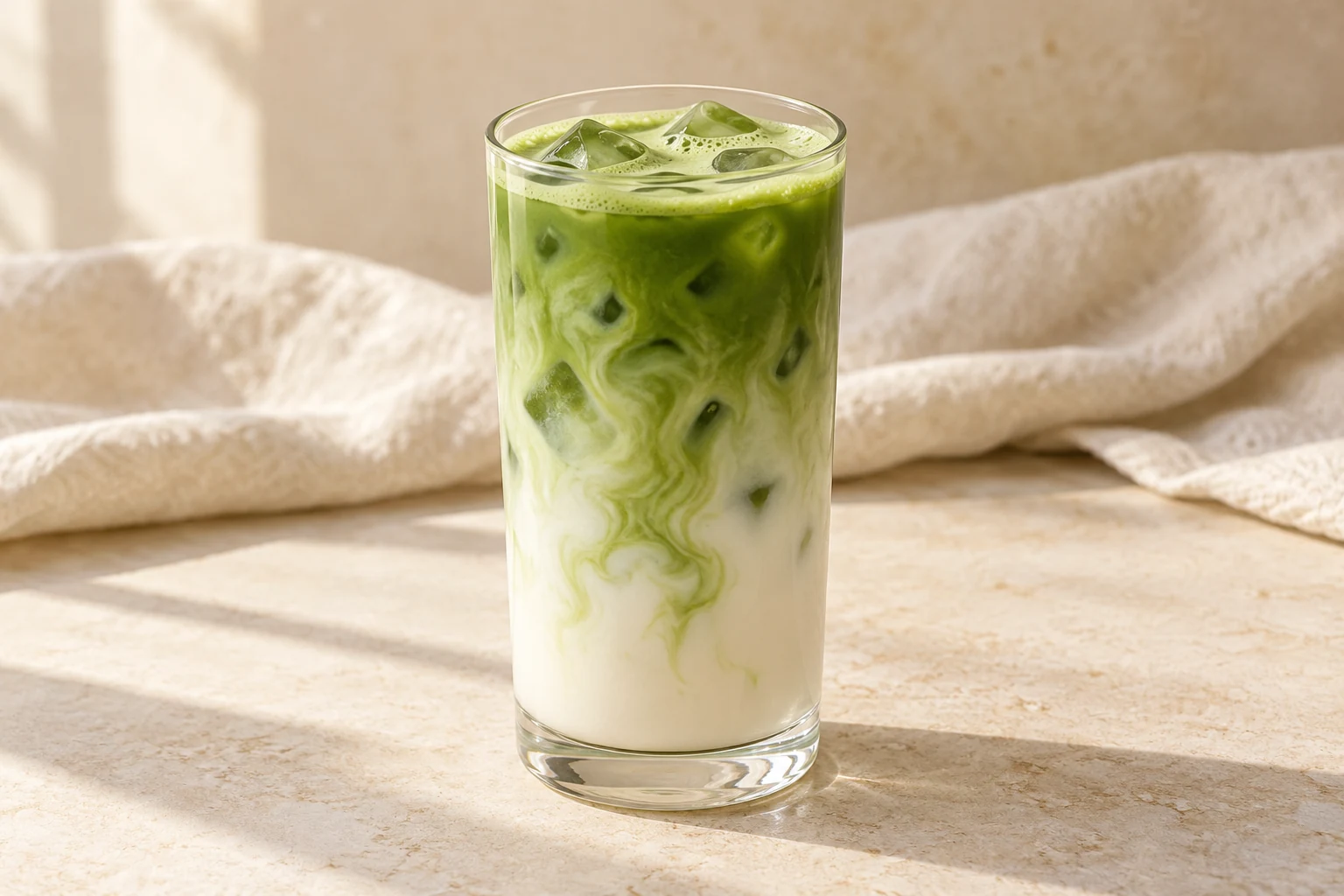
Freshly whisked green tea flows through cold milk and ice in a gently sweet, creamy café-style drink.
Save to your Saucey Space, or keep a bookmark on this device.
A NOTE FROM THE KITCHEN
Whisk the tea before adding milk.
This Japanese-inspired latte is a contemporary café preparation. Plain matcha is whisked with a little warm water before it meets the milk, helping prevent dry pockets of powder. The optional sugar makes a lightly sweet version.
Ready to get started? The ingredients and steps are right below.
LET’S MAKE SOMETHING GOOD
Iced matcha latte
Sample recipe awaiting kitchen testing. Timings are estimates.
The good part
Check off each step as you cook.
0 of 4 steps complete
BEHIND THE DISH · Japan and contemporary café culture
Iced matcha latteBeyond the plate.
An iced matcha latte combines Japanese powdered green tea with milk and ice. This contemporary café drink draws on an ingredient with a long history, in a format distinct from a formal tea gathering.
ORIGINS & EVOLUTION
Powdered tea travels across the sea.
Around the twelfth century, Buddhist monks traveling between China and Japan helped carry Song-dynasty powdered-tea practices to Japan. Tea drinking spread through Zen temples and into samurai and aristocratic circles. That movement provides important context for matcha’s history, without supplying an origin date for the modern latte.
The latte adds milk, often sugar, and sometimes ice. Our version first disperses the powder in warm water, then pours it over cold milk. Whisking suits matcha’s physical character: fine tea powder needs to be evenly suspended.
CULTURAL IMPACT
Tea helps shape an artistic tradition.
Tea gatherings became important settings for appreciating ceramics, arranging objects, and expressing taste. In the sixteenth century, influential practitioners including Sen no Rikyu helped establish an aesthetic that valued humble and irregular vessels alongside prized imported objects. Bowls and water jars became part of the experience of drinking.
That history gives matcha cultural meaning beyond its green color. A formal gathering brings host, guests, utensils, and carefully practiced actions together. An iced latte uses the same category of tea in an everyday café format, with the milk and sweetness adjusted to the drinker.
SOCIAL HISTORY
From selected utensils to a glass of ice.
Historical tea gatherings offered rulers, warriors, and wealthy merchants a way to build social relationships. Their objects communicated judgment and status. As tea culture developed, the preferences of practitioners also influenced potters, encouraging new shapes and wares made specifically for the tea setting.
Modern latte preparation offers simple hospitality: choose a milk, whisk the tea, and share a cold drink. The green layer is briefly visible before stirring. This recipe presents a home adaptation, distinct from the tea ceremony.
What else sounds good?
There’s a little more inspiration in the kitchen.
Back to the recipes