American · Main course · SAMPLE RECIPE
Hoppin’ John · black-eyed peas, bacon & rice
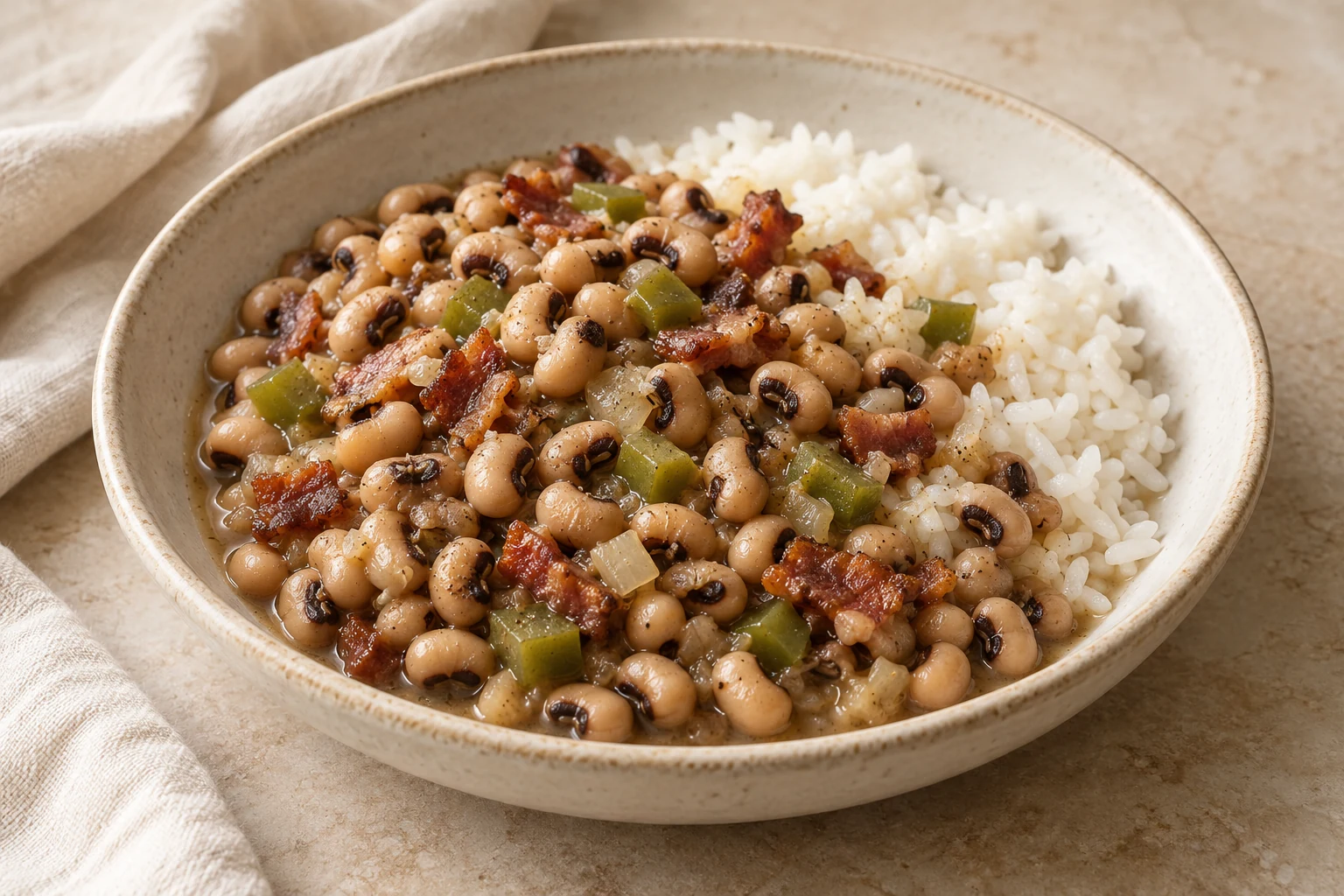
Tender black-eyed peas simmered with smoky bacon, onion, and green pepper, served over freshly cooked rice. A quick pantry version of a dish with deep Lowcountry and African American roots.
Save to your Saucey Space, or keep a bookmark on this device.
A NOTE FROM THE KITCHEN
A canned-pea adaptation for an everyday pot.
Hoppin’ John has many regional and family forms, including preparations with field peas and rice cooked together. This practical version uses canned black-eyed peas and cooks the rice separately. The shortcut is explicit: no dried-pea soaking or long bean simmer is hidden from the timing.
Ready to get started? The ingredients and steps are right below.
LET’S MAKE SOMETHING GOOD
Hoppin’ John · black-eyed peas, bacon & rice
Sample recipe awaiting kitchen testing. Timings are estimates.
The good part
Check off each step as you cook.
0 of 4 steps complete
BEHIND THE DISH · Lowcountry and African American food traditions
Hoppin’ John · black-eyed peas, bacon & riceBeyond the plate.
Black-eyed peas and rice carry a story of agriculture, adaptation, and celebration as well as everyday nourishment.
ORIGINS & EVOLUTION
Peas and rice with deep roots.
Hoppin’ John is strongly connected with the Lowcountry and African American cooking, including Gullah foodways. Black-eyed peas are cowpeas, a crop with African roots. The dish has regional forms using different field peas, and some cook the rice and peas together while others bring them together at serving.
CULTURAL CONTEXT
A place at the New Year table.
Black-eyed peas and rice are part of many New Year’s meals and are associated with hopes for good fortune. The Smithsonian’s account of Watch Night places these foods within a wider African American history of fellowship, freedom, and renewal. Customs still vary among families and communities.
AT THE TABLE
A clear pantry shortcut.
Our everyday adaptation uses canned black-eyed peas with bacon, onion, green pepper, and a little broth. The rice cooks separately from dry grains. It keeps the distinctive pea-and-rice combination while making the shorter preparation explicit.
What else sounds good?
There’s a little more inspiration in the kitchen.
Back to the recipes