
American · Main course · SAMPLE RECIPE
Honey & garlic glazed salmon
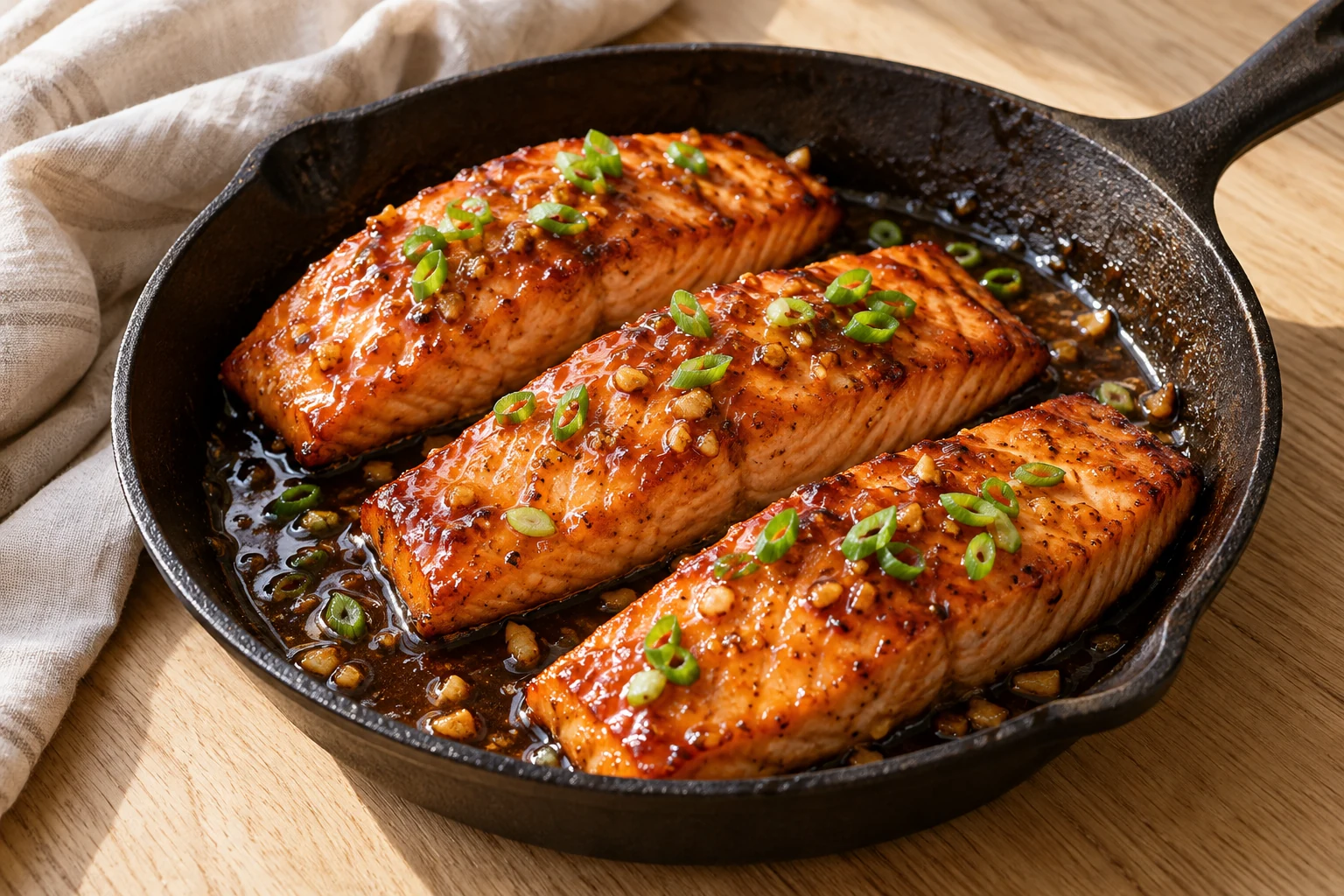
Golden salmon in a sweet, savory pan glaze, with rice vinegar to keep things bright. A quick dinner for the days when the sauce is the best part.
Save to your Saucey Space, or keep a bookmark on this device.
A NOTE FROM THE KITCHEN
Add the sweetness at the end.
Brown the fish before the honey mixture meets the pan. A short, gentle simmer gives the glaze body without letting its sugars scorch.
Ready to get started? The ingredients and steps are right below.
LET’S MAKE SOMETHING GOOD
Honey & garlic glazed salmon
Sample recipe awaiting kitchen testing. Timings are estimates.
The good part
Check off each step as you cook.
0 of 4 steps complete
BEHIND THE DISH · Modern American home cooking · A global pantry
Honey & garlic glazed salmonBeyond the plate.
Honey-garlic salmon is a modern combination rather than a dish with one established birthplace. Its sweet, salty glaze tells a more useful story about ingredients crossing borders and becoming familiar tools in everyday kitchens.
ORIGINS & EVOLUTION
A new dinner from well-traveled ingredients.
Our version combines honey, soy sauce, rice vinegar, and garlic, then adds the mixture after the salmon has browned. The honey supplies sweetness, the vinegar sharpness, and the soy sauce a savory base. This particular balance belongs to the recipe, rather than to a single inherited national formula.
Soy sauce’s place in American cooking expanded through deliberate experimentation. After opening a San Francisco sales company in 1957, Kikkoman promoted it with supermarket tastings and recipes showing how it could season familiar foods. That history helps explain how a Japanese seasoning became part of many otherwise American suppers.
CULTURAL IMPACT
A condiment becomes a pantry habit.
In 1973, Kikkoman began shipping soy sauce made at its plant in Walworth, Wisconsin. Japanese brewing knowledge and American production met in a product that shoppers could use beyond a designated Japanese meal.
Honey-garlic salmon fits that flexible approach: its identity comes from what the ingredients do together. Calling it a modern adaptation leaves room to enjoy the combination while recognizing that the seasonings have histories of their own.
SOCIAL HISTORY
The work behind a spoonful of sweetness.
Honey has another story of movement. Honey bees were brought from Europe to North America in the seventeenth century, joining a landscape already home to thousands of native bee species. Beekeeping became a subject of agricultural instruction and research; federal bee research began in 1891.
Behind this quick glaze, then, sit both food manufacturing and the skilled work of keeping bees. At the stove, those long supply chains become a few measured spoonfuls. The short finishing simmer makes a small quantity of sauce enough to coat four portions.
What else sounds good?
There’s a little more inspiration in the kitchen.
Back to the recipes