
Korean · Main course · SAMPLE RECIPE
Haemul pajeon · seafood & scallion pancakes
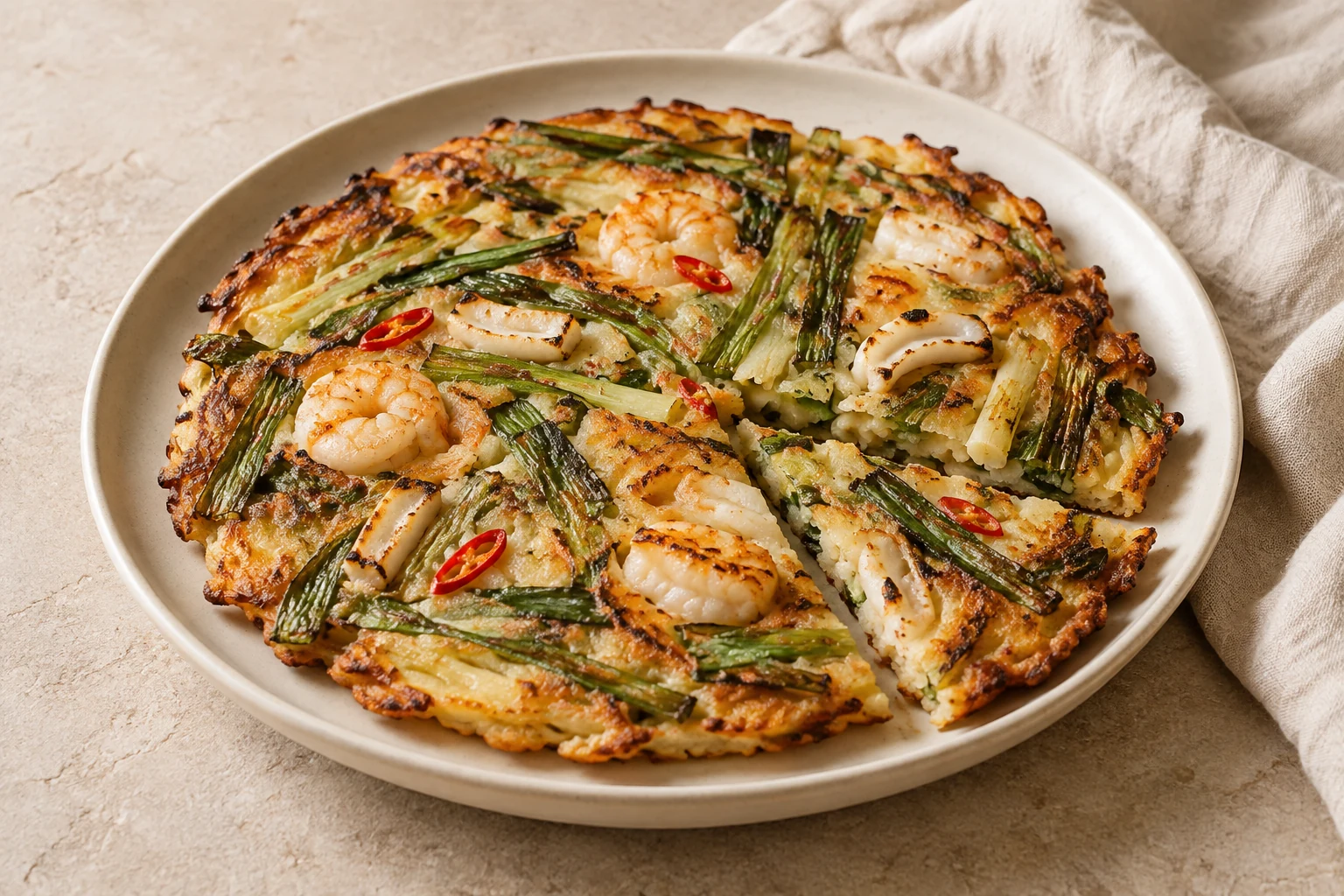
Crisp-edged savory pancakes filled with long scallions, shrimp, and squid. Tear off a warm piece and dip it into a bright soy-and-vinegar sauce.
Save to your Saucey Space, or keep a bookmark on this device.
A NOTE FROM THE KITCHEN
Make manageable pancakes and keep the seafood dry.
The base batch makes two pancakes about 8 inches / 20 cm across, enough for four as a shared starter. This home batter uses plain flour, rice flour, and cornstarch rather than a packaged Korean pancake mix. Use thawed, drained seafood if starting from frozen.
Ready to get started? The ingredients and steps are right below.
LET’S MAKE SOMETHING GOOD
Haemul pajeon · seafood & scallion pancakes
Sample recipe awaiting kitchen testing. Timings are estimates.
The good part
Check off each step as you cook.
0 of 5 steps complete
BEHIND THE DISH · Korean savory pancake traditions
Haemul pajeon · seafood & scallion pancakesBeyond the plate.
Long scallions and small seafood pieces settle into a crisp-edged pan-fried batter.
ORIGINS & EVOLUTION
Scallions define the pancake.
Pa means scallion, while jeon describes a family of battered or coated pan-fried foods. Haemul adds seafood to the name. Shrimp and squid are common choices, but other seafood combinations also appear in Korean kitchens.
CULTURAL CONTEXT
A plate for sharing.
Pajeon is enjoyed as a snack, appetizer, or part of a larger meal. It is often associated with rainy-day eating and may accompany makgeolli. Cut pieces can be lifted from a shared plate and dipped into a soy-based sauce.
AT THE TABLE
A small pancake is easier to turn.
This version combines flour, rice flour, and cornstarch instead of a packaged pancake mix. We use shrimp and squid, optional red chili, and a simple vinegar-soy dip. Dry ingredients and a thin layer help the outside crisp while the center cooks through.
What else sounds good?
There’s a little more inspiration in the kitchen.
Back to the recipes