
Greek · Salad · SAMPLE RECIPE
Greek village salad
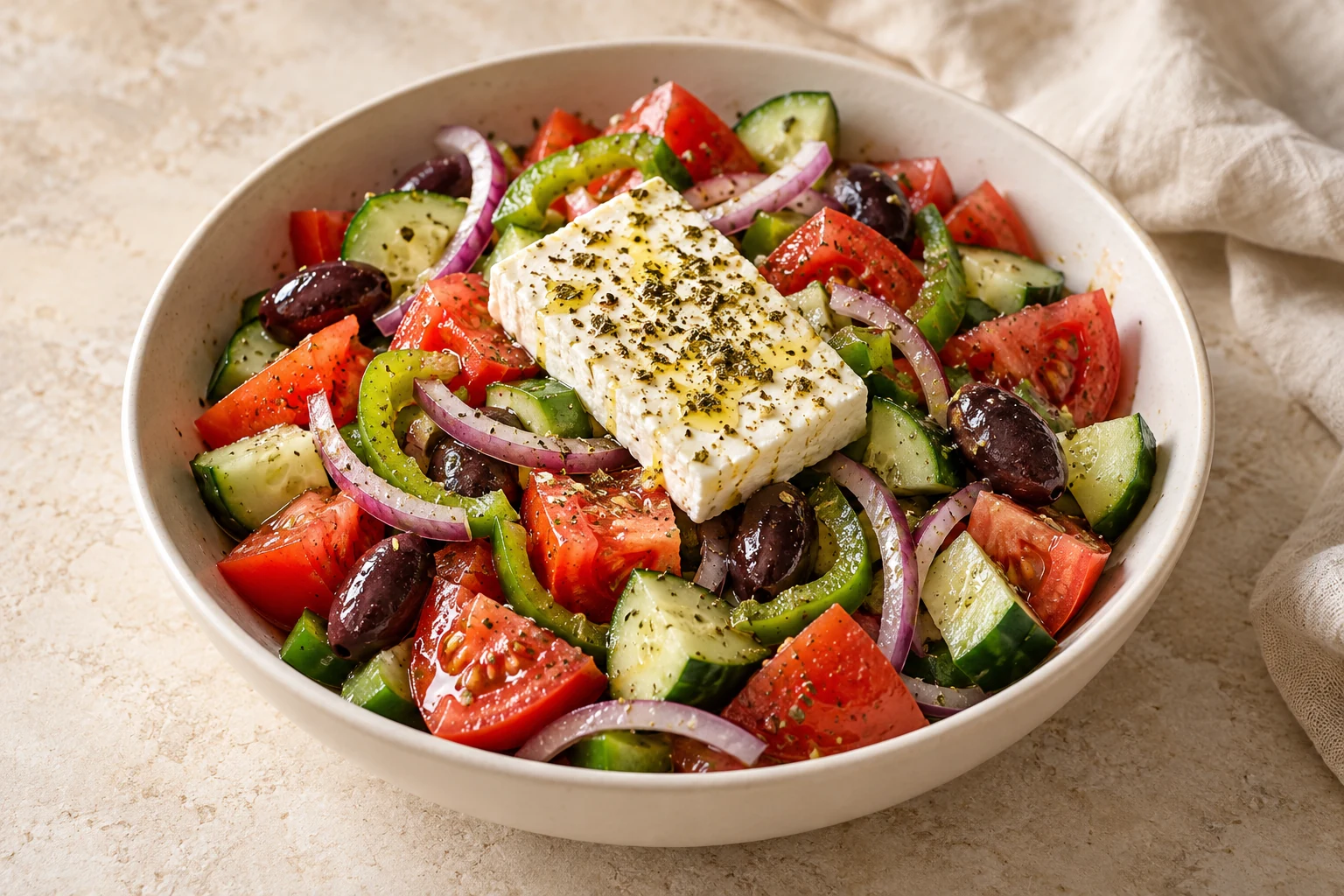
Ripe tomatoes, crisp cucumber and pepper, briny olives, and a generous piece of feta make a bright, satisfying salad with a simple olive oil dressing.
Save to your Saucey Space, or keep a bookmark on this device.
A NOTE FROM THE KITCHEN
Let the tomatoes lead.
Horiatiki, often called Greek village salad, brings together chunky vegetables, olives, and feta without lettuce. Use ripe tomatoes with good flavor and leave the pieces large enough to hold their own beside the cheese.
Ready to get started? The ingredients and steps are right below.
LET’S MAKE SOMETHING GOOD
Greek village salad
Sample recipe awaiting kitchen testing. Timings are estimates.
The good part
Check off each step as you cook.
0 of 4 steps complete
BEHIND THE DISH · Greece
Greek village saladBeyond the plate.
Greek village salad makes a meal out of recognizable ingredients and a sense of season. Its cultural history is tied to ripe summer produce, regional cheesemaking, and the way an everyday dish becomes an international emblem.
ORIGINS & EVOLUTION
A village name, without an invention legend.
Horiatiki is commonly translated as village salad. Tomatoes, cucumber, onion, olives, olive oil, and feta define its familiar form, with peppers, capers, and other details varying between preparations. It is better understood as a cooking tradition than as the documented invention of one named cook.
The ingredients also have different histories. Feta belongs to a long cheesemaking tradition, but that does not make the complete tomato salad an ancient recipe. Our version keeps the vegetables chunky, includes green pepper, and sets broad pieces of feta across the top.
CULTURAL IMPACT
Summer becomes a recognizable plate.
Horiatiki has become one of the best-known dishes associated with Greece. Its appearance in national tourism recipes shows how an everyday salad can represent a country to visitors. The essential appeal is direct: vegetables, briny cheese, olives, and oil remain visibly themselves.
Within Greece, it also invites variation. An Athens restaurant version uses heirloom tomatoes, mint, and galomizithra, a fresh goat’s-milk curd, instead of feta. Such examples show an active food culture, where a familiar name can make room for regional products and a cook’s interpretation.
SOCIAL HISTORY
The landscape contributes to lunch.
Feta’s production connects the salad to pastoral work. Greece’s steep terrain and dry climate favored sheep and goats over widespread cattle rearing. Milk from these animals, local grazing, and accumulated cheesemaking knowledge all sit behind the white cheese placed on the vegetables.
Seasonality matters just as much. Athens food culture continues to prize horiatiki when tomatoes are sweet and juicy, with bread to take up the oil and tomato juices. Seen this way, the salad brings the work of growers, herders, and cheesemakers together in one uncomplicated meal.
What else sounds good?
There’s a little more inspiration in the kitchen.
Back to the recipes