
Japanese · Main course · SAMPLE RECIPE
Ginger teriyaki salmon
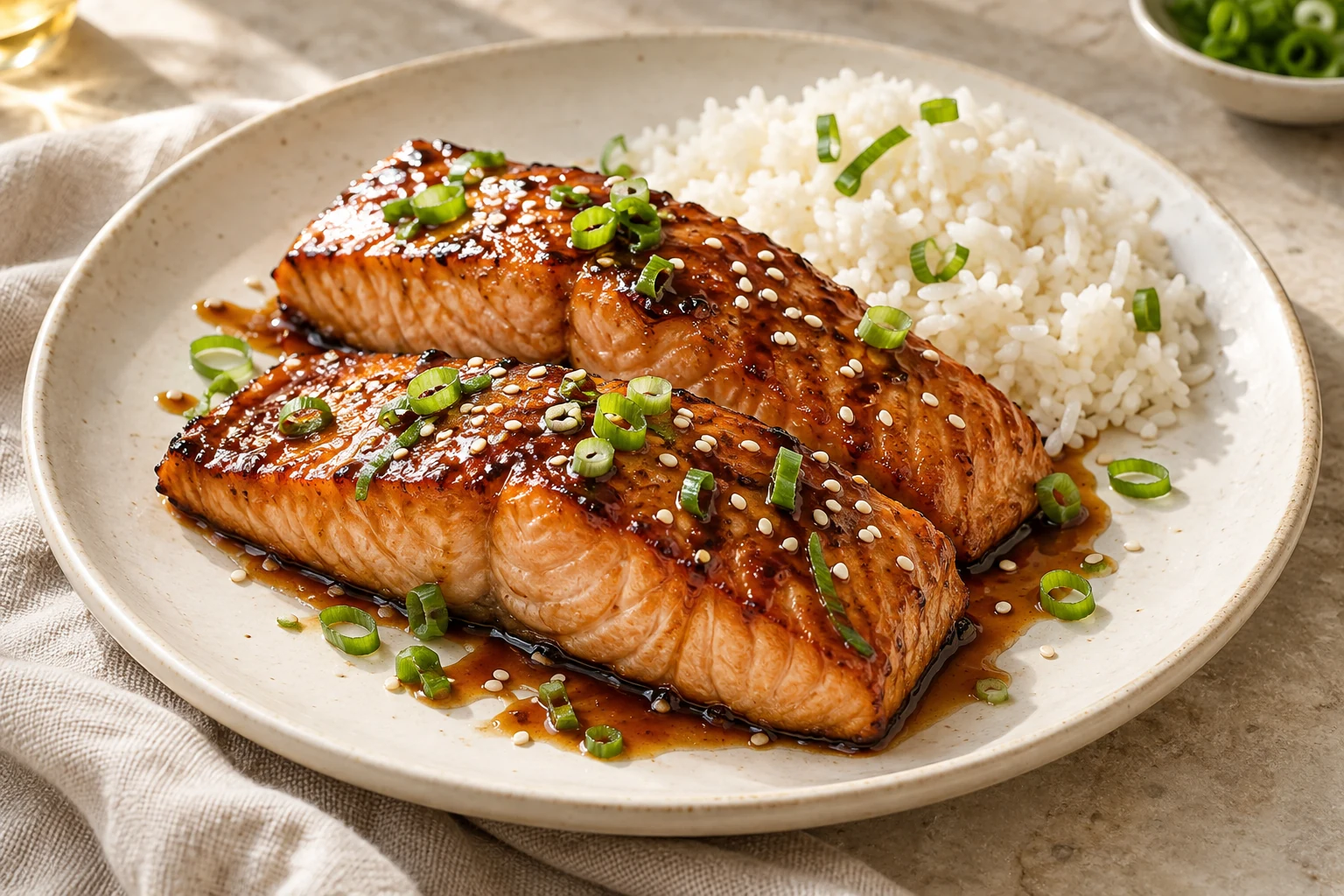
A glossy ginger-soy glaze over oven-roasted salmon. Sweet, savory, and just right with a bowl of rice and something green.
Save to your Saucey Space, or keep a bookmark on this device.
A NOTE FROM THE KITCHEN
A weeknight take on teriyaki.
This Japanese-inspired version uses honey and rice vinegar for a pantry-friendly glaze. Make the sauce separately so its consistency is easy to control while the salmon roasts.
Ready to get started? The ingredients and steps are right below.
LET’S MAKE SOMETHING GOOD
Ginger teriyaki salmon
Sample recipe awaiting kitchen testing. Timings are estimates.
The good part
Check off each step as you cook.
0 of 4 steps complete
BEHIND THE DISH · Japan · Japanese American adaptations
Ginger teriyaki salmonBeyond the plate.
This is a modern, Japanese-inspired teriyaki salmon: roasted fish with a separately prepared ginger glaze. Its name connects it to a Japanese cooking method that acquired new ingredients and new meanings as it traveled.
ORIGINS & EVOLUTION
First a method, then a familiar sauce.
Teriyaki joins teri, the shine on the food, with yaki, grilling. In Japanese cooking, soy sauce and mirin help create that glossy surface on fish such as yellowtail or salmon. The name describes both the seasoning and the cooking.
Our version takes a different route to the sheen. Honey provides sweetness, rice vinegar adds acidity, and a little cornstarch thickens the sauce in a saucepan while the salmon roasts. It is a convenient adaptation, with ginger providing a pronounced fresh aroma.
CULTURAL IMPACT
Teriyaki learns to travel.
In 1950, American newspaper coverage described Hawaiian beef teriyaki with soy sauce, sugar, garlic, and ginger. Kikkoman launched a bottled teriyaki marinade for North America in 1961, incorporating wine, spices, and ideas from its American employees.
Bottling helped turn a cooking method into a seasoning people could recognize and use across different dishes. Our separately spooned glaze reflects that broader understanding of teriyaki. The connection is meaningful even though the ingredients and sequence differ from a Japanese grilled-fish preparation.
SOCIAL HISTORY
A neighborhood meal with immigrant roots.
Seattle developed its own teriyaki culture around accessible, hot meals. Toshi Kasahara opened his business in 1976, and Japanese and Korean immigrant entrepreneurs helped build the city’s network of teriyaki shops. Their work made the dish part of the rhythm of local lunches and dinners.
That story puts small businesses alongside bottled sauces in teriyaki’s travels. At home, this recipe keeps the practical appeal of a glazed main dish that can meet a bowl of rice. The rice remains a serving choice, while the salmon and ginger sauce carry the recipe itself.
What else sounds good?
There’s a little more inspiration in the kitchen.
Back to the recipes