
Greek · Main course · SAMPLE RECIPE
Gemista · tomatoes & peppers with herbed rice
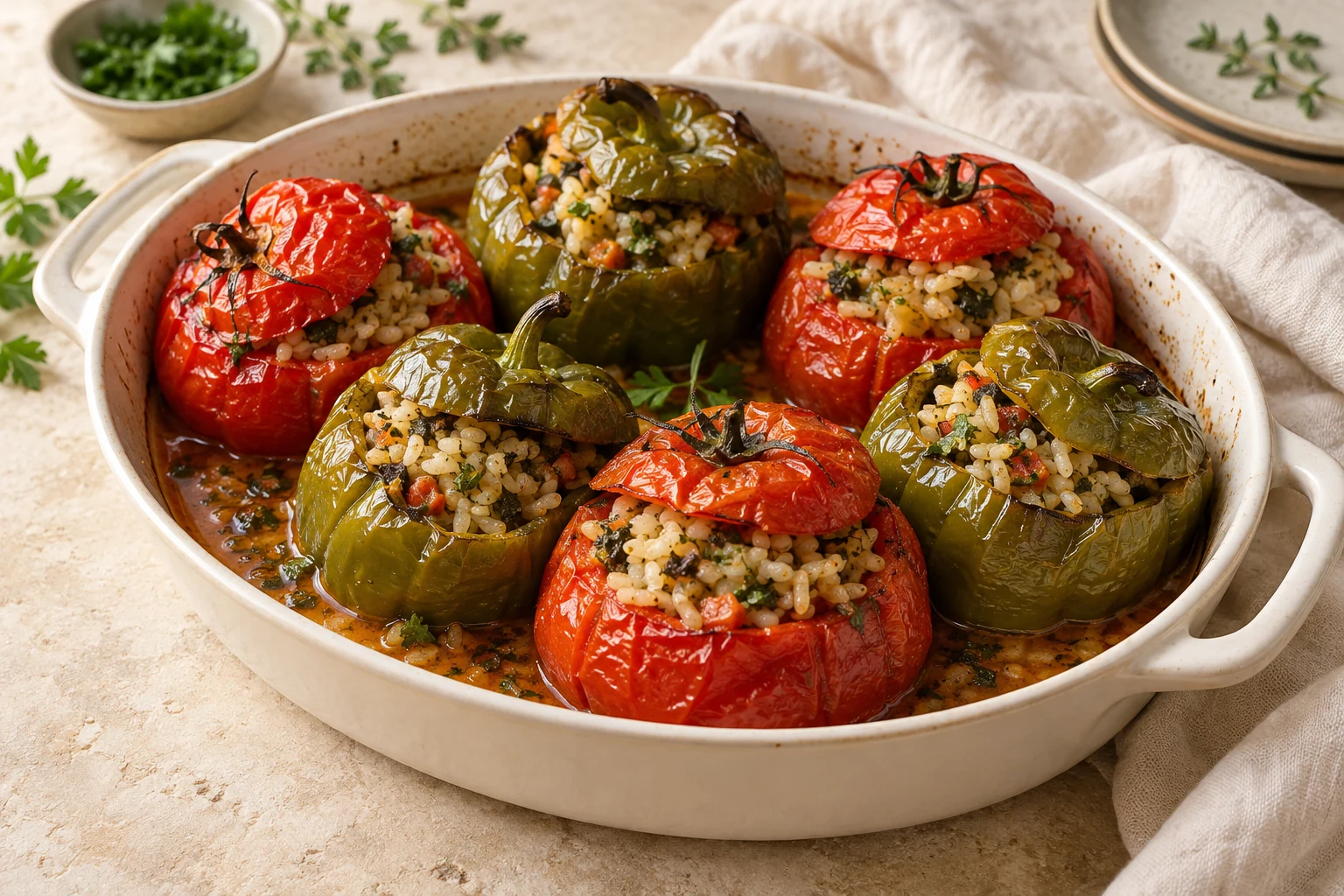
Soft baked tomatoes and peppers filled with rice, onion, mint, and parsley. A meatless Greek oven dish that lets the vegetables do the talking.
Save to your Saucey Space, or keep a bookmark on this device.
A NOTE FROM THE KITCHEN
Leave room for the rice to expand.
Choose large, firm tomatoes and medium peppers that stand upright. The base batch uses four of each, serving one tomato and one pepper per person. This is a rice-and-herb version without meat; the tomato pulp becomes part of the filling.
Ready to get started? The ingredients and steps are right below.
LET’S MAKE SOMETHING GOOD
Gemista · tomatoes & peppers with herbed rice
Sample recipe awaiting kitchen testing. Timings are estimates.
The good part
Check off each step as you cook.
0 of 6 steps complete
BEHIND THE DISH · Greek summer cooking
Gemista · tomatoes & peppers with herbed riceBeyond the plate.
Tomatoes and peppers become their own little baking dishes for a fragrant rice filling.
ORIGINS & EVOLUTION
A name for filled vegetables.
Gemista refers to stuffed vegetables. Tomatoes and green peppers are a familiar pairing, and fillings vary: rice and herbs appear in meatless versions, while other preparations include minced meat.
CULTURAL CONTEXT
An oven dish for ripe produce.
Stuffed tomatoes are closely associated with summer cooking in Greece. The oven softens the vegetables and draws their juices into the filling, making the quality and ripeness of the produce especially noticeable.
AT THE TABLE
Room for the rice.
Our version puts the scooped tomato pulp back into the filling with mint and parsley. The rice begins cooking in a pan and finishes inside the vegetables. Leaving headroom keeps the expanding grains from forcing out the caps.
What else sounds good?
There’s a little more inspiration in the kitchen.
Back to the recipes