
Italian · Side · SAMPLE RECIPE
Fagioli all’uccelletto
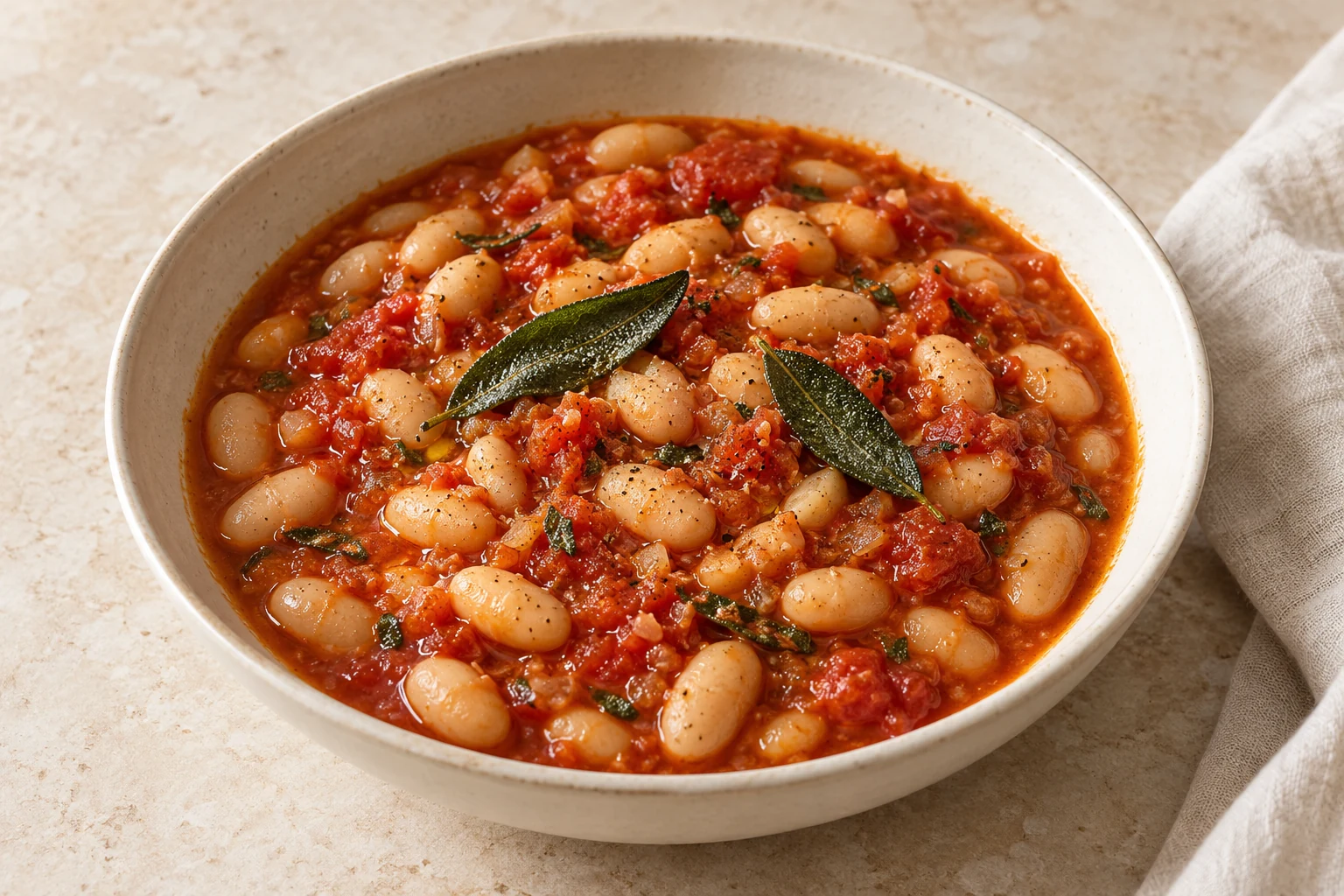
Creamy cannellini beans simmer in a garlic-and-sage tomato sauce, finished with olive oil for a simple Tuscan-style side.
Save to your Saucey Space, or keep a bookmark on this device.
A NOTE FROM THE KITCHEN
Let sage season the oil.
The name refers to cooking “in the little-bird style,” but these beans contain no bird. This practical home version starts with canned cannellini rather than dried beans, so there is no soaking or separate bean-cooking stage. Gentle heat preserves their creamy centers and delicate skins.
Ready to get started? The ingredients and steps are right below.
LET’S MAKE SOMETHING GOOD
Fagioli all’uccelletto
Sample recipe awaiting kitchen testing. Timings are estimates.
The good part
Check off each step as you cook.
0 of 4 steps complete
BEHIND THE DISH · Tuscany · Florence and surrounding traditions
Fagioli all’uccellettoBeyond the plate.
Fagioli all’uccelletto puts beans at the center of a Tuscan side dish. Its playful name and modest ingredients open onto a wider story of trattorie, regional agriculture and everyday cooking skill.
ORIGINS & EVOLUTION
The little birds are in the name
Pellegrino Artusi’s recipe 384 records beans cooked with oil, sage and tomato, using a name he heard in Florentine trattorie. It documents an established preparation without identifying its inventor.
The bird reference is commonly explained through sage and other seasonings also used with small game birds. That explanation is plausible, but the naming history is not settled. A pan of fagioli all’uccelletto need not contain any meat at all.
CULTURAL IMPACT
Beans as a recognizable Tuscan flavor
The combination of cannellini, garlic, sage, tomato and olive oil makes a distinctive dish from a short ingredient list. Tuscan versions may be served beside meat, while preparations with added sausage can become a more substantial course. Our recipe follows the meatless side-dish approach.
Gentle cooking is part of its character: intact beans sit in a sauce enriched by their own starch. Traditional accounts describe earthenware pots, while modern recipes also use ordinary saucepans or ovens. The vessel can change without losing the attention paid to creamy beans and fragrant oil.
SOCIAL HISTORY
The landscape behind the beans
Tuscany’s bean culture reaches beyond cannellini. Around Pratomagno, growers cultivate the small Zolfino bean on well-drained terraces, sometimes beneath olive trees. Efforts to maintain this delicate, relatively low-yielding crop connect regional food identity with the work of farmers and the survival of local varieties.
Zolfino is an example of that wider culture, not a required ingredient here. Using canned cannellini changes the household work involved: soaking and boiling have already been done. The cook can concentrate on the sauce, making a traditional flavor combination practical within a shorter evening schedule.
What else sounds good?
There’s a little more inspiration in the kitchen.
Back to the recipes