
British · Drinks · SAMPLE RECIPE
Espresso martini
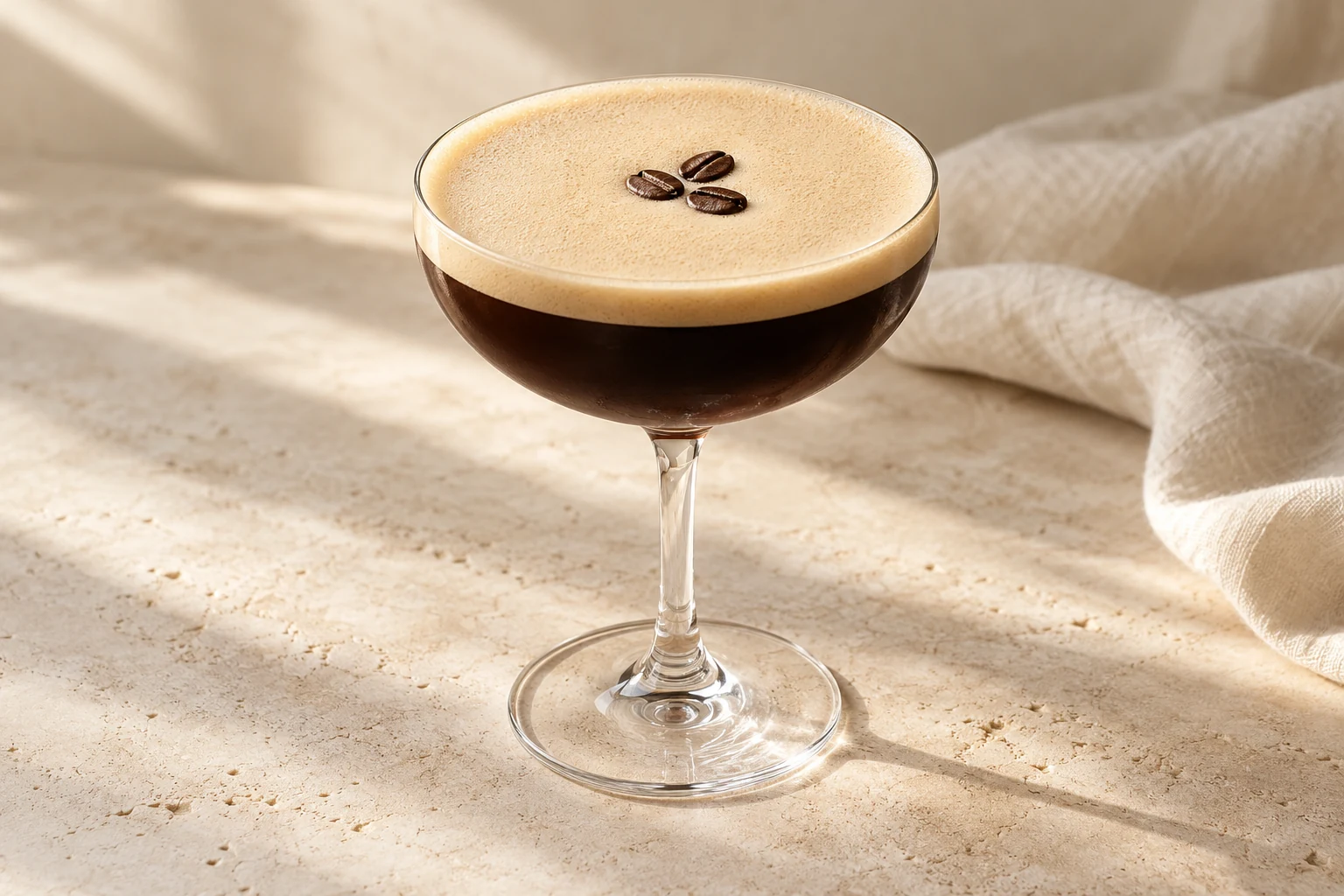
Fresh espresso, vodka, and coffee liqueur shake into a deep brown cocktail with a soft tan foam and a coffee-bean finish.
Save to your Saucey Space, or keep a bookmark on this device.
A NOTE FROM THE KITCHEN
Coffee strength and sweetness both matter.
Contains alcohol. This London-inspired home version uses freshly brewed espresso cooled before shaking. Coffee liqueurs vary in sweetness, so the syrup is optional.
Ready to get started? The ingredients and steps are right below.
LET’S MAKE SOMETHING GOOD
Espresso martini
Sample recipe awaiting kitchen testing. Timings are estimates. Contains alcohol.
The good part
Check off each step as you cook.
0 of 4 steps complete
BEHIND THE DISH · London, England
Espresso martiniBeyond the plate.
The espresso martini belongs to modern London bar culture. Its history follows Dick Bradsell’s coffee experiments and the people who carried his creation around the world.
ORIGINS & EVOLUTION
Coffee was already beside the bar.
Bradsell developed the drink at the Soho Brasserie during the 1980s. Accounts disagree about the year. In his recollection, a coffee machine beside his station suggested a mixture of strong coffee, vodka, coffee liqueurs, and sugar.
The early Vodka Espresso was served over ice. Bradsell later recalled serving a version without ice at Match under the Espresso Martini name, while another incarnation was called the Pharmaceutical Stimulant. Those changes describe a recipe refined across venues, rather than one finished formula that never altered.
CULTURAL IMPACT
A familiar silhouette, a different drink.
The martini glass suited the cocktail fashions of the 1990s, but this drink contains neither gin nor vermouth. Coffee liqueur bridges the espresso and vodka, and a vigorous shake produces its characteristic foam. The familiar name and glass helped make an otherwise distinctive coffee cocktail easy to recognize.
Bradsell welcomed variations, describing adaptability as one reason a drink survives. His daughter Bea also recalled his continued adjustments and his attention to sweetness according to the drinker’s preference. That approach remains useful when coffee roasts and liqueurs can differ substantially in bitterness, aroma, and sugar.
SOCIAL HISTORY
A recipe travels through people.
Bea remembered Australian visitors coming to El Camion in London to meet her father because they knew his cocktail. She connects that interest with Australia’s strong coffee culture. The account offers a concrete example of a recipe making a bartender and his workplace a destination for travelers.
His working life also depended on learning from other bartenders. Bradsell credited an early mentor at the Zanzibar Club with teaching him cocktail principles and an openness to improvement. The espresso martini’s history therefore includes practical knowledge passed between colleagues, alongside the better-known story about a customer’s unusual request.
What else sounds good?
There’s a little more inspiration in the kitchen.
Back to the recipes