
Japanese · Dessert · SAMPLE RECIPE
Daigaku imo · candied Japanese sweet potatoes
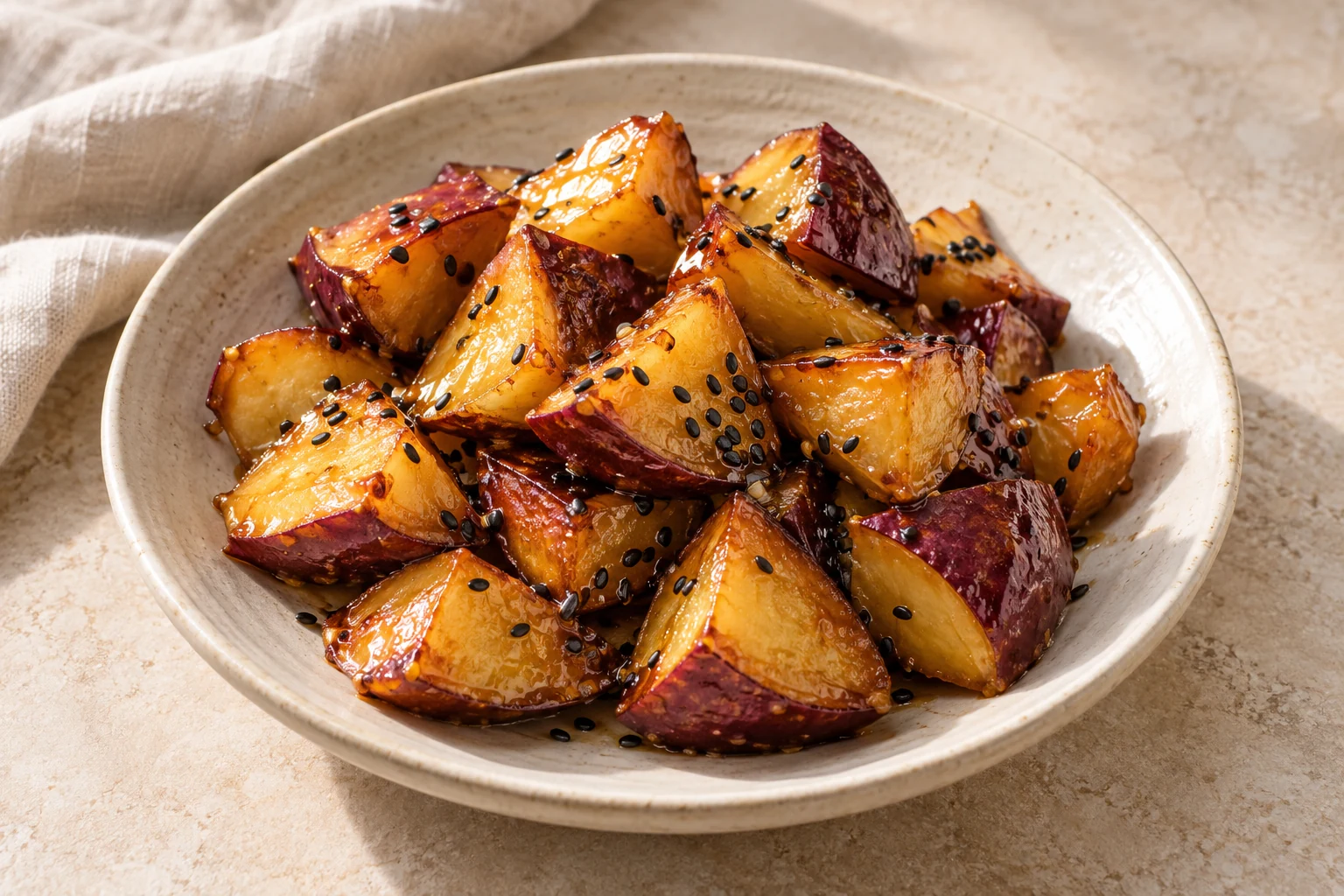
Golden sweet-potato pieces with a shiny sugar glaze and a scattering of black sesame. Crisp at the edges, tender inside, and just a little savory.
Save to your Saucey Space, or keep a bookmark on this device.
A NOTE FROM THE KITCHEN
Japanese sweet potatoes keep their shape.
Choose firm Japanese satsumaimo, usually purple-skinned with pale yellow flesh. Orange-fleshed sweet potatoes have a wetter texture and will not behave quite the same. This version fries the potato pieces, then coats them in a simple soy-accented glaze.
Ready to get started? The ingredients and steps are right below.
LET’S MAKE SOMETHING GOOD
Daigaku imo · candied Japanese sweet potatoes
Sample recipe awaiting kitchen testing. Timings are estimates.
The good part
Check off each step as you cook.
0 of 4 steps complete
BEHIND THE DISH · Japanese sweet-potato snacks
Daigaku imo · candied Japanese sweet potatoesBeyond the plate.
A glossy coating turns firm Japanese sweet potatoes into a warmly sweet snack with a savory edge.
ORIGINS & EVOLUTION
A familiar candied sweet potato.
Daigaku imo is a Japanese preparation of sweet-potato pieces coated in a sweet glaze, often finished with sesame. Methods range from frying to pan-cooking, and the balance of sugar and soy sauce varies.
CULTURAL CONTEXT
Sweet enough for a treat.
The dish sits comfortably between snack and dessert. Japanese sweet potatoes bring a dense, gently sweet interior, while the cooked skin and edges provide contrast to the shiny coating.
AT THE TABLE
Fried pieces with a simple glaze.
This version uses satsumaimo with their skins on. After frying until tender, the pieces meet a sugar glaze seasoned with a small amount of soy sauce. Black sesame is scattered over them, leaving their uneven shapes visible.
What else sounds good?
There’s a little more inspiration in the kitchen.
Back to the recipes