American · Soup · SAMPLE RECIPE
Creamy tomato soup
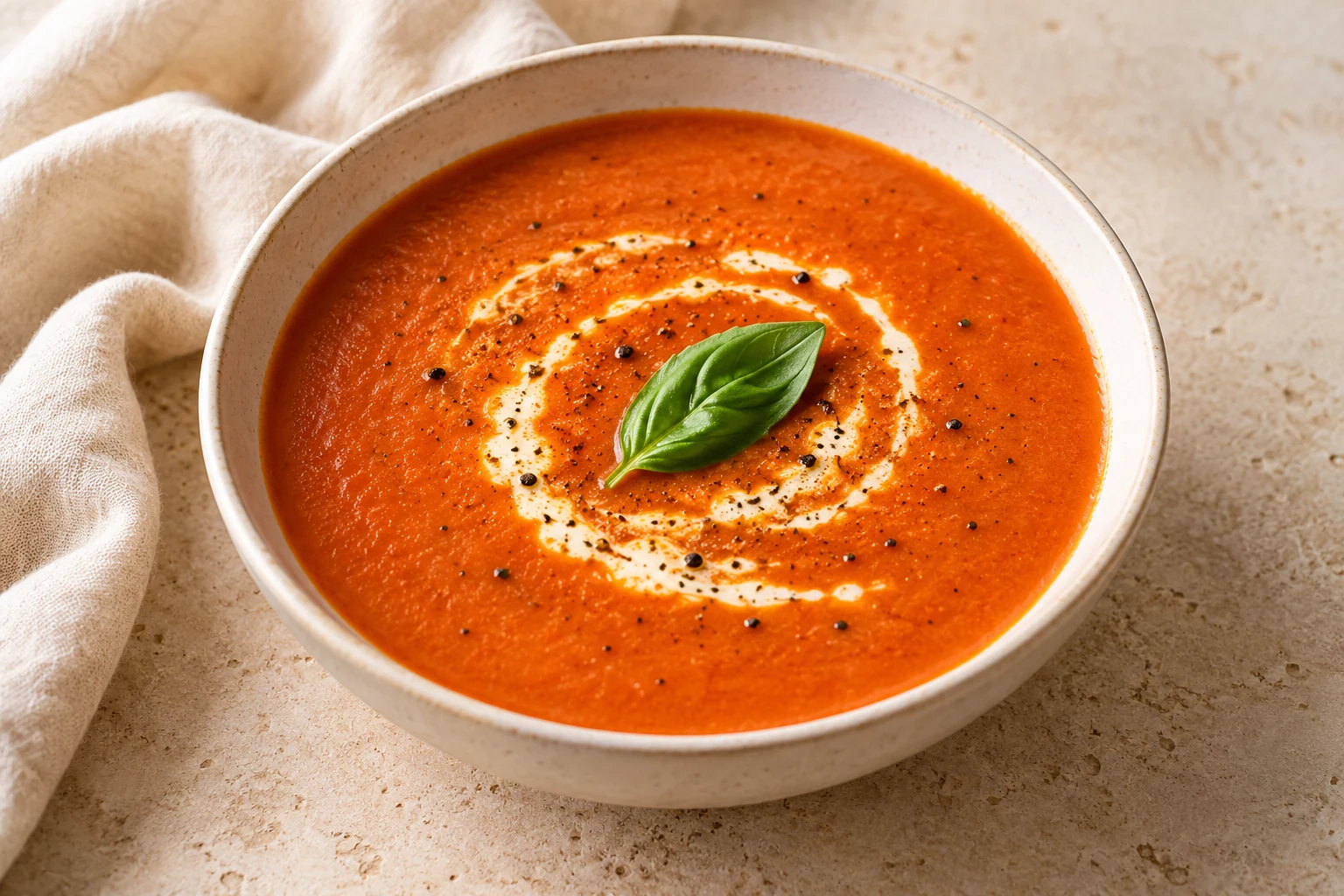
A smooth, warming tomato soup made with pantry tomatoes, a slowly softened onion, and a splash of cream. Fresh basil gives each bowl a bright finish.
Save to your Saucey Space, or keep a bookmark on this device.
A NOTE FROM THE KITCHEN
Canned tomatoes make this a year-round soup.
Whole peeled tomatoes give a rounded base after a gentle simmer. Their acidity varies, so taste the finished soup before deciding whether it needs the optional sugar. The cream softens the flavor without hiding the tomatoes.
Ready to get started? The ingredients and steps are right below.
LET’S MAKE SOMETHING GOOD
Creamy tomato soup
Sample recipe awaiting kitchen testing. Timings are estimates.
The good part
Check off each step as you cook.
0 of 4 steps complete
BEHIND THE DISH · United States
Creamy tomato soupBeyond the plate.
Creamy tomato soup has a history in both the saucepan and the can. American recipe books, industrial food production, and an artist’s fascination with everyday packaging helped turn a simple bowl into a recognizable cultural image.
ORIGINS & EVOLUTION
Home cooking and the canned-soup era.
The 1910 edition of Fannie Farmer’s cookbook includes cream of tomato soup made with canned tomatoes, milk, butter, and flour. This is evidence of an established home preparation, not a claim that Farmer invented the dish. Its dairy-enriched style differs from a clear tomato broth.
Commercial soup developed alongside such cooking. Campbell introduced a ready-to-serve tomato soup in 1895, followed by condensed soup in 1897. Removing water allowed smaller packages and lower prices. That innovation helped make prepared soup a practical product for a much wider market.
CULTURAL IMPACT
The soup can enters the gallery.
In 1962, Andy Warhol exhibited thirty-two paintings of Campbell’s soup cans, one for each variety then sold. They stood on shelves like groceries. The repeated labels brought an ordinary packaged food into the setting of an art gallery.
The paintings invite attention to repetition, advertising, and the things people encounter every day. Their familiar appearance depended on the can already being recognizable. Tomato soup’s cultural story therefore includes the packaging around the meal, as well as the meal itself.
SOCIAL HISTORY
Convenience already belonged in the kitchen.
Farmer’s use of canned tomatoes is a reminder that cooking from a recipe and using preserved ingredients were already compatible. Her suggested luncheon menus paired cream of tomato soup with croutons, an omelet, bread, and other foods, placing it within a planned household meal.
Our soup follows that useful meeting of pantry ingredients and hands-on cooking. Canned whole tomatoes meet a softened onion, vegetable broth, and a measured splash of cream. Blending replaces straining, and there is no flour-thickened milk base. It is a contemporary home version within a broader tradition.
What else sounds good?
There’s a little more inspiration in the kitchen.
Back to the recipes