
British · Drinks · SAMPLE RECIPE
Corpse Reviver No. 2 · gin, citrus & absinthe
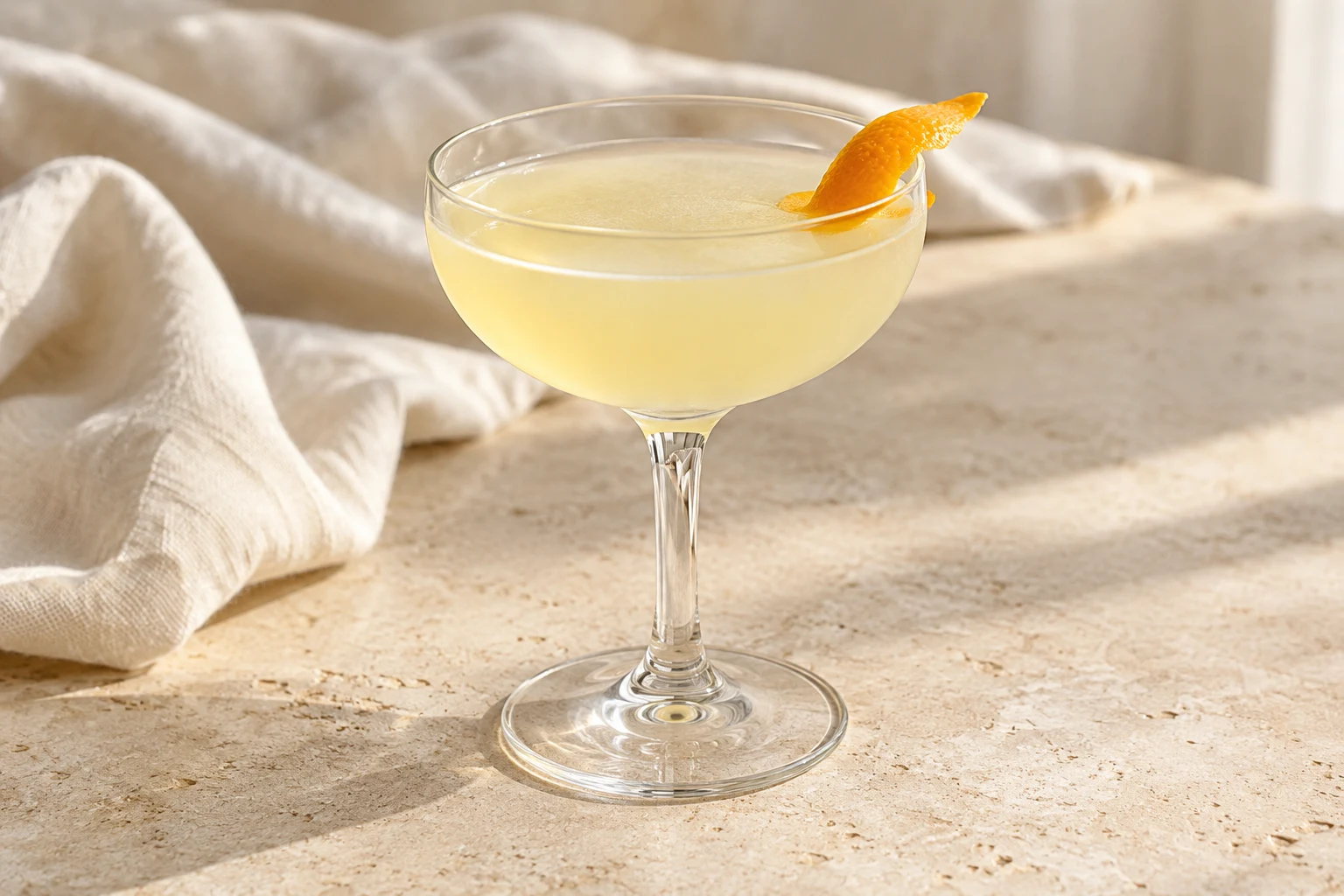
Gin, orange liqueur, Lillet Blanc, and lemon in equal measures, sharpened by a small dash of absinthe. A bright cocktail with a gentle anise aroma.
Save to your Saucey Space, or keep a bookmark on this device.
A NOTE FROM THE KITCHEN
A little absinthe goes a long way.
This version uses Lillet Blanc, a wine-based aperitif, and a measured dash of absinthe in the shaker. It is a cocktail, not a remedy despite its historical name. A small orange peel supplies the final aroma; no syrup is needed.
Ready to get started? The ingredients and steps are right below.
LET’S MAKE SOMETHING GOOD
Corpse Reviver No. 2 · gin, citrus & absinthe
Sample recipe awaiting kitchen testing. Timings are estimates. Contains alcohol.
The good part
Check off each step as you cook.
0 of 3 steps complete
BEHIND THE DISH · British hotel-bar cocktail traditions
Corpse Reviver No. 2 · gin, citrus & absintheBeyond the plate.
Gin, orange liqueur, aromatized wine, and lemon meet a small dash of absinthe in this bright, sharply scented classic.
ORIGINS & EVOLUTION
One numbered member of a larger family.
The Corpse Reviver name has been used for more than one cocktail. The No. 2 appears in Harry Craddock’s 1930 Savoy Cocktail Book, giving this gin-and-citrus combination a lasting place in the London hotel-bar tradition.
CULTURAL CONTEXT
A dramatic name, a measured recipe.
The old name belongs to cocktail history; it is not a promise of recovery or a remedy. The recognizable structure uses equal measures of four main liquids, with only a little absinthe to add anise aroma rather than overwhelm them.
AT THE TABLE
A contemporary Lillet Blanc version.
Our recipe uses the present-day Lillet Blanc specified by the International Bartenders Association and a modest serving size. Orange peel finishes the shaken drink. It does not claim to reproduce every historical bottle or formulation.
What else sounds good?
There’s a little more inspiration in the kitchen.
Back to the recipes