
Indian · Main course · SAMPLE RECIPE
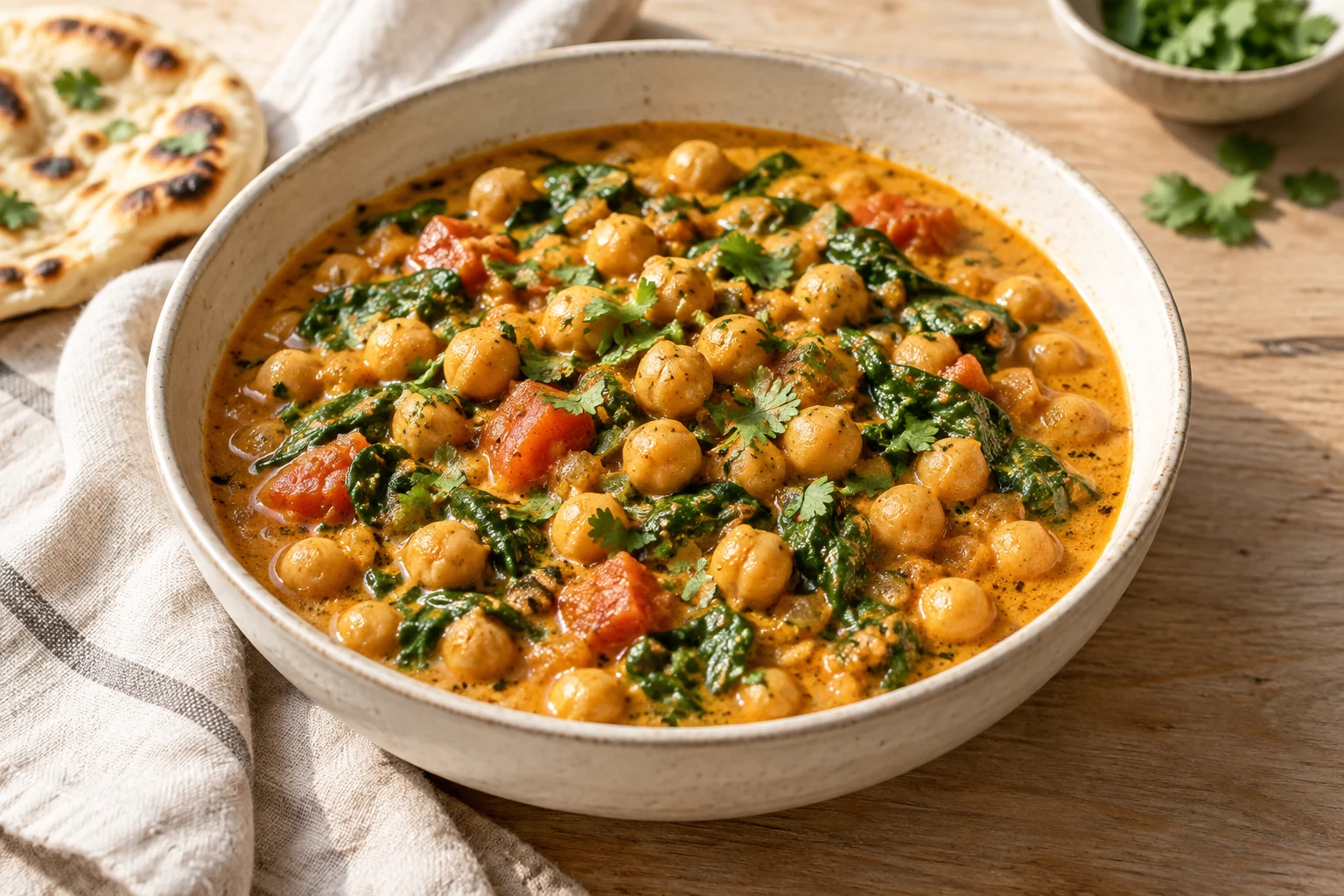
Coconut chickpea & spinach curry
A cozy bowl of chickpeas, warming spices, and silky coconut milk, finished with tender spinach.
Save to your Saucey Space, or keep a bookmark on this device.
A NOTE FROM THE KITCHEN
Comfort, by the spoonful.
This Indian-inspired pantry curry uses a simple blend of ground spices. Let them bloom briefly in the oil, then add the tomatoes before they catch.
Ready to get started? The ingredients and steps are right below.
LET’S MAKE SOMETHING GOOD
Coconut chickpea & spinach curry
Sample recipe awaiting kitchen testing. Timings are estimates.
The good part
Check off each step as you cook.
0 of 4 steps complete
BEHIND THE DISH · Indian-inspired · contemporary pantry cooking
Coconut chickpea & spinach curryBeyond the plate.
Chickpeas, coconut milk, tomatoes, and spinach make a generous pantry supper. Behind this contemporary combination lie the diversity of Indian cooking and the journeys carried inside the word curry.
ORIGINS & EVOLUTION
An inspired combination, with its own identity.
This contemporary Indian-inspired home recipe combines canned chickpeas and coconut milk with tomatoes, greens, and individually measured spices. It is one pantry interpretation within a much wider world of spiced dishes, rather than an exact version of one regional preparation.
Kerala’s kadala curry offers a revealing comparison. A documented preparation uses black chickpeas and a paste of toasted coconut and spices, and is paired with puttu, a steamed rice-and-coconut preparation. Our larger canned chickpeas, coconut milk, and spinach take a different route. The connection is a family resemblance in ingredients, not a claim of direct descent.
CULTURAL IMPACT
A familiar word that covers many dishes.
The international word curry can hide differences in ingredients, texture, technique, and regional identity. Comparing this pot with kadala curry makes that tangible: different chickpeas and forms of coconut produce different dishes. This recipe’s broad name is an invitation to explore those distinctions.
Britain’s relationship with curry developed through empire, imported spices, cookbooks, and restaurants. Commercial curry powders made a portable idea of Indian flavor available to home cooks. Our recipe measures cumin, coriander, and turmeric separately, making its seasoning choices visible rather than relying on one ready-mixed powder.
SOCIAL HISTORY
Food, work, and a place to meet.
In early twentieth-century East London, Bengali seafarers found meals and support in cafés and lodging houses run by people from their communities. Former sailors and ship’s cooks were among the proprietors. These businesses offered company and practical help as well as food.
That history is part of the background to Britain’s later curry restaurants, though it is not the origin of this chickpea dish. It shows how foods travel through working lives and migration. A familiar menu category can contain stories of settlement, employment, and people building a place for themselves.
What else sounds good?
There’s a little more inspiration in the kitchen.
Back to the recipes