
Cuban · Drinks · SAMPLE RECIPE
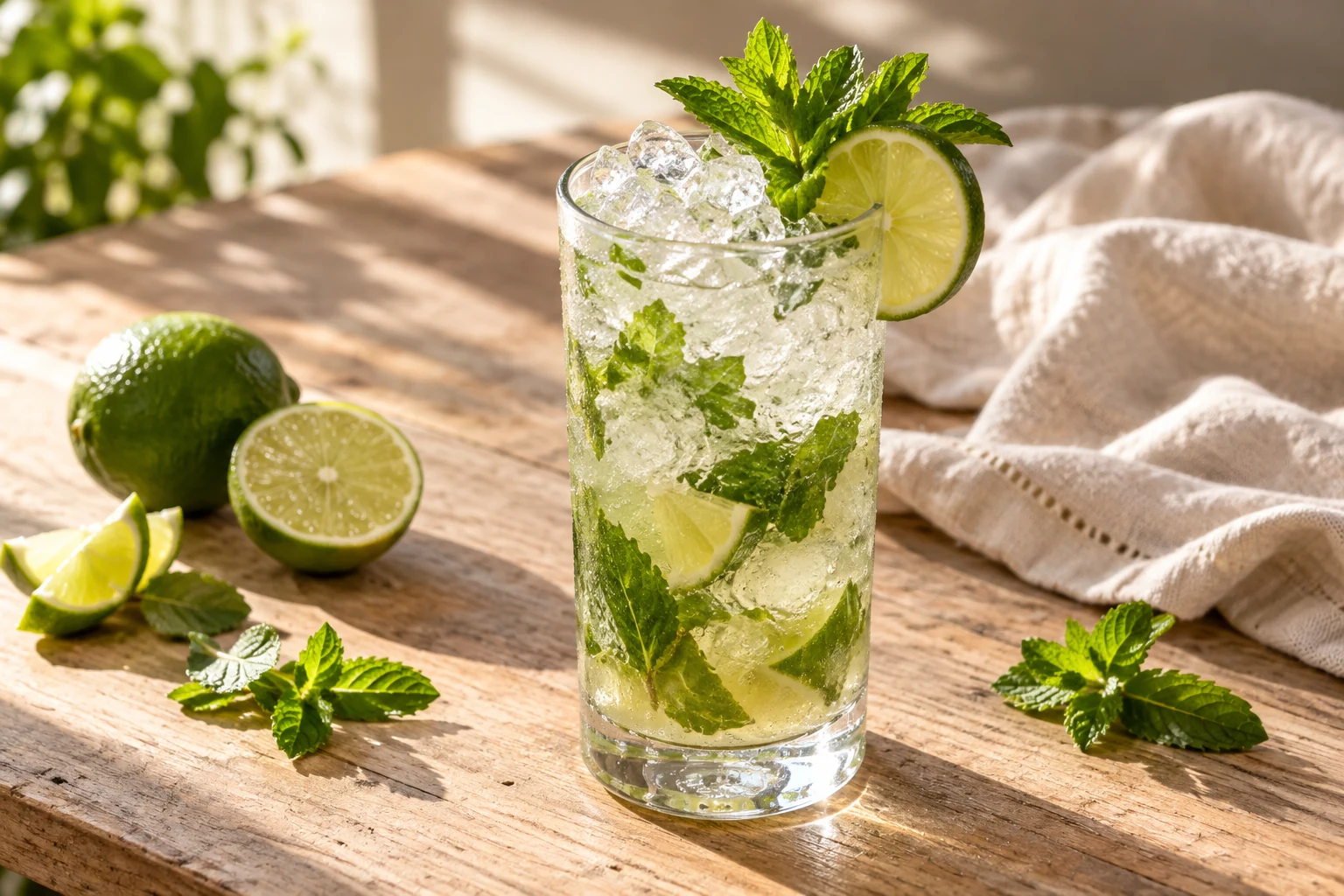
Classic lime & mint mojito
Lime, fresh mint, white rum, and a splash of soda. Crisp, bright, and made to sip slowly.
Save to your Saucey Space, or keep a bookmark on this device.
A NOTE FROM THE KITCHEN
A gentle muddle is enough.
Press the mint just enough to release its aroma; shredding it can overwhelm the drink. This recipe contains alcohol.
Ready to get started? The ingredients and steps are right below.
LET’S MAKE SOMETHING GOOD
Classic lime & mint mojito
Sample recipe awaiting kitchen testing. Timings are estimates. Contains alcohol.
The good part
Check off each step as you cook.
0 of 4 steps complete
BEHIND THE DISH · Cuba
Classic lime & mint mojitoBeyond the plate.
Mint, lime, sugar, rum, and soda give the mojito its recognizable shape. The most convincing parts of its history live in printed recipes, Havana’s bar culture, and the movements of bartenders and drinkers across the Caribbean and beyond.
ORIGINS & EVOLUTION
A Cuban classic with uncertain beginnings.
The mojito is firmly associated with Cuba, but its exact inventor and earliest form remain uncertain. A closely related rum drink appears as Mojo de Ron in a 1929 Cuban cocktail manual. Sloppy Joe’s Havana booklet for the 1931–32 season then lists the familiar Mojito name.
That booklet includes both rum and gin versions, showing that the name was not yet attached to only one spirit. Today’s familiar preparation centers on white rum, fresh lime, mint, sugar, and soda. Our version follows that combination, with gentle muddling and crushed ice.
CULTURAL IMPACT
A local drink becomes an international language.
Havana’s bars introduced the drink to American visitors during Prohibition. Later, Cuban migrants in Miami helped renew its popularity in the 1980s. The mojito’s international life therefore includes both tourism and people carrying a familiar drinking culture into a new home.
Its recognizable combination also gives bartenders a shared starting point. A tall glass, fresh citrus, aromatic mint, and a sparkling finish distinguish it from a short shaken rum cocktail. The proportions can differ while the central idea remains easy to recognize.
SOCIAL HISTORY
The bar as a place of movement and exchange.
The 1932 Sloppy Joe’s booklet gives a revealing account of its proprietor, José Abeal. It describes a working life that moved from Spain to Cuba, then through bars in New Orleans and Miami before returning to Havana. The setting around the drink was already connected across borders.
The booklet also advertised imported spirits and presented recipes to an English-reading audience. These details offer a concrete picture of commercial hospitality: bartending skills, suppliers, travelers, and printed souvenirs working together. They tell us more about the mojito’s documented world than an unverified story about one famous drinker.
What else sounds good?
There’s a little more inspiration in the kitchen.
Back to the recipes