Mexican · Drinks · SAMPLE RECIPE
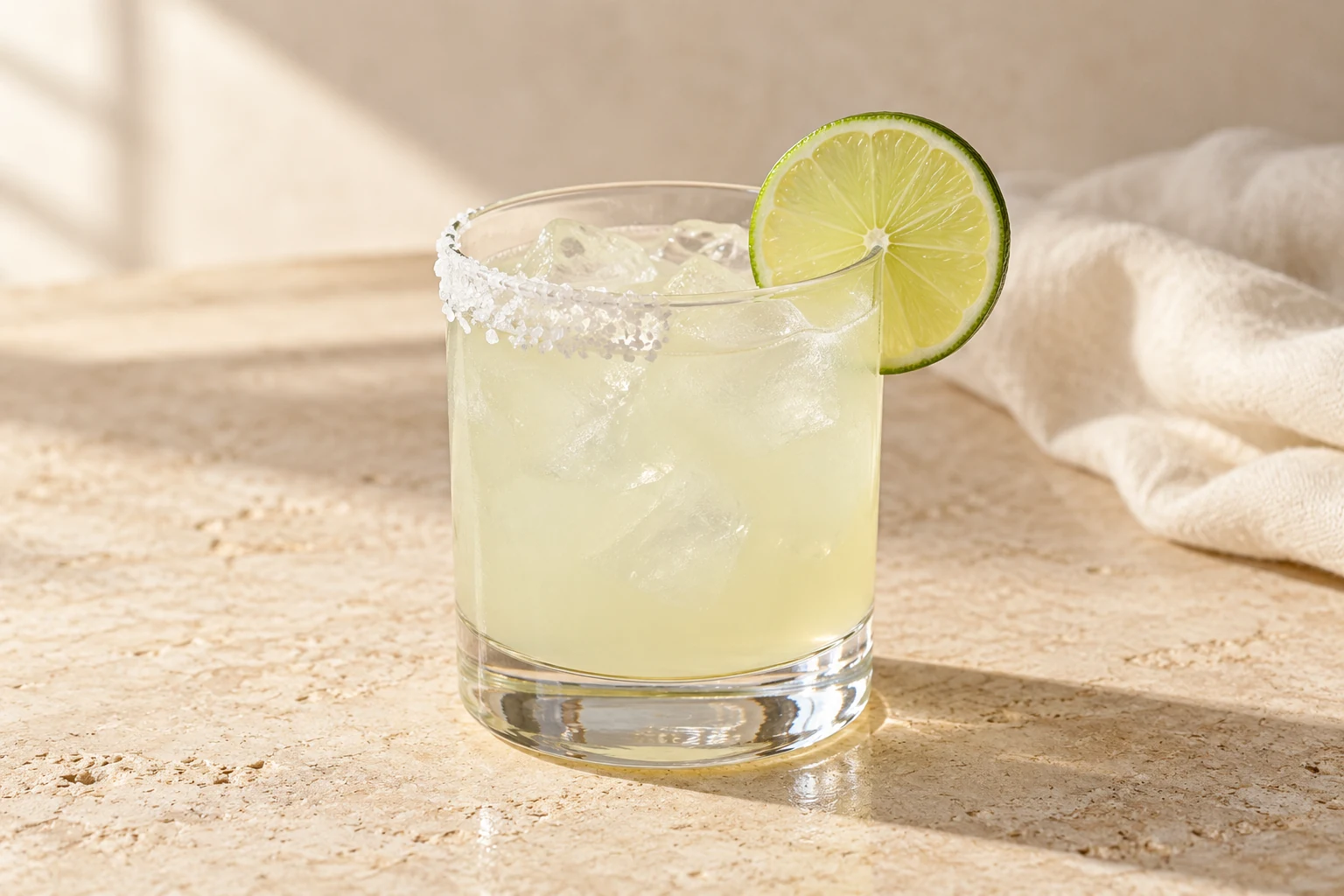
Classic lime margarita
Tequila, orange liqueur, and freshly squeezed lime make a bright, tart margarita, shaken cold and poured over fresh ice.
Save to your Saucey Space, or keep a bookmark on this device.
A NOTE FROM THE KITCHEN
Fresh lime gives this drink its shape.
Contains alcohol. This home version uses the familiar tequila, orange liqueur, and lime combination, served over ice. The orange liqueur supplies the sweetness; choose a 100% agave blanco tequila and an orange liqueur you enjoy.
Ready to get started? The ingredients and steps are right below.
LET’S MAKE SOMETHING GOOD
Classic lime margarita
Sample recipe awaiting kitchen testing. Timings are estimates. Contains alcohol.
The good part
Check off each step as you cook.
0 of 3 steps complete
BEHIND THE DISH · Mexico and the United States
Classic lime margaritaBeyond the plate.
The margarita connects Mexican tequila with a border-crossing bar tradition. Its balance of spirit, orange liqueur, and citrus is easier to trace than its inventor, while later popularity owes much to Mexican American restaurants and a practical piece of machinery.
ORIGINS & EVOLUTION
A recognizable drink before a settled name.
Tequila, orange liqueur, and lime appeared together as the Picador in a London cocktail book in 1937. A 1939 New York Tequila Sour added the salt rim. These printed relatives complicate later claims to have invented the combination.
By September 1953, a California newspaper described margaritas served in Ensenada, Mexico; a magazine recipe followed that December. Several competing personal invention stories survive. The available record supports a drink circulating between places, with its ingredients and name becoming established at different moments.
CULTURAL IMPACT
A restaurant drink learns to freeze.
The margarita became a familiar part of Mexican American restaurant dining. Blended versions added another texture, but a busy bar could struggle to make every batch equally cold and smooth. The frozen drink therefore created a production problem as well as a new preference among customers.
In Dallas in 1971, restaurateur Mariano Martinez and chemist John Hogan adapted a soft-serve ice-cream machine to make frozen margaritas. Their work drew on Martinez’s father’s recipe and the example of the convenience-store Slurpee. Restaurant service helped drive a lasting change in how the cocktail was prepared.
SOCIAL HISTORY
Behind the glass is someone making a round.
The machine story brings bartenders’ work into view: consistency matters when many people order the same drink. A cocktail’s history can include the equipment, family recipes, and small-business decisions that make repeated service possible, alongside the more familiar stories about glamorous guests.
Our version returns to a hand-shaken drink over fresh ice. Lime supplies acidity, orange liqueur supplies sweetness, and a half salt rim makes the seasoning optional from sip to sip. This preparation does not claim to reproduce a disputed first margarita.
What else sounds good?
There’s a little more inspiration in the kitchen.
Back to the recipes