
Levantine · Appetizer · SAMPLE RECIPE
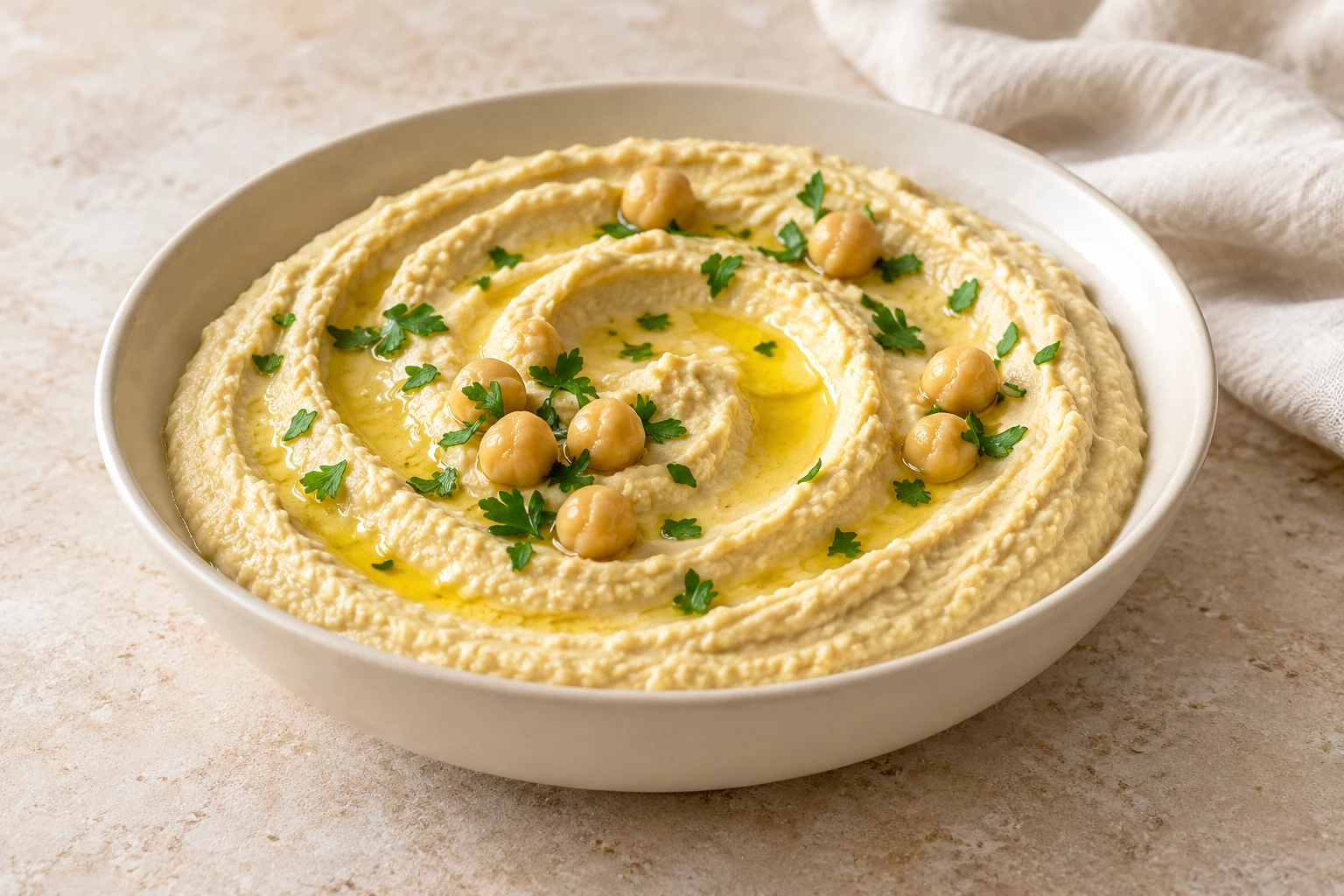
Classic lemon & tahini hummus
A creamy chickpea dip with nutty tahini, fresh lemon, and a little garlic. Canned chickpeas make it easy to bring a bowl to the table in about 15 minutes.
Save to your Saucey Space, or keep a bookmark on this device.
A NOTE FROM THE KITCHEN
Tahini brings more than creaminess.
Chickpeas, tahini, lemon, and garlic are at the heart of this Levantine dip. This quick home version uses canned chickpeas, so no soaking or cooking is needed. The batch makes about 3 cups, enough for 8 small appetizer portions.
Ready to get started? The ingredients and steps are right below.
LET’S MAKE SOMETHING GOOD
Classic lemon & tahini hummus
Sample recipe awaiting kitchen testing. Timings are estimates.
The good part
Check off each step as you cook.
0 of 4 steps complete
BEHIND THE DISH · The Levant
Classic lemon & tahini hummusBeyond the plate.
Hummus is a dish, a meal, and a point of cultural attachment. Its history reaches through Arabic cookbooks and neighborhood shops into modern food factories, with no securely established single inventor or exclusive national birthplace.
ORIGINS & EVOLUTION
A family of chickpea and sesame dishes.
Medieval Arabic cookbooks contain chickpea and tahini preparations related to today’s hummus. Their seasonings could include vinegar, preserved lemon, nuts, and herbs or spices that are less usual in the modern dip. They are historical relatives, not necessarily identical recipes preserved unchanged.
The recurring combination is easier to trace than a single moment of invention: chickpeas, sesame paste, savory seasoning, and acidity. Reading the older dishes together reveals a wider tradition of foods with a texture suited to scooping with bread, rather than one timeless formula.
CULTURAL IMPACT
A shared regional dish carries local identities.
Hummus has deep roots in Arab food culture and especially strong associations across the Levant. Its adoption as an Israeli national food also made it part of arguments about identity and ownership. Recognizing that later history does not erase its Palestinian and wider Arab connections.
Industrial production added another layer. Research dates the first industrialized hummus in Israel to 1958 and shows that packaged and handmade versions developed together. Wider supermarket availability did not simply make specialist hummus shops disappear; both helped shape how the dish was understood and valued.
SOCIAL HISTORY
The neighborhood shop matters.
In Jerusalem and other Levantine cities, hummus shops can serve as familiar gathering places, with family loyalties and strongly held preferences about texture and seasoning. A plate belongs to a local routine as much as to a category on an international supermarket shelf.
Shop menus also reach beyond the smooth dip: whole chickpeas with tahini and hummus topped with fava beans are related dishes with their own identities. Our quick bowl uses canned chickpeas and a food processor, bringing one accessible version of this much broader tradition into a home kitchen.
What else sounds good?
There’s a little more inspiration in the kitchen.
Back to the recipes