
Cuban · Drinks · SAMPLE RECIPE
Classic lime daiquiri
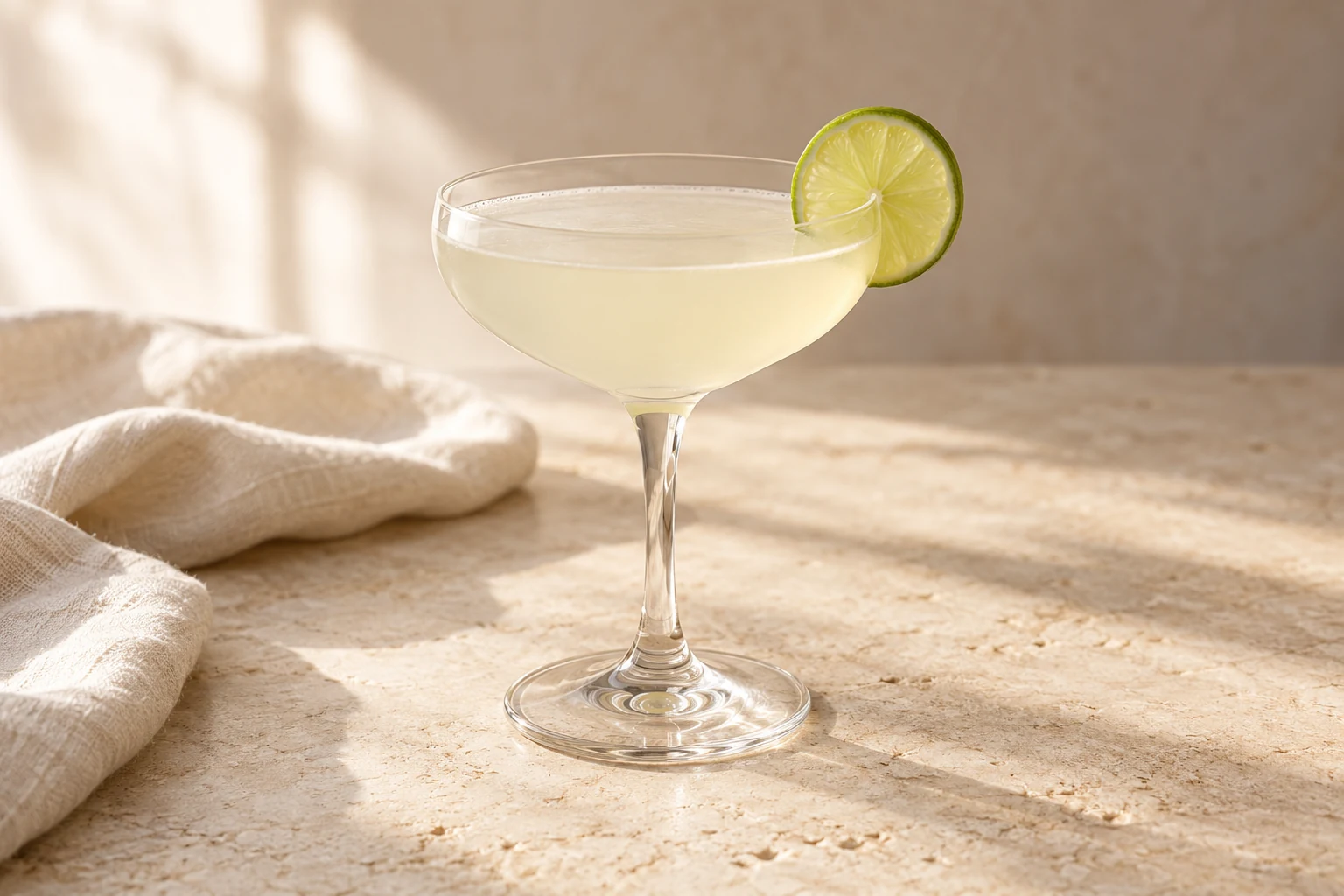
White rum, fresh lime, and a measured touch of sweetness, shaken until icy cold and served smooth in a coupe.
Save to your Saucey Space, or keep a bookmark on this device.
A NOTE FROM THE KITCHEN
Three ingredients, carefully balanced.
Contains alcohol. This is a shaken Cuban-style daiquiri served without ice in the glass. Ready-to-use simple syrup replaces granulated sugar for easy mixing. Its sweetness should round out the lime while leaving the rum clear and fragrant.
Ready to get started? The ingredients and steps are right below.
LET’S MAKE SOMETHING GOOD
Classic lime daiquiri
Sample recipe awaiting kitchen testing. Timings are estimates. Contains alcohol.
The good part
Check off each step as you cook.
0 of 3 steps complete
BEHIND THE DISH · Cuba
Classic lime daiquiriBeyond the plate.
A classic daiquiri is a cold meeting of rum, citrus, and sugar. Its story connects eastern Cuba, American mining and naval circles, and the bars where it traveled. The familiar tale of one inventor leaves questions unresolved.
ORIGINS & EVOLUTION
A surviving recipe and several stories.
Jennings Cox, an American mining engineer near Daiquirí in eastern Cuba, is associated with the drink’s beginnings. A handwritten recipe attributed to him survives in the University of Miami’s Cuban Heritage Collection. It documents a recipe without proving that one person first combined these ingredients.
Accounts disagree over the exact circumstances and date of invention. Even the surviving recipe’s citrus wording raises questions: it says lemon, while the established modern cocktail uses lime. Rum, citrus, and sugar also belong to a wider Caribbean family of drinks, so a single moment cannot explain the whole tradition.
CULTURAL IMPACT
A compact formula travels widely.
In 1909, naval medical officer Lucius Johnson encountered Cox’s drink in Cuba and later brought it to Washington’s Army and Navy Club. Johnson recalled the meeting in a newspaper decades afterward. This route into American club culture rests partly on later recollection, which deserves careful reading.
Cuban daiquiris also developed a celebrated association with Ernest Hemingway. The variation bearing his name adds grapefruit and maraschino liqueur to the rum-and-lime foundation. That branch illustrates how a recognizable cocktail can generate its own family, with new names recording particular tastes and bar relationships.
SOCIAL HISTORY
A club keeps the connection alive.
The Washington club’s Daiquiri Lounge preserves the naval connection in its name. In 2017, a portrait of Johnson was dedicated there at a gathering of club members and naval-history organizations. The ceremony shows how a drink can become part of an institution’s shared memory long after its arrival.
Our recipe uses ready-made simple syrup so the sweetness mixes evenly before shaking. It is strained into a cold coupe, without ice in the glass. These choices simplify preparation while preserving the clear, tart character of a classic shaken daiquiri.
What else sounds good?
There’s a little more inspiration in the kitchen.
Back to the recipes