
French · Dessert · SAMPLE RECIPE
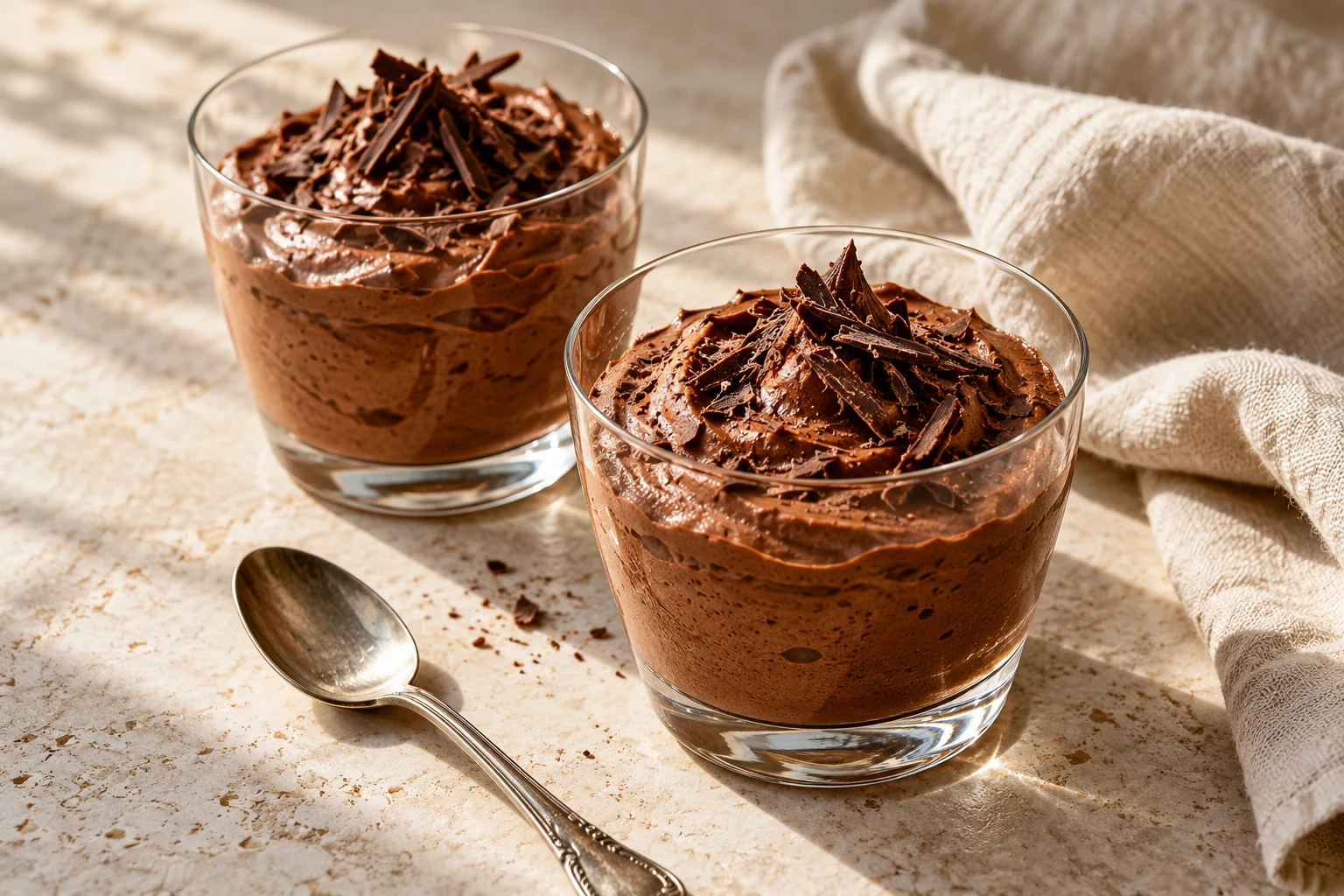
Easy dark chocolate mousse
Rich dark chocolate, soft whipped cream, and a little patience while it chills.
Save to your Saucey Space, or keep a bookmark on this device.
A NOTE FROM THE KITCHEN
A little chocolate goes a long way.
This French-inspired mousse uses whipped cream instead of eggs. Let the chocolate cool until barely warm before folding so the mixture stays light.
Ready to get started? The ingredients and steps are right below.
LET’S MAKE SOMETHING GOOD
Easy dark chocolate mousse
Sample recipe awaiting kitchen testing. Timings are estimates.
The good part
Check off each step as you cook.
0 of 4 steps complete
BEHIND THE DISH · France · whipped-cream adaptation
Easy dark chocolate mousseBeyond the plate.
Chocolate mousse makes richness feel light by giving it air. Its history runs through French cookbooks, changing access to chocolate, and the teaching of a technique that can turn a small bowl of ingredients into an elegant dessert.
ORIGINS & EVOLUTION
An old idea with several forms.
Chocolate mousse predates the colorful stories assigning it to a modern artist or celebrity chef. A French cookbook published in 1768 includes chocolate mousse made with cream. That documented example places the idea well before those later invention legends.
Recipes subsequently took different directions, including preparations with egg yolks, beaten whites, whipped cream, or combinations of them. Our easy version is a contemporary French-inspired adaptation: chocolate is combined with warm cream, then folded into whipped cream. It contains no eggs and makes no claim to be the single definitive French formula.
CULTURAL IMPACT
Cookbooks carry a technique across borders.
Antoine Beauvilliers published chocolate mousse in a French cookbook in 1814; an English-language edition later called it whipped chocolate cream. The change of language is a small example of how a preparation could travel while remaining recognizable.
By the late nineteenth century, American cooking teacher Maria Parloa was demonstrating chocolate mousse, although her published version was frozen. The name has therefore covered more than one texture over time. What connects these preparations is the ambition to make chocolate into something airy, with careful handling doing much of the work.
SOCIAL HISTORY
From expensive chocolate to a home dessert.
Chocolate in early modern France was associated with wealthy consumers and the royal court, often as a drink. Marie-Antoinette had a personal chocolate maker, while specialist workshops developed recipes and techniques. Skilled labor helped make an expensive ingredient desirable.
Nineteenth-century factories widened chocolate’s availability. That change provides useful background to its growing place in domestic desserts, without proving that mousse appeared in every household. Today’s small glasses of mousse join two histories: the production that makes chocolate accessible and the kitchen skill that gives it a different texture.
What else sounds good?
There’s a little more inspiration in the kitchen.
Back to the recipes